 A friend of mine is a triathlete whose training regimen is grueling and never-ending and from time to time I’ve secretly wondered if she’s a little off her rocker. I asked her once what motivated her to compete and, without hesitation, she said it was the thrill of crossing the finish line at the conclusion of each race.
A bit like the protagonist of a book I recently finished called Running the Rift by Naomi Benaron. It’s the fictional account of a Tutsi runner, Nkuba Jean Patrick, who dreams of becoming his country’s first Olympic gold medalist in the 800 meters. The novel unfolds leisurely in 1980s Rwanda and explodes violently amidst the 1994 genocide of Tutsis by their Hutu neighbors, in which some 800,000 men, women and children were slaughtered over a four month period.
While the novel is really more about the genocide than the running, I was nevertheless struck by how deftly Benaron, who is herself a triathlete, captures the inner fire of an athlete driven to compete. And it got me to thinking about the sacrifices that many real life athletes have made and the insurmountable obstacles some have overcome for that fleeting moment of glory while competing in an Olympic arena.
For the next two weeks many of us will be tuning in to the London Olympics, cheering on the hundreds of American athletes who will be competing in a dizzying array of events. Michael Phelps has already won 16 Olympic medals in two Olympic meets. Chances are pretty good that he’ll take home a few more. Colorado’s own Missy Franklin will compete in seven swimming events – with any luck she’ll bring home at least one medal. We’re crossing our fingers that sprinters Justin Gatlin, Wallace Spearmon and Tyson Gay can cross the finish line in front of those pesky – and speedy – Jamaicans. And we’ll watch in amazement as the diminutive Jordyn Wieber and Gabby Douglas double-twist their dismounts, perhaps artfully enough to garner a spot on the medals podium in women’s gymnastics.
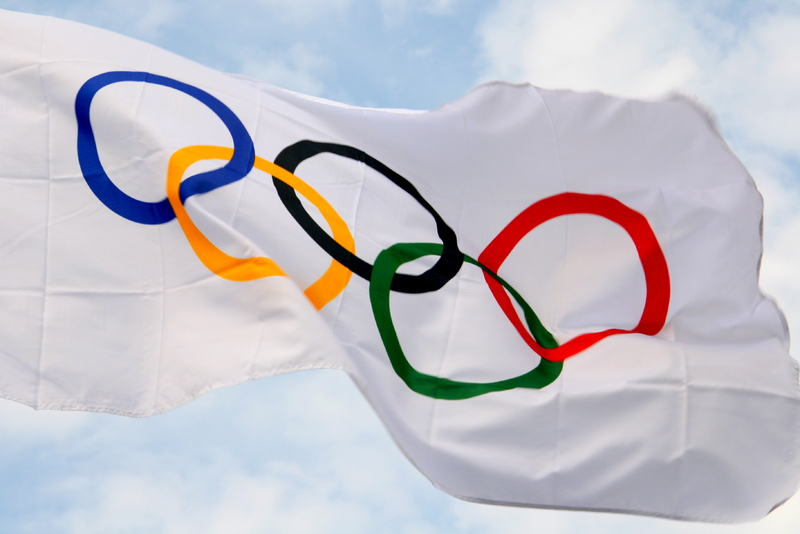
But I’ll also be looking for a handful of athletes who haven’t trained in state-of-the-art facilities or benefitted from the expertise of personal trainers, sports nutritionists, and sports psychologists. Athletes who have worked hard, sacrificed much and beat amazing odds, all for the pride of representing their countries (and genders) and the sheer joy of competing. These are the athletes who will truly embody the Olympic creed:
“The most important thing in the Olympic Games is not to win but to take part, just as the most important thing in life is not the triumph but the struggle. The essential thing is not to have conquered but to have fought well.”
Here are a few athletes who personify that creed:
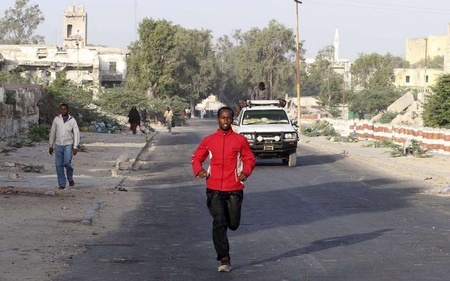 Mohamed Hassan Mohamed is one of two Somalis who will compete in London. This 22 year old runner fled Mogadishu several years ago fearing for his life after an Islamic militia group beheaded an acquaintance of his and threatened his life as well. While Al Qaeda backed insurgents withdrew from Mogadishu over a year ago, suicide bombings, assassinations and kidnappings are still quite common. Mohamed has been training in a neglected and war-ravaged stadium, and has spent the last few months living in a renovated classroom with no phone, TV or Internet, and a mosquito net hanging over his bed.
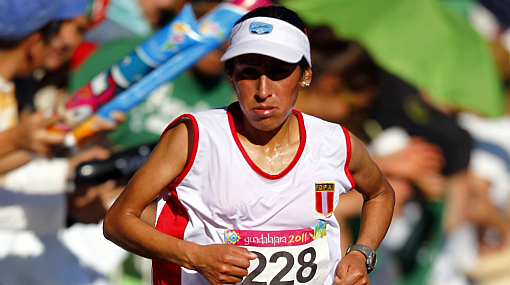 Gladys Tejada will be running only her third marathon, representing Peru at the London games. The youngest of nine children, Gladys grew up in a tiny mud-brick village in the Peruvian mountains with no electricity and no TV and had never even heard of the Olympics until four years ago. As subsistence farmers, her family never had any money and could barely afford to put shoes on their feet. Gladys has not had any kind of formal athletic training, but believes that running in the harsh mountain conditions – plus hard work and discipline – have prepared her well for Olympic competition.
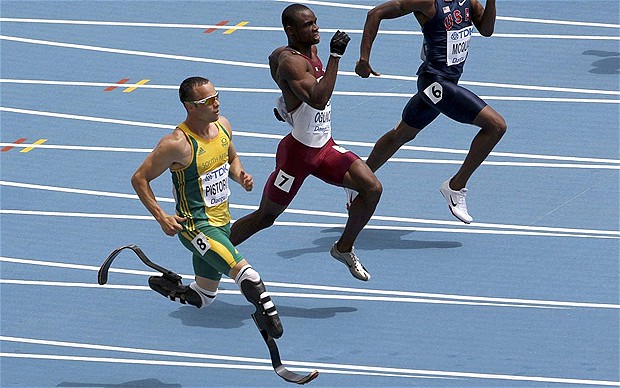 Oscar Pistorius, a 25 year old sprinter from South Africa, is nicknamed the “Blade Runner” because of the carbon fiber prosthetics he wears. Pistorius had his legs amputated below the knees at the age of 11 months because of the congenital absence of the fibula in both legs. He’ll run both the individual 400 meter and the 4 X 400 meter relay and will make history as the first double amputee to compete in the Olympic games.
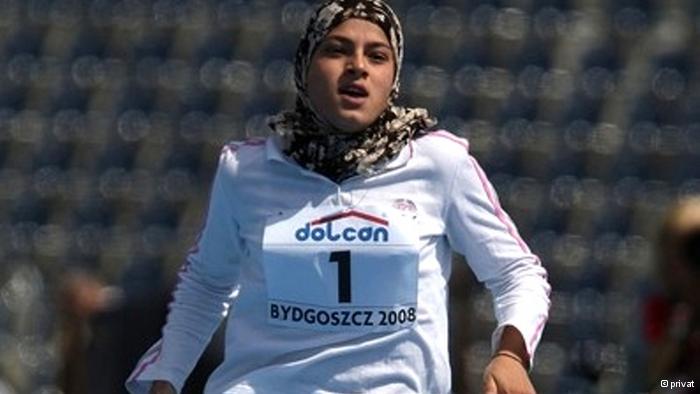 Tahmina Kohistani will be the only female member of Afghanistan’s Olympic track team. While Kohistani has had the full support of her family in pursuing her Olympic dreams, she’s representing a country in which women’s participation in athletics is deemed socially unacceptable. She trains to the frequent jeers of citizens who are openly hostile to the idea of her competing and in subpar facilities and environmental conditions. Kohistani will compete in the 100 meter and 200 meter heats.
In Running the Rift, Jean Patrick rises before dawn one morning for a practice run, to the amazement of his roommate who asks him “why?” Jean Patrick replies that if he doesn’t run, his legs begin to hurt. Running is as natural and automatic for him as breathing and blinking. Like Jean Patrick, most of these real-life Olympians compete because it’s who they are – it’s their essence. To not run, jump, throw, shoot, dive, vault or hurdle would be unnatural, even unthinkable. And like my triathlete friend, they compete for the love of the competition; they’re in London for the love of the games. I, for one, will be rooting for them.
Over the course of the next two weeks, be sure to tell us which athletes have inspired you. Click on “Leave a Comment” in the title box above and share your thoughts and perceptions.

 COACH STACY'S HEALTHY U
I haven’t been paying too much attention to the Olympics until I read your blog. I’ll be tuned in now.
Thank you.
JRsr