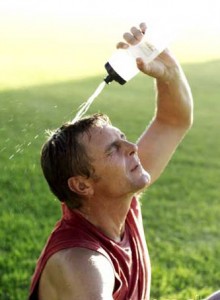
 Here in Colorado, as in many parts of the nation, we’re still in the throes of a prolonged heat wave. But don’t let the high temperatures cause you to miss any workouts. Keep reading for a little “beat the heat” know-how, so that you’ll be lean and strong when crisp fall temperatures arrive.
- Operation Hydration – Be sure to stay hydrated while working out in the heat. Water makes up approximately 65% of our body weight: 20% of our bones, 70% of our brains, 75% of our muscles, and 80% of our blood is made up of water. A loss of more than 10% poses a significant health risk and a loss of 20% will result in death. The body’s need for water is second only to oxygen. Plus, drinking water keeps the wrinkles away! Now that’s hydration motivation! When you don’t get enough water you risk dehydration. By the time you feel thirsty, your brain’s already signaled that your fluid levels are low. Signs of dehydration include thirst, fatigue, nausea, muscle cramps, light headedness and darker urine. What’s more, research shows that performance and endurance can drop with as little as 2% dehydration. Monitor the color of your urine. Darker urine is a sign of dehydration. Be sure to drink enough fluids to maintain very light-colored urine.
- Don’t Pass on the Salt – Sodium is useful to help maintain blood and fluid levels in the body in hot environments. Make sure your food diet includes sodium. Soup, pretzels, nuts and crackers are quick snacks chock full of sodium. One of the key adaptations with heat acclimation is an increase in the volume of fluid that circulates in your body. When you have more fluid in your body the heart pumps more fluid with each beat, leading to a lower exercise heart rate. This means less sodium is excreted in your sweat and urine. Lower heart rate, increase fluid volume, decrease sweat rate and loss of sodium will occur in 1-2 weeks.
- Cool Outfits – Breathable fabrics that wick moisture away from the skin are best for working out in hot, humid conditions. Improper fabric can become a source of heat transfer, blocking your skin’s ability to dissipate it through sweat. Think inside out – everything from your sports bra, underwear, and socks should also wick and breathe.
- Sunglasses and Sunscreen – Wear sunglasses that provide UV protection from the sun’s rays during practice. Apply sunscreen to your body before practice prior to becoming hot and sweaty. During your break seek shade or create a shade with a large umbrella and hydrate. Remember that damaging UV rays are at their strongest between the hours of 10:00 a.m. and 2:00 p.m. each day, so it is best to limit exposure to the sun during those hours. Use sunscreen with an SPF of at least 15 (30 for children). The Sun Protection Factor is how much longer you can be in the sun without burning if you are wearing protection. If you would normally burn after, say, 10 minutes, then applying a sunscreen with an SPF of 15 will give you 15 times the protection – or 150 minutes. Apply sunscreen and lip balm liberally every 2 hours – and don’t forget those tricky spots like ears, feet and neck. Reapply sunscreen when needed. All of these strategies will be useful in preventing sunburn. But what do you do after the fact? Mild sunburn can be treated with:
- Aspirin or ibuprofen
- Cool compresses or soaks in the tub – oatmeal baths work wonders
- Hydration – drink plenty of water to replenish lost fluid, which is common with sunburn
- After-sun creams and lotions like calamine and aloe vera are helpful, but avoid greasy creams since they tend to trap the heat and make symptoms worse
- Sleep Tight, Sleep Right – A rested body will perform at its peak. Strive for 6-8 hours of sleep each night for optimal performance.
- Recovery – Workouts that last longer than 45 minutes can deplete your body of glycogen, the form of glucose your body uses for energy. Working out also causes micro-tears in the muscles. You want to make sure you feed your body to help repair muscle tissues and replenish glycogen stores which are depleted after a strenuous workout. Recovery foods are important to athletes who work out intensely every day. In addition to rehydration, a combination of carbohydrates and protein will help your muscles recover after a workout. Try an iced cold glass of chocolate milk, which is surprisingly effective for muscle recovery after a workout. Chocolate milk contains calcium, potassium and magnesium, which can all be depleted through vigorous exercise. Some other foods that are good for recovery are: black beans and whole grain rice, pasta with low fat sauce and lean chicken or beef, dark green salad with lean protein, mixed berries with yogurt, turkey and cheese on whole grain bread with apple slices, banana with peanut butter, tuna on whole wheat bread, hummus and pita, lean chicken or beef with beans or whole grain rice. Try also baked or sweet potatoes but go easy on the toppings. Remember portion size does matter. Eat slowly and choose whole foods that are not processed.
- Beware of Heat Illnesses – Heat Illnesses fall into three categories of increasing severity: Heat Cramps, Heat Exhaustion, and Heat Stroke. Heat emergencies are caused by prolonged exposure to extreme heat. Common causes of heat emergencies are dehydration, alcohol use, medications, illness, prolonged exercise, sweat gland issues, hot and humid temperatures, and clothing that does not breathe. Address symptoms early and take action to prevent them from getting worse. The early symptoms of heat illness include: profuse sweating, fatigue, thirst and muscle cramps. The next stage is heat exhaustion with symptoms of headache, dizziness, weakness, nausea and vomiting, dark urine and cool, moist skin. The last stage is the most dangerous and symptoms are escalated to fever above 104 degrees, dry, hot and red skin, rapid and shallow breathing, rapid or weak pulse, possible seizures, extreme confusion and irrational behavior and unconsciousness.
First Aid Tips for Heat Illnesses from National Institutes of Health
- Have the person lie down in a cool place. Raise the person’s feet about 12 inches.
- Apply cool, wet cloths (or cool water directly) to the person’s skin and use a fan to lower body temperature. Place cold compresses on the person’s neck, groin, and armpits.
- If alert, give the person beverages to sip (such as Gatorade), or make a salted drink by adding a teaspoon of salt per quart of water. Give a half cup every 15 minutes. Cool water will do if salt beverages are not available.
- For muscle cramps, give beverages as above and massage affected muscles gently, but firmly, until they relax.
- If the person shows signs of shock (bluish lips and fingernails and decreased alertness), starts having seizures, or loses consciousness, call 911 and give first aid as needed.
That about sums it up. Remember, when you’re moving, you’re improving – even in the “dog days” of summer!
Do you have any full-proof strategies for working out in the heat of summer? Let us know by clicking on the “Leave a Comment” link in the title box above.
 COACH STACY'S HEALTHY U