 By Susan Angell-Gonzalez
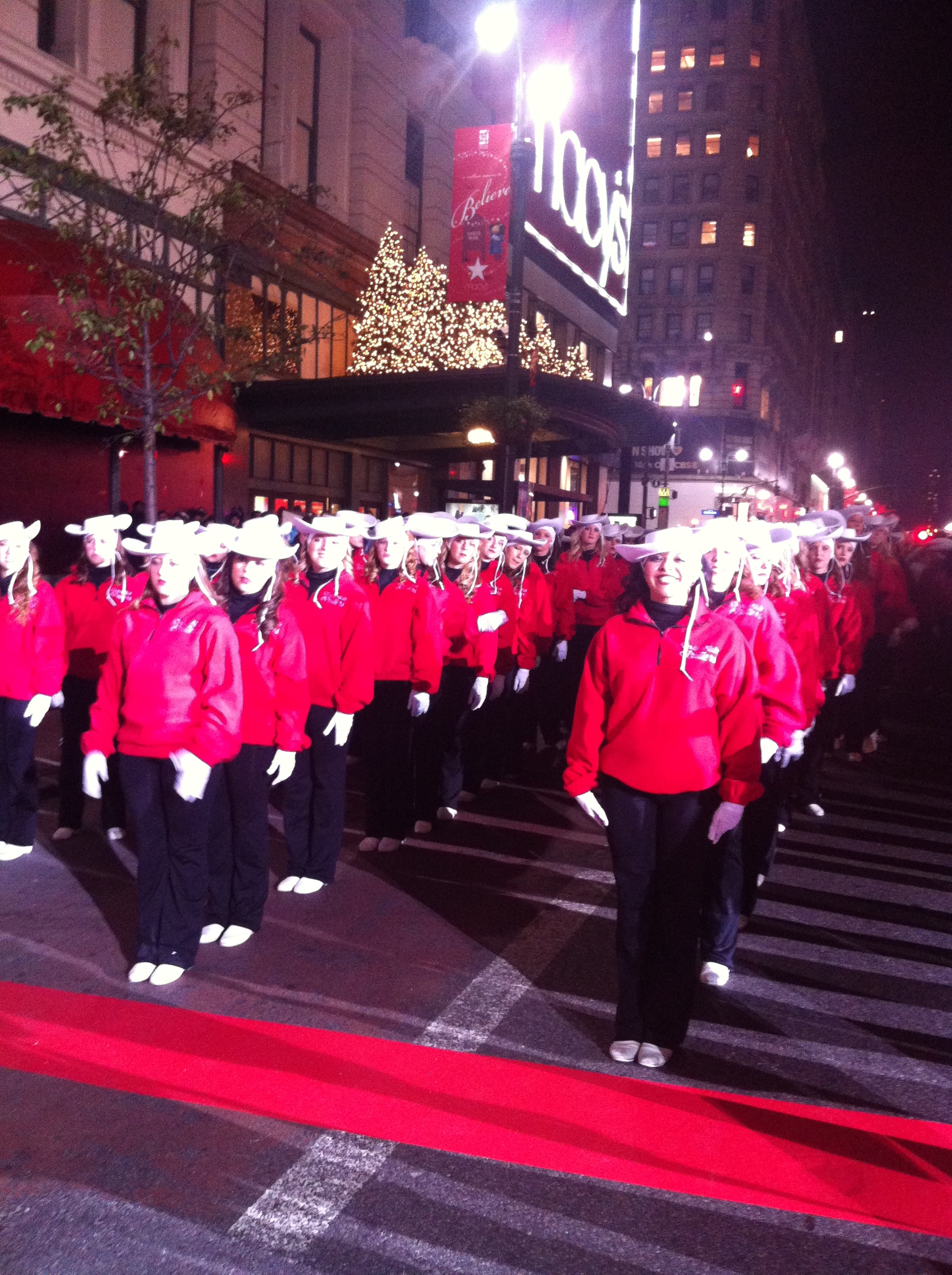
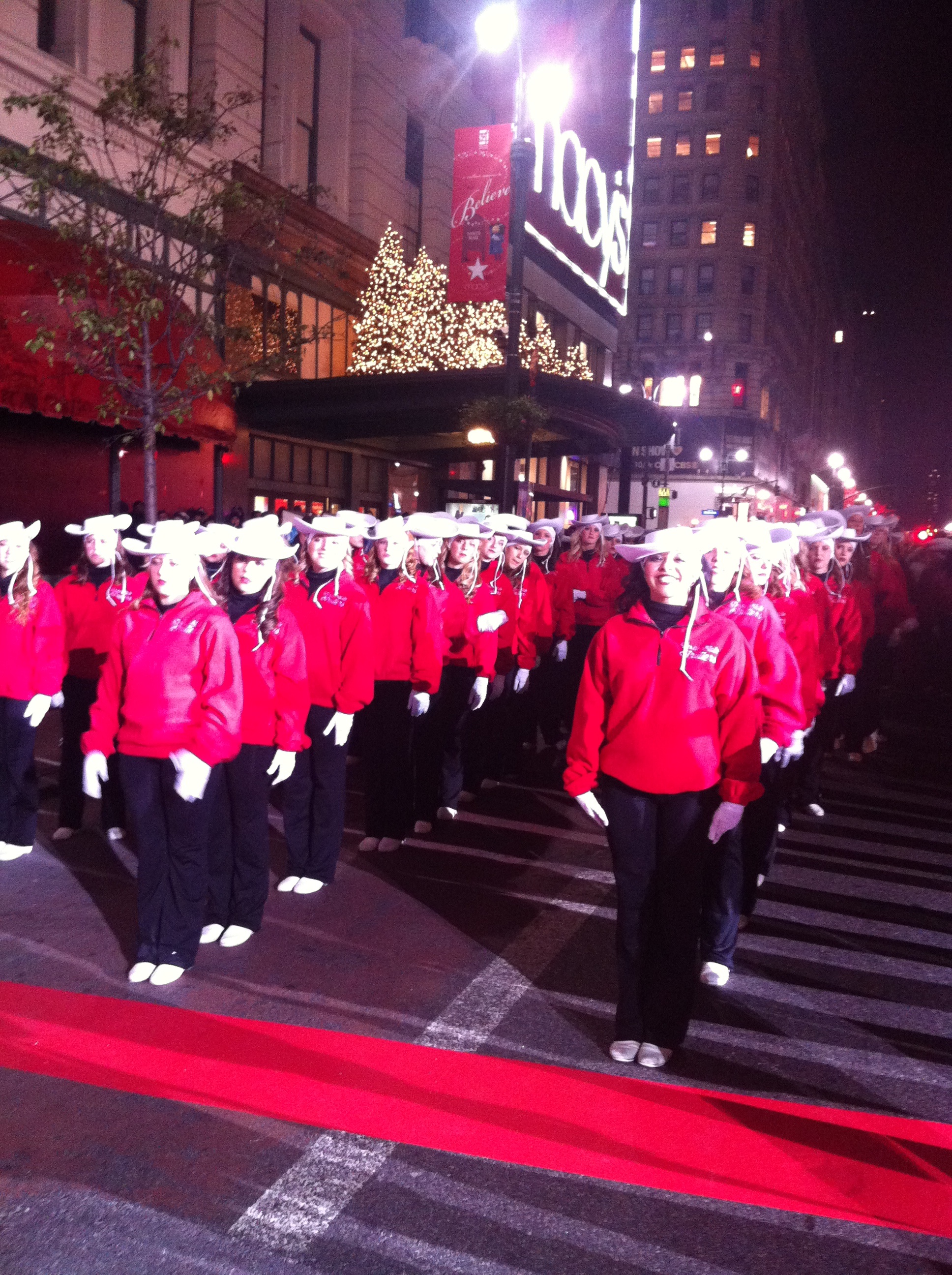
Susan Angell-Gonzalez is the Director of the Texas State University Strutters, the largest synchronized dance team in the U.S. On Thanksgiving morning, everyone will have an opportunity to see the Strutters in action, as they perform at the 86th annual Macy’s Thanksgiving Day Parade, which will be televised on NBC, live from New York, 9:00 a.m. to noon. Be sure to tune in early and check the Strutters out as they “strut” their amazing athleticism on national television. Ms. Angell-Gonzalez is providing a guest post today on the inherent athleticism of dance.
There is controversy that exists as to whether dancers are “athletes.” As a professional who has coached thousands of skilled dancers in a span of 37-years, I believe that all dancers are athletes, but not all athletes are dancers. The skills performed with their bodies demand strength, agility and balance. Dancers play like a team, and when they perform as a group, they work as a collective. Some typical qualities of an athlete include speed, flexibility, strength, endurance, balance, agility, and coordination. ALL of these same qualities are seen in skilled dancers. When watching and analyzing the movements along with the physical ability that it takes for a dancer to perform technical skills, there is no question that highly skilled dancers are athletes. Is dancing considered a sport? According to Wikipedia, a “Sport is all forms of competitive physical activity which, through casual or organized participation, aim to use, maintain or improve physical fitness and provide entertainment to participants. Sport is generally recognized as activities which are based in physical athleticism or physical dexterity.” In argument, dance has the same amount of requirements that any sport does.
Several learning institutions around the United States are beginning to acknowledge dance as a sport and dancers as “elite” athletes and artists. At Texas State University-San Marcos, the Strutters have been recognized as student athletes and are given many of the same perks that sport athletes receive. In addition, the Strutters are granted credit in Health and Human Performance each semester.
Components to consider:
Athletes & Artists
Dancers are “elite” athletes as well as artists. As we all know, dancers have an extraordinary range of flexibility and muscular strength. They move on a level far beyond athleticism. Dancers have speed, agility, power, precision, balance, and endurance (all the things that define an athlete). Additionally, there is grace, beauty, form, emotion, and the power of communication that is expressed through dance movement. What separates dancers from athletes is artistry (there can also be artistry in athleticism, to a point). Dance/Drill Teams perform as a group with precision, energy and style. Basketball players do not think about their arm extension in relation to their shoulder. Dancers think about placement and take everything to the next level! To dance is to move on a level far beyond athleticism. Yes, there is speed, power, balance, and endurance (all the things that define an athlete). But again, there is grace, beauty, form, emotion, and the power of communication (it is an art form). A dancer must be able to react quicker with more balance and control (and be able to demonstrate explosive strength). A dancer must also be able to turn without throwing oneself into it and stop cleanly without losing balance.
Training
Athleticism has to be developed through training. In addition to sport athletes, dancers follow a rigorous training regimen and must stay in peak condition. For the most part, dancers have extraordinary flexibility/joint mobility, muscular strength, and physical and mental endurance. Many high school and college dance teams train and rehearse every day. They incorporate into their workout cross training with cardio, weight lifting, and Yoga/Pilates to improve their physical fitness and technique. While aesthetic goals are of the utmost importance, dancers remain subject to the same unyielding physical laws as athletes. Because most dance/drill team workout regimens tend to concentrate on core conditioning and increasing flexibility, they overlook the need for strength and cardiovascular training exercises that are essential to preventing injury. The Texas State University Strutters spend 11-days together in Training Camp before the start of football season/fall semester. The team is engaged in a daily core, muscle strengthening and flexibility training program along with cardio-respiratory activities. During Strutters Training Camp, the team will work out each day from 8:30 am. until 6:00 pm. with 1 ½ hours for lunch. Their activities also include various dance technique drills, skill development and routine instruction. Training Camp activities have been tailored to suit the needs of Strutters, with the ultimate goal being improvement in muscular strength, flexibility, joint mobility, agility, balance, and physical/mental endurance (and injury prevention). Developing core strength is the secret to their success as dancers and performers.


 COACH STACY'S HEALTHY U

Reblogged this on WE FIT TOGETHER.