 Snow is forecast for Colorado tonight. That news typically garners mixed reactions from the locals. Some roll their eyes and brace themselves for the gridlock of a long and icy commute. Others bundle up and rush out the door to go frolic in the powder enjoying their favorite winter sports. We tend to be members of the latter group, not at all reluctant to hang a sign on the door that says, “Closed Today Due to Perfect Powder.”
You don’t have to be Lindsey Vonn to enjoy winter in the mountains. In fact you don’t have to know how to ski at all. One of our favorite winter pastimes is snowshoeing, which offers a challenging cardio workout without the steep learning curve of skiing. If you can walk and run, you can snowshoe – and for only a fraction of the cost of skiing, which is why it’s currently one of the fastest growing winter sports in the U.S.
Many people don’t know this, but you burn a lot more calories snowshoeing (430-650 calories per hour) than you do skiing (325-490 calories per hour). Your group’s pace is only as fast as its slowest member. Most pairs of snowshoes cost less than skis and they’re quite durable, requiring little maintenance. Moreover you don’t need to buy lift tickets; most local snowshoe routes and trails can be accessed for free. And snowshoeing is safe and low impact – so it’s easy on your knees – as well as environmentally friendly and esthetically pleasing. 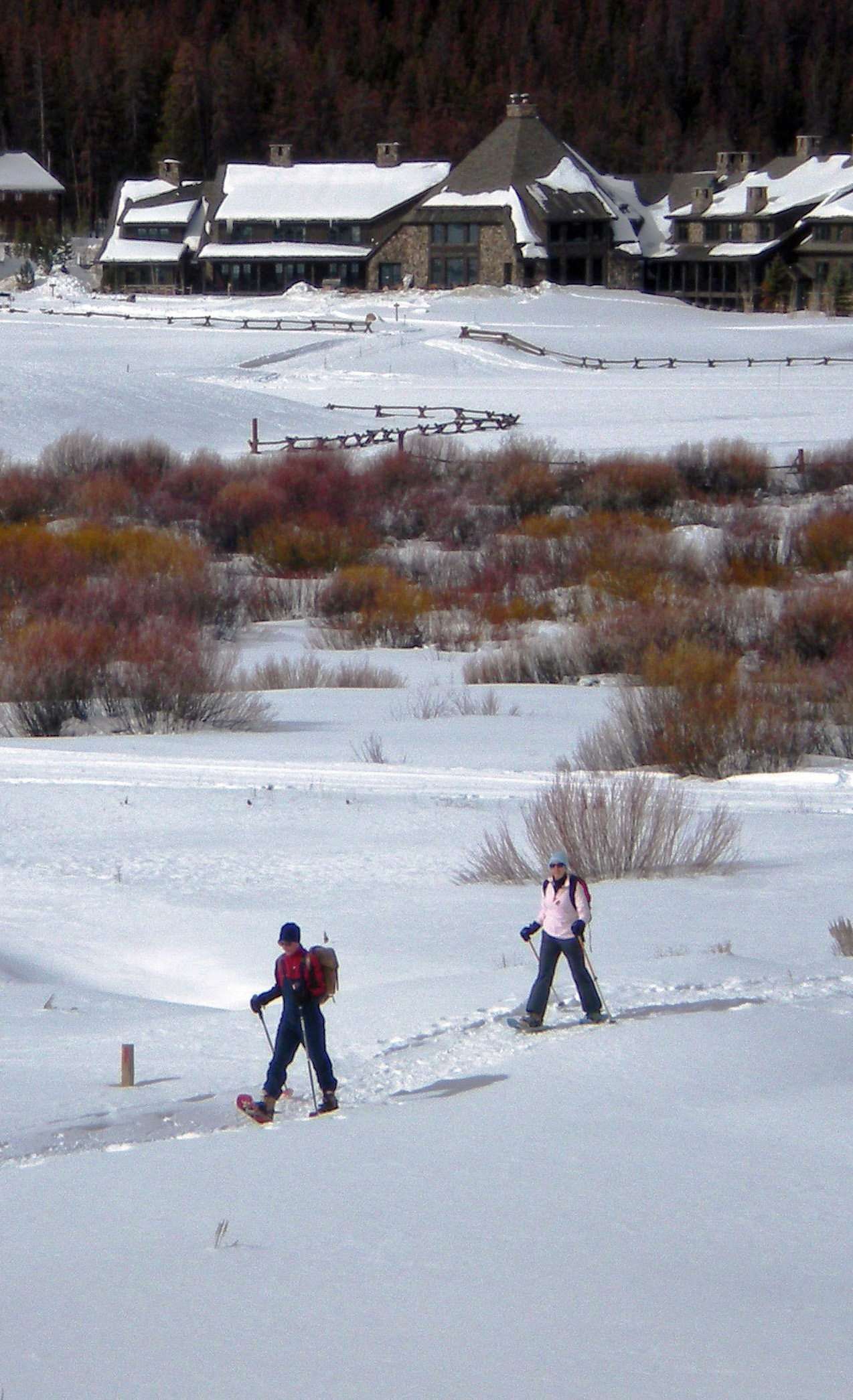
To increase calorie burn – as much as 20% — we use poles while snowshoeing. Doing so brings our upper bodies into the workout, increasing our strength and energy output as well as our heartrates by 7 to 10 beats per minute. Using poles also decreases stress on our joints while improving stability and safety. Poles can also be used to knock snow off our shoes.

 According to our friend and snowshoeing expert, Claire Walter, “Snowshoes are the sport utility vehicles of the winter backcountry. They can take you virtually anywhere there is snow.” Any route you can walk or hike is ripe for snowshoeing. Just throw your shoes in the back of your car and never miss a beat through the next two winter months. Claire’s books, Snowshoeing Colorado and The Snowshoe Experience: Gear Up & Discover the Wonders of Winter on Snowshoes are available at your local library or Tattered Cover Bookstore.
As with any winter sport, you should always be aware of weather conditions and your own physical limitations before you embark on your snowshoeing trek. Make sure others know of your plans and location. For tips on snow sports and winter safety, log on to Snowlink.
Here’s hoping you find some time to enjoy “all the white stuff “ before winter yields to spring.

 COACH STACY'S HEALTHY U