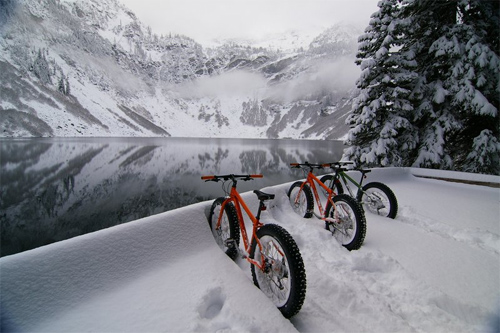
 Yesterday was the last day of the meteorological winter, so it’s time to put away the skis and snowshoes right? Not by a long shot – at least not here in Colorado. Traditionally, March is the snowiest month in our mountainous state so there’s plenty of winter left to be had. But those of you who are itching to tune up your bikes and hit the mountain trails again, why wait?
“Fat biking,” also known as “snow mountain biking” is rapidly growing in popularity in places where snow represents big business. The sport originated in Alaska some 25 years ago, but spread quickly to the lower 48. Fat bikes are easily recognizable by their wide rims and their bulbous, knobby tires and anyplace that you’d normally hike, mountain bike or snowshoe is suitable for fat biking.
However, the activity is for neither the novice nor weekend warrior. It’s a strenuous workout, indeed; most seasoned fat bikers will tell you that biking on snowy trails represents double the workout of the average mountain biking trail. The typical fat bike ride is slippery, strenuous, and somewhat “technical.”
There is some disagreement over what constitutes a decent “snow bike.” Some contend that all you need is a mountain bike with a doublewide rim and mud-pattern tires. Others insist that you need an actual fat bike, complete with a four-inch rim and wide, knobby tires (think studded snows). Such bikes range widely in price, as do mountain bikes, and are built specifically for riding in snow or sand. Their secret lies in the flotation derived from large-volume, low-pressure tires.
Fat biking pros offer the following tips and techniques for riding in the snow: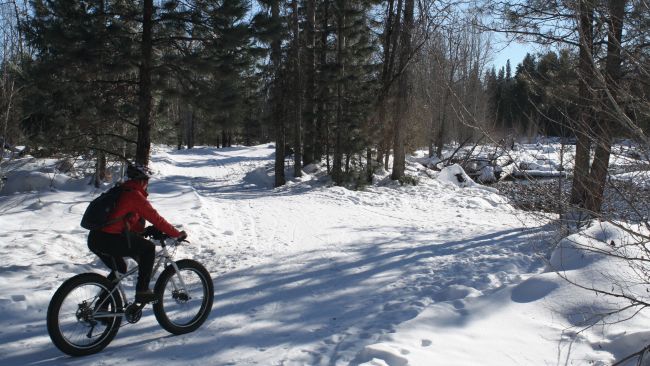
- Ride at a lower cadence than you would on a regular biking trail.
- Pedal more or less continuously to avoid sinking in the snow.
- Shift your weight backwards so as to weigh down your back tire and produce better traction.
- Employ a lower gear while traveling uphill, and a higher gear while traveling downhill or on level surfaces.
- Seek trails that feature hardpack or packed powder.
- Avoid carefully groomed cross-country trails.
- Try not to break quickly, particularly where there’s ice. Breaking suddenly doesn’t work well when you’re driving a car and is equally hazardous when riding a bike in the snow.
- Practice the same safety precautions you would while riding a regular bike – and most definitely wear a helmet.
Here in Colorado, our best snow of the season is yet to come. If you’ve already skied or gone snowshoeing, why not try fat biking for a change of pace? Happy pedaling!
If you want to learn more about fat biking, check out the following links:

 COACH STACY'S HEALTHY U