COACH STACY'S HEALTHY U

When you're moving, you're improving!

  • About
  • Camp GO™
  • Class Schedules
  • Contact Us
  • We Play It Forward

Ask Coach Stacy: Working Out on an Empty Stomach

Posted by Coach Stacy & Debby Ridgell on August 29, 2013
Posted in: Ask Coach Stacy, Diet & Nutrition. Tagged: fueling workouts, healthy exercise snacks, working out on an empty stomach. Leave a comment

Exercising-Empty-StomachQ: Does working out on an empty stomach help to burn more fat? – Lindsay; Evergreen, CO

A: That’s a great question.  You bring up a myth that’s in dire need of busting.  Contrary to the mis-information doled out by many an arm-chair fitness expert, working out on an empty stomach does NOT cause your body to fuel exercise by burning stores of fat.  In fact, that theory was soundly refuted in a study by the Strength and Conditioning Journal which found that working out on an empty stomach generally leads the body to burn calories from muscle instead.  Now, if you’re thinking that’s not so bad, given that muscle weighs more than fat – wrong again!  All that time you spend working out in the gym is to gain muscle, because muscle tissue is metabolically active, helping you burn calories.  So the last thing you want to do is burn muscle tissue.

The other side effects of working out on an empty stomach are low energy and low blood sugar.  It’s like getting in your car to drive across town with your gas tank nearly empty.  You won’t get very far before your car stalls out completely.  So, no fuel and no energy – think you’ll burn many calories?  Not likely.  Your best bet is to eat a healthy, light meal or snack prior to working out.  Not only will you feel more energetic, but your body will burn more calories, and you’ll feel less hungry, both of which will result in keeping your weight in check.

Next question — should you eat a meal or just a snack?  Eating before a workout is all about the timing.  If you opt for a full meal, you need to eat 1-2 hours before your workout. For me, snacks work best, since the size of the meal should be about half the calories the workout will burn – typically 100-200 calories 30 minutes before my session. I try to choose fast digesting carbohydrates (which are high on the glycemic index) and avoid fatty foods. No one knows your body better than you; some people simply cannot eat before a workout. But knowing the science behind sports nutrition might help you to make an informed decision about working out on an empty stomach. Either way, keep in mind that when you’re moving, you’re improving!

Smart Choices for Fueling Workouts

Fruit juice or fruit smoothie

Yogurt or yogurt smoothie

Fruits – banana, watermelon, pineapple, mango, apricots

Sports drinks

Energy bars with 3-5 grams of protein and 15 carbs

Pretzels

Bagels, but not whole grain

Hard-boiled egg or egg whites

Hummus and raw veggies

Oatmeal

Nuts, trail mix, dried fruit

Cottage cheese with fruit

Cereals with at least 3 grams of fiber

Whole grain Fig Newtons

Milk (white or chocolate)

1/2 whole grain sandwich with almond or peanut butter, turkey or chicken

Share this:

  • Share on X (Opens in new window) X
  • Share on Facebook (Opens in new window) Facebook
  • Share on LinkedIn (Opens in new window) LinkedIn
  • Share on Pinterest (Opens in new window) Pinterest
  • Print (Opens in new window) Print
  • Email a link to a friend (Opens in new window) Email
  • Share on Reddit (Opens in new window) Reddit
  • Share on Tumblr (Opens in new window) Tumblr
Like Loading...

Recess: A Healthy Hole-in-One

Posted by Coach Stacy & Debby Ridgell on August 15, 2013
Posted in: Physical Activity, Recess. Tagged: health benefits of golf, Solheim Cup, women and golf. 1 Comment

michelle wie SolheimIn case you’re living under a rock and haven’t heard, thirty outstanding athletes have descended upon the Denver area this week to participate in the Solheim Cup, a biennial golf match featuring the best female golfers from the United States and Europe.  The three-day match-play competition is set to tee off tomorrow morning at 7:30 sharp at the beautiful Colorado Golf Club in Parker, Colorado.  Judging from the media blitz, the Solheim’s a pretty big deal – Coach Stacy tells me it’s referred to as the “Ryder Cup of Women’s Golf.”  And Coach is playing host to several VIP friends from the fitness and sports world who are in town for the match.  With so much fanfare surrounding this women’s athletic event I was surprised to learn that only 19% of golfers in the United States are female, a sad statistic that the PGA is actively campaigning to improve.

The last time Coach Stacy and I played a round of golf, I double bogeyed the first hole, missed the green entirely on my drive to the second, and shanked so far out of bounds aiming at the third that I never located the ball and had to concede the hole altogether.  Naturally after that disastrous start, I never recovered.  Coach Stacy, on the other hand, shot a respectable 110.

Show off.

At the local watering hole afterwards, Coach began outlining a textbook of tips geared at helping me improve my stroke as well as my concentration.  I, in turn, offered to sell her my clubs for twenty bucks.  When she persisted, I offered to pay her twenty bucks and throw in my clubs for free if she’d just quit trying to refine my game.

“Perhaps I’m not altogether cut out for the game of golf,” I grumbled.  Like a dog with a bone, however, Coach Stacy wouldn’t let it go.

“Ridge, golf is just too darned healthy a sport for you to give up on it after one bad round,” she said, and proceeded to regale me with the myriad health benefits of the game of golf.  And so, here they are – ten healthy reasons for you to hit the links before the weather turns cold:

  • Golf is an excellent venue for getting your steps in.  The Surgeon General recommends that we move to the tune of 10,000 steps a day.  Ironically enough, during an average round of golf, you can expect to walk about 5 miles, which just happens to add up to around 10,000 steps.
  • Playing golf burns calories – over 1,000 per 18 holes if you carry or pull your clubs.
  • Regular rounds of golf can reduce your risk of developing heart disease, diabetes, cancer, and osteoporosis.
  • Golf is relaxing for most people (especially those who, unlike me, routinely manage to drive or putt a ball with even the slightest degree of accuracy).  Therefore, golf is a great stress reliever and a sport that helps the body release mood-enhancing endorphins.
  • Most people report that they sleep better at night after a round of golf by day.
  • Playing even a few holes of golf or hitting a bucket of balls on the driving range is a fine way to catch a few healthy rays and a lot of Vitamin D.
  • Golf helps keep you mentally sharp, improving your focus, discipline, and decision-making skills.  As such, playing golf helps reduce your risk of developing Alzheimers.
  • While golf can be played alone, it’s also an excellent sport to play in groups – and it soothes the soul to be able to go out and play with one’s friends from time to time.
  • Golf is a sport that involves finesse rather than visceral force.  As such, this low-impact form of physical activity helps improve balance, flexibility, endurance, and muscle tone and strength.  AND, golf provides a first-rate core workout.
  • Contrary to popular belief, golf is a relatively inexpensive pastime.  The average cost for a round at a public course is around $27.00 – WAY less expensive than a ticket to a baseball or football game – and in the long run, easier on the wallet because of the health benefits associated with playing the game.

Okay, so maybe I was too quick to give up on golf.  Coach has had me tuned in to the Golf Channel for the Solheim Cup all week and I’m rather inspired by these gifted women athletes as they’ve played their practice rounds.  Perhaps one of these days I’ll venture out to the local course again for some healthy activity and good dose of Vitamin D.  Of course that will require me to buy back my clubs.  Knowing Coach Stacy, the price has probably gone up…

Share this:

  • Share on X (Opens in new window) X
  • Share on Facebook (Opens in new window) Facebook
  • Share on LinkedIn (Opens in new window) LinkedIn
  • Share on Pinterest (Opens in new window) Pinterest
  • Print (Opens in new window) Print
  • Email a link to a friend (Opens in new window) Email
  • Share on Reddit (Opens in new window) Reddit
  • Share on Tumblr (Opens in new window) Tumblr
Like Loading...

Coach’s Kitchen: Refreshing Rhubarb

Posted by Coach Stacy & Debby Ridgell on August 7, 2013
Posted in: Coach's Kitchen. Tagged: health benefits of rhubarb, rhubarb recipes. Leave a comment

Content contributed by Keith and Laura Padgett

rhubarbOf all the fruits and veggies you’ll find in the produce aisle, rhubarb is quite likely the most complicated and enigmatic.  A study in contrasts, rhubarb grows in long, dark red, celery-like stalks, but boasts bright green leaves.  While rhubarb is technically a vegetable, it’s frequently paired with sweet-tasting fruits such as strawberries or cooked with heavy doses of natural or artificial sweeteners to mask its tart flavor.  The stalk of the rhubarb plant boasts numerous medicinal uses for such ailments as irregularity and gastrointestinal disorders, yet its leaves are considered toxic due to their high oxalic acid content.  Rhubarb is not an easy vegetable to cook, but it’s worth the exertion since it packs a mighty nutritional punch, supplying Vitamins C, E, and K as well as potassium, calcium, and fiber.

To grow rhubarb, plant rhizomes in either spring or fall, preferably in the spring to allow roots to get established. Full sun is best, although it will do well in partial shade. Space rhizomes about 3’ apart, cover about 2” deep, and water well. Do not harvest the first year to allow the plant to get well established. Remove flower stalks as soon as they appear because if allowed to mature, the leaf stalks will be thinner. You may need to thin your rhubarb garden every 4-5 years depending on plant growth (stalks will become smaller).  Harvest when stalks are approximately 1” diameter. Cut at ground level or pull with a slight twisting action. Only use stalks that are firm, not soft. Cut off the leaf and compost.

Here are a few rhubarb recipes to get you started:

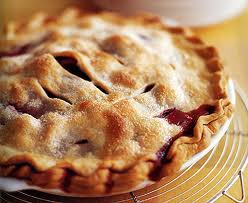
rhubarb piePa Padgett’s Rhubarb Pie (from Keith and Laura Padgett, http://livinwhatyouregiven60.wordpress.com/)

Filling:

¾ cup sugar

3 Tbs cornstarch

3 cups rhubarb (mostly drained)

2 cups strawberries (mostly drained)*

1 deep dish pie crust**

Topping:

1/3 cup flour**

1/3 cup packed brown sugar

1 tsp cinnamon

2 ½ Tbs soft butter

½ cup chopped nuts (pecans)

For filling, mix rhubarb and berries together, and then mix in sugar and cornstarch.  For topping, mix dry ingredients together, blend in soft butter, and then add nuts last.  Bake at 375° in pre-heated oven for 30 minutes uncovered, then cover with aluminum foil and continue baking for and additional 30 minutes plus, until bubbly on top.  Let cool and serve with whipped cream, ice cream or other toppings.

* May use other fruits as desired

** For gluten-free, use GF flours and crusts

_________________________________________

rhubarb custard barsRhubarb Custard Bars (from www.cookinglight.com)

Crust:

1 ½ cups all-purpose flour

½ cup sugar

1/8 tsp salt

9 Tbs chilled butter, cut into small pieces

Cooking spray

Filling:

1/3 cup all-purpose flour

1 ½ cups 1% low-fat milk

3 large eggs

5 cups (1/2 inch) sliced fresh or frozen rhubarb (unthawed)

Topping:

½ cup sugar

½ cup (4 ounces) block-style fat-free cream cheese

½ cup (4 ounces) block-style 1/3-less-fat cream cheese

½ tsp vanilla extract

1 cup frozen fat-free whipped topping, thawed

Mint sprigs (optional)

Preheat oven to 350°. 

To prepare crust, lightly spoon 1 ½ cups flour into dry measuring cups; level with a knife.  Combine 1 ½ cups flour, ½ cup sugar, and salt in a bowl.  Cut in butter with a pastry blender or 2 knives until mixture resembles coarse meal.  Press mixture into a 13 X 9-inch baking dish coated with cooking spray.  Bake at 350° for 15 minutes or until crust is golden brown.

To prepare topping, place ½ cup sugar, cheeses, and vanilla in a bowl; beat with a mixer at medium speed until smooth.  Gently fold in whipped toping; spread evenly over baked custard.  Cover and chill a least 1 hour.  Garnish with mint sprigs, if desired.

Yields 36 servings

Per serving:

131 calories, 4.2 g fat, 2.5 g protein, 21 g carbohydrates, 29 mg cholesterol

_________________________________________

rhubarb crispRhubarb Crisp (from www.eatingwell.com)

1 cup thinly sliced rhubarb

½ cup chopped peeled apple

3 Tbs granulated sugar

1 tsp instant tapioca

¼ tsp plus 1/8 tsp ground cinnamon, divided

2 Tbs all-purpose flour

2 Tbs old-fashioned rolled oats (not steel cut or instant)

1 ½ Tbs packed dark brown sugar

1 Tbs finely chopped pecans

1 Tbs unsalted butter, melted

2 tsp pure maple syrup

1/8 tsp salt

Preheat over to 350°.  

Toss rhubarb, apple, granulated sugar, tapioca and ¼ tsp cinnamon in a medium bowl.  Divide between two 10-ounce (1 ¼ cup) oven-safe ramekins or custard cups.

Mix flour, oats, brown sugar, pecans, butter, syrup, salt and the remaining 1/8 tsp cinnamon in a small bowl until crumbly.  Sprinkle over the rhubarb mixture.

Bake until bubbling and lightly browned, about 30 minutes.  Cool for 5 minutes before serving.

Yields 2 servings

Per Serving:

259 calories, 9 g fat, 15 mg cholesterol, 47 g carbohydrates, 3 g protein, 3 g fiber

rhubarbiaFor more rhubarb recipes, check out the rhubarb website and Rhubarbaria: Recipes for Rhubarb by Mary Prior.

Share this:

  • Share on X (Opens in new window) X
  • Share on Facebook (Opens in new window) Facebook
  • Share on LinkedIn (Opens in new window) LinkedIn
  • Share on Pinterest (Opens in new window) Pinterest
  • Print (Opens in new window) Print
  • Email a link to a friend (Opens in new window) Email
  • Share on Reddit (Opens in new window) Reddit
  • Share on Tumblr (Opens in new window) Tumblr
Like Loading...

Get Outdoors: Geocaching 101

Posted by Debby Ridgell on July 31, 2013
Posted in: Get Outdoors. 2 Comments
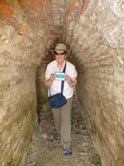
Phyllis with a find in Myanmar

Phyllis with a find in Myanmar

Did you ever play pirates where you were a kid?  Painstakingly burying a “treasure” – perhaps your little brother’s Tonka truck or your big sister’s bangles.  Then creating an elaborate map, leading a would-be treasure hunter – your little brother or big sister – ten paces here, five frog-leaps there, to where the “X” marked the spot where the treasure was buried.  Exciting fun, playing pirates.

You can reclaim that fun through geocaching, a relatively new outdoor pursuit, which is part scavenger hunt, part orienteering.  One of our good friends, Phyllis McGuire, is an avid geocacher, which she describes as high-tech treasure hunting.  Instead of a map, she uses GPS (Global Positioning System).  And instead of a treasure, she hunts for “caches,” or hidden containers filled with trinkets and mementos.

After a recent workout class, Phyllis allowed us to tag along for a short geocaching expedition during which she filled us in on the game’s basics:

  • “Geo” stands for geography and “cache” stands for hidden provisions or valuables.
  • To find caches, participants use GPS-enabled devices to navigate to a set of coordinates where such containers are hidden.  Phyllis used to use a GPS receiver but now, more often than not, she simply uses the GPS app on her iPhone.
  • Geocaching is an ideal outdoor pursuit in and of itself for adventure-seekers.  However, many like to pair geocaching with other outdoor pastimes such as hiking, canoeing, camping, mountain biking or rock climbing.
  • To get started in geocaching, go to www.geocaching.com and register for an account.  Membership is free, requiring only one’s name, address and a geocaching handle.  Once you’re registered, you can consult the website for caches in particular areas, then load the coordinates into your GPS device and start hunting.
  • Caches vary widely in terms of size and contents.  A “micro” cache is generally less than 100 ml, such as a film canister.  “Small” caches are about the size of a sandwich, and “regular” caches are shoebox sized.  “Large” caches are the size of a bucket or larger.
  • The primary requirement for a cache is that it contain a logbook or log sheet of some sort.  Once a geocache is found, players sign the logbook and return the cache to its original location.
  • Geocaches can also contain items for trade, the possibilities of which are endless and include baseball cards, small toys such as troll dolls, stickers, polished stones, batteries, hand and foot warmers, collector items, whistles, matches, Lego pieces, playing cards, maps, silver dollars or small tools.  Geocaching etiquette stipulates that if an item is taken from a cache for trade, something of equal or greater value must be left in exchange.
  • There are also certain items that should never be included in a geocache, such as weapons or explosives, drugs or alcohol, food, or heavily scented items.
  • Caches are hidden on every continent, thus geocaching is an enjoyable pursuit for world travelers like our friend Phyllis.  Caches can be found in utterly easy terrain such as the super market parking lot or far more challenging environments such as the top of a 10,000-foot peak or underwater.
  • Geocaching is a hobby that requires very little in the way of equipment or supplies, aside from a GPS device.  Depending on the location or terrain, you might consider packing food and water, bug spray, sunglasses and sunscreen, extra batteries, maps and a compass, a pen or pencil, a hat and work gloves, flashlight, extra clothing, a signal mirror and whistle, and matches.

The result of our first geocaching expedition was somewhat less successful than we’d hoped.  Coach Stacy is a bit of a chatterbox, and while holding forth, she tends to be rather unobservant with regard to her surroundings (although she’ll tell you she was focused more on avoiding snakes than locating the cache).  I, on the other hand, was evidently born with no discernable sense of direction.  So together, we failed to locate the cache, leaving poor Phyllis to only speculate as to the relative wisdom of going geocaching with two ditzy blondes.  Turns out, she returned to the coordinates some days later and found the micro cache, a film canister covered with camouflage duct tape and containing only a rolled up log sheet.

“Anyone could have missed it,” she said in a misguided attempt at consolation.  But it’s more likely that our geocaching handles should be “Ditzy Blonde 1” and “Ditzy Blonde 2.”  And besides, Coach Stacy is quite a bit more accomplished at locating athletic shoes on clearance at the local shoe warehouse.

Still, we’ve noticed that Phyllis hasn’t invited us back for another geocaching expedition…

For more information on geocaching, check out the following resources:

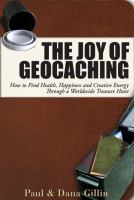
joy of geocachingThe Joy of Geocaching by Paul and Dana Gillen

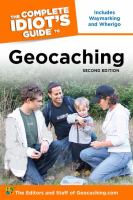
complete idiot's guide to geocachingThe Complete Idiot’s Guide to Geocaching by the editors and staff of Geocaching.com.

The Geocaching Website

Share this:

  • Share on X (Opens in new window) X
  • Share on Facebook (Opens in new window) Facebook
  • Share on LinkedIn (Opens in new window) LinkedIn
  • Share on Pinterest (Opens in new window) Pinterest
  • Print (Opens in new window) Print
  • Email a link to a friend (Opens in new window) Email
  • Share on Reddit (Opens in new window) Reddit
  • Share on Tumblr (Opens in new window) Tumblr
Like Loading...

Fit RX: Glute Force

Posted by Coach Stacy on July 15, 2013
Posted in: Fit RX, Physical Activity. Tagged: butt exercises, butt workouts, gluteal muscles, glutes. 1 Comment

wranglersWhen I was a Texas undergrad, I was consistently attracted to the cowboys who wandered about campus; years in the saddle made them look mighty fine from behind in their Wranglers.  Of course, the butt muscles are the largest muscles in the body.  So when worked out, they look terrific.  But ignored, they present a LARGE problem in a hurry.  Three muscles known as the gluteus maximus, the gluteus medius, and the gluteus miniumus, make up one’s rear end.  The maximus comprises the biggest portion of the tush, the medius sits at the top of the hips, and the minimus rests in between.

Most of us are motivated to work our glutes in order to look toned and sculpted and fabulous in jeans.  However, a strong butt serves functional purposes as well.  Not only does it help stabilize the back, it also helps us climb stairs, sit and stand, get in and out of the car, and carry out daily chores and countless other tasks.  The following five exercises will activate the gluteal muscles and transform droopy and flabby into shapely and firm for a sexy and strong derriere:

Glute Bridge – Double or Single Legglute bridge

  • Ready: Lie on your back with your knees bent, shoulder width apart and feet flat on the floor. Inhale and exhale several times slowly.
  • Set: Lift your hips off the floor and engage your abdominal muscles, with your weight mostly on your heels pressing into the floor. Try not to push your hips too far up so as to avoid overarching your back muscles.
  • Go:  Slowly lower back down without letting the hips touch the floor.  Maintain the position and repeat the exercise 10-20 times.
  • Exercise Challenge:  Try lifting one leg in the air as you lift your hips off the floor or holding a dumbbell or medicine ball on your hips as you lift.

Platypus WalkPlatypusWalk

This is a simple move that works the butt and can be done anywhere, anytime with no equipment. The platypus walk engages the butt, thighs, and core, and challenges one’s balance as well. I love this move for all the different muscles it involves and it’s also fun to do.

  • Ready: Start with your feet slightly wider than hip-width apart with toes pointed out (think plié position in ballet).
  • Set: As you sink into the plié position, keep your back straight and your arms raised as if you are holding your ears.
  • Go:  Maintain this position and begin slowly walking forward 10-20 steps then back 10-20 steps. Repeat 2-3 times.
  • Exercise Challenge:  Increase your distance and speed.

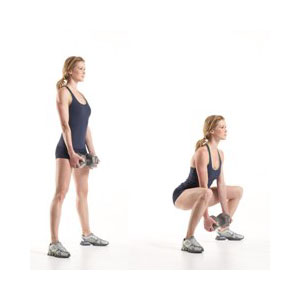
Bodyweight SquatBodyweight squat

Ready: No equipment is needed as you start with feet shoulder width and toes lined up with your knees. Place your hands on the side of your hips. Stand tall with your chin parallel to the floor, shoulder blades together, abdominals engaged and chest up. Inhale and exhale throughout the movement.

Set:  Keep your weight shifted back onto your heels as Bodyweight squat 2your hips and butt prepare to jut out behind you.  A good cue is to think of sitting in a chair. Like a hinge, your hips and knees bend in unison as you lower your butt, and your knees will start to shift forward.

Go:  Begin to slowly lower yourself into a “sitting in the air” position with arms extended forward for balance.  As you squat, try not to let your knees pass over your toes and keep your heels planted flat on the floor. Align knees with hips throughout the movement. To engage the glutes muscles push through the heels more as you begin the upward movement. Repeat 5-20 times.

Exercise Challenge:  Add weight in your hands and maintain the above position.

Bicycling

bicyclingBicycling is an outstanding butt workout, as it engages multiple muscles, including the glutes and burns about 500 calories per hour.  To avoid back or knee strain, distribute your weight evenly and don’t slump.  Keep your shoulders back and your hands even with your shoulders on the handlebars.  Adjust your seat so that your knees stop just short of locking when you push down on the pedals.  Adjust your gears so that the ride is challenging, but not impossible – and be sure to wear a helmet for safety.

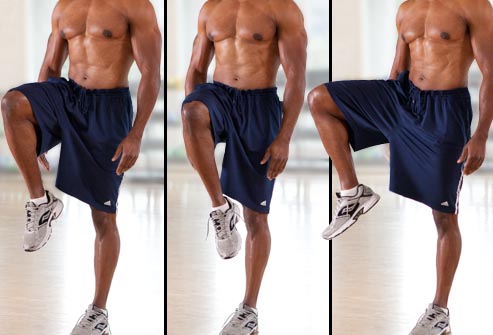
Standing Gate Openers

Ready:  Stand tall with your feet shoulder width apart, toes facing forward, chest up and arms by your side.  If needed, use the wall or a chair for balance.standing gate openers

Set: Think of a gate that opens and closes like a hinge as your prepare to lift one leg up and off the floor.

Go:  As you begin the move, engage your abdominals and shift your weight to one leg as you lift your other knee up towards your chest. Keeping your knee in a 90-degree bent position, rotate the bent leg across your body and back as if it is a gate opening and closing. Try to keep your other leg and hip stable as you repeat the move 5-10 times.

Share this:

  • Share on X (Opens in new window) X
  • Share on Facebook (Opens in new window) Facebook
  • Share on LinkedIn (Opens in new window) LinkedIn
  • Share on Pinterest (Opens in new window) Pinterest
  • Print (Opens in new window) Print
  • Email a link to a friend (Opens in new window) Email
  • Share on Reddit (Opens in new window) Reddit
  • Share on Tumblr (Opens in new window) Tumblr
Like Loading...

Pass the Health: Help Run Hunger Out of Town

Posted by Coach Stacy & Debby Ridgell on July 9, 2013
Posted in: Pass the Health. Tagged: 10K, 5K, Panerathon, running for health. Leave a comment

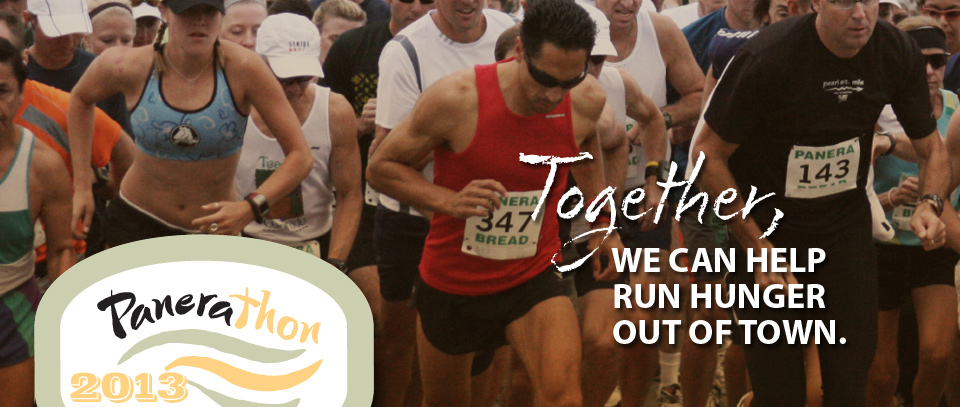
Panerathon 2013

Running for your health is good.  Running for a worthy cause is even better.  Panera bread is presenting three upcoming race venues, the proceeds of which will benefit local food banks.  All three venues will feature a 10K run, a 5K run/walk, and a free kids’ fun run for the 12 and under crowd.

In Colorado, choose either the Colorado Springs Panerathon on Saturday, August 3 or the Denver/Westminster Panerathon on Sunday, September 22.  Or if you reside in the Midwest, choose the Cincinnati, Ohio Panerathon, also on September 22.

Since we’re such huge fans of the Panera menu, we think the best part of these events is that they’ll feature finish line parties where fresh Panera Bread pastries, bagels and sandwiches will be served.

Register for one of these Panerathons now and help run hunger out of town.

Share this:

  • Share on X (Opens in new window) X
  • Share on Facebook (Opens in new window) Facebook
  • Share on LinkedIn (Opens in new window) LinkedIn
  • Share on Pinterest (Opens in new window) Pinterest
  • Print (Opens in new window) Print
  • Email a link to a friend (Opens in new window) Email
  • Share on Reddit (Opens in new window) Reddit
  • Share on Tumblr (Opens in new window) Tumblr
Like Loading...

Coach’s Daily Dose: Fitness and Fireworks

Posted by Coach Stacy & Debby Ridgell on July 3, 2013
Posted in: Coach's Daily Dose. Tagged: 4th of July, fitness history, President's Council, presidential fitness, presidential trivia. Leave a comment

Washington joggerWhile being introduced as the keynote speaker at a conference some years ago, I was described as a “missionary of fitness.”  That had a nice ring to it – and quite true, too.  Fitness is one of my greatest passions and only slightly trumped by my love for God and my country.  Therefore I strive to use my gifts and talents to motivate the citizens of our great nation to live active lives and practice healthy behaviors.

And so, to celebrate America’s birthday, Debby and I decided to test our readers’ knowledge of both fitness and American history.  Answer the questions below and see how well you do.  You’ll find the answers at the end of the quiz – but no peeking!

1. This U.S. President was so alarmed by a report that American youth were not as fit as European youths that he created the President’s Council on Youth Fitness, which is now known as the President’s Council on Fitness Sports and Nutrition.

(a) George Washington

(b) Dwight D. Eisenhower

(c)  Woodrow Wilson

(d) Abraham Lincoln

2. What do the seven rays of the Statue of Liberty represent?

(a) The seven dwarfs

(b) The seven deadly sins

(c)  The seven bones of the cervical vertebrae

(d) The seven continents

3. Under which President was an indoor track installed within the White House?

(a) Harry Truman

(b) Bill Clinton

(c)  John F. Kennedy

(d) Ulysses S. Grant

4. In 1959, this fitness guru did 1,000 jumping jacks and 1,000 chin-ups in 1 hour, 22 minutes to promote the TV show named after him.

(a) Jack LaLanne

(b) Captain Kangaroo

(c)  Dick Van Dyke

(d) Howdy Doody

5. This military hero and eventual president was described by a fellow officer accordingly:

“measuring six feet two inches in his stockings, and weighing 175 pounds…His frame is padded by well-developed muscles, indicating great strength.”

(a)  Bill Clinton

(b)  William Taft

(c)   George Washington

(d)  John Adams

6. A gifted college football player, this President turned down offers to play professionally in order to embark on a career in politics:

(a) Gerald Ford

(b) Richard Nixon

(c)  Barack Obama

(d) Jimmy Carter

7. He is the only Founding Father in the Swimming Hall of Fame and briefly contemplated becoming a swimming instructor.

(a)  Paul Revere

(b)  Thomas Jefferson

(c)  Alexander Hamilton

(d)  Benjamin Franklin

8. Frail and unhealthy as a child, this President was encouraged to engage in regular and rigorous physical activity in order to alleviate symptoms of asthma.

(a)  Teddy Roosevelt

(b)  John F. Kennedy

(c)  Andrew Johnson

(d)  Herbert Hoover

9. This President graduated from the same university (Texas State) as Coach Stacy.

(a)  George W. Bush

(b)  Lyndon Johnson

(c)  Ulysses S. Grant

(d)  George H. W. Bush

10. This body building contest was first held in 1940 at Madison Square Garden and won by John Grimek:

(a)  Mr. Universe

(b)  Mr. Right

(c)  Mr. America

(d)  Mr. Magoo

11. This President loved to swim and stripped down to his birthday suit every morning for a swim in the Potomac River.

(a) Warren G. Harding

(b) John Quincy Adams

(c)  Abraham Lincoln

(d) Franklin Delano Roosevelt

12. “Not less than two hours a day shall be devoted to exercise, and the weather shall be little regarded.  If the body is feeble, the mind will not be strong.”  Who said it?

(a) Thomas Jefferson

(b) Benjamin Franklin

(c)  Lyndon Johnson

(d) Calvin Coolidge

13. He was one of our nation’s unhealthiest Presidents.  At 5’11” and weighing 250 pounds, he was known affectionately by his nieces and nephews as “Uncle Jumbo.”

(a) Franklin Delano Roosevelt

(b) William Taft

(c)  Grover Cleveland

(d) Bill Clinton

14. He was an avid runner and elliptical trainer and was known to run a mile in 7-8 minutes.

(a) Dwight Eisenhower

(b) George W. Bush

(c)  Barack Obama

(d) Jimmy Carter

15. The first Chairman of the President’s Council on Fitness Sports and Nutrition later went on to become President of the United States.  Who was he?

(a) Harry Truman

(b) James Buchanan

(c)  Gerald Ford

(d) Richard Nixon

Answers:

  1. (b) Dwight Eisenhower
  2. (d) The seven continents
  3. (b) Bill Clinton
  4. (a) Jack LaLanne
  5. (c) George Washington
  6. (a) Gerald Ford
  7. (d) Benjamin Franklin
  8. (a) Teddy Roosevelt
  9. (b) Lyndon Johnson
  10. (c) Mr. America
  11. (b) John Quincy Adams
  12. (a) Thomas Jefferson
  13. (c) Grover Cleveland
  14. (b) George W. Bush
  15. (d) Richard Nixon

Share this:

  • Share on X (Opens in new window) X
  • Share on Facebook (Opens in new window) Facebook
  • Share on LinkedIn (Opens in new window) LinkedIn
  • Share on Pinterest (Opens in new window) Pinterest
  • Print (Opens in new window) Print
  • Email a link to a friend (Opens in new window) Email
  • Share on Reddit (Opens in new window) Reddit
  • Share on Tumblr (Opens in new window) Tumblr
Like Loading...

Ask Coach Stacy: Cardio or Weights – What’s Best for Losing Weight?

Posted by Debby Ridgell on June 27, 2013
Posted in: Ask Coach Stacy. Tagged: cardio vs. weight training, weight loss and exercise. 1 Comment

cardio vs weightsQ: My wife and I have both put on a few pounds since our wedding a year ago.  We recently joined a gym near our home and stop there after work 2-3 evenings a week.  I like to hit the weights, but my wife spends most of her time on the treadmill or elliptical.  We’re wondering which is better for burning calories – weight training or cardio workouts?  — Aaron; New Braunfels, TX

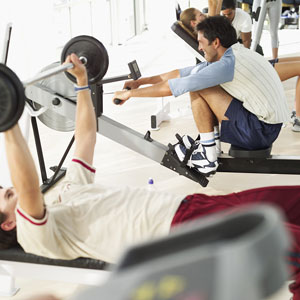
A: Actually, Aaron, your best bet for losing weight is combining the two.  Cardio training works the heart and lungs and increases your stamina.  Thirty minutes of cardio exercise burns more calories than thirty minutes of lifting.  Weight training, on the other hand, increases your muscles’ strength, as well as improves muscular definition and endurance.  This leads to increases metabolism, which in turn, will help you lose even more weight.  Stronger muscles leads to increased calorie burn – and so in the long run, strength training is very beneficial in losing weight and keeping it off.

Now, if time is a factor – as it is with most of us – try staggering your fitness routine throughout the week.  Get out and take a walk or go for a run together three nights, perhaps Sunday, Tuesday and Thursday.  But on Monday and Wednesday, hit the weights for an hour or so.

Of course, other factors play into your ability to actually lose weight – particularly, your food intake.  Ultimately, you’ll also both need to burn more calories than you consume if you want to shed pounds.  So a healthy and nutritious diet that features plenty of fresh fruits and veggies as well as whole grains will also contribute positively to your quest to lose weight.

And keep in mind that when you’re moving, you’re improving – so make sure that you factor in plenty of fun in your fitness regimen.  Play badminton, go for a hike, shoot some hoops – just stay active and the pounds will melt away.

Share this:

  • Share on X (Opens in new window) X
  • Share on Facebook (Opens in new window) Facebook
  • Share on LinkedIn (Opens in new window) LinkedIn
  • Share on Pinterest (Opens in new window) Pinterest
  • Print (Opens in new window) Print
  • Email a link to a friend (Opens in new window) Email
  • Share on Reddit (Opens in new window) Reddit
  • Share on Tumblr (Opens in new window) Tumblr
Like Loading...

Coach’s Kitchen: Fruit on the Barbie

Posted by Coach Stacy on June 21, 2013
Posted in: Coach's Kitchen. Tagged: fruit on the barbecue, grilled fruit recipes. 1 Comment

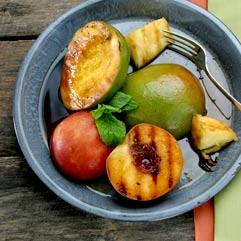
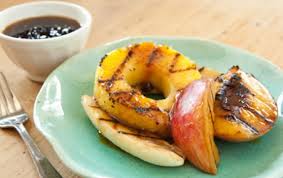
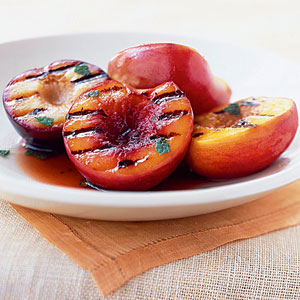
After dinner tonight take a pass on the cookies and cake and satisfy your sweet tooth by grilling a little fruit on the barbecue.  The natural sugars found in fruit caramelize while on the grill for an explosion of sweetness that is sure to please.  Grilling fruit is quick and easy – and it’s nutritious too.  Here are three recipes to get you started:


Grilled fruit with Balsamic Vinegar SyrupGrilled Fruit with Balsamic Vinegar Syrup (from www.mayoclinic.com)

1 small pineapple, peeled, cored and cut into wedges

2 large mangoes, cored and cut in half

2 large peaches, cored and cut in half

Nonstick, butter-flavored cooking spray

2 Tbs brown sugar

½ cup balsamic vinegar

Mint or basil leaves, for garnish


In a large bowl, combine the pineapple, mangoes and peaches.  Spray generously with cooking spray.  Toss and spray again to ensure the fruit is well coated.  Sprinkle with brown sugar.  Toss to coat evenly.  Set aside.

In a small saucepan, heat the balsamic vinegar over low heat.  Simmer until the liquid is reduced in half, stirring occasionally.  Remove from the heat.

Prepare a hot fire in a charcoal grill or heat a gas grill or broiler.  Away from the heat source, lightly coat the grill rack or broiler pan with cooking spray. Position the cooking rack 4-6 inches from the heat source.

Place the fruit on the grill racks or broiler pan.  Grill or broil over medium heat until the sugar caramelizes, about 3-5 minutes.

Remove the fruit from the grill and arrange onto individual serving plates.  Drizzle with balsamic syrup and garnish with mint or basil.  Serve immediately.

Yields: 6 servings

Per Serving: 120 calories, 0 g fat, 0 mg cholesterol, 5 mg sodium, 29 g carbohydrates, 3 g fiber, 1 g protein

_______________________________


Grilled Fruit with Caramelized Orange SauceGrilled Fruit with Caramelized Orange Sauce (from www.wholefoodsmarket.com)

½ cup orange juice

1/3 cup brown sugar

1 tsp orange zest

Canola oil

2 large peaches or nectarines, pitted and cut into thick wedges

2 ripe but firm bananas, peeled, halved lengthwise then crosswise

1 pineapple, peeled, cored and cut into thick slices


Whisk together juice, sugar and zest in a small saucepan and bring to a simmer over medium heat.  Reduce heat to medium low and simmer until reduced by half, 6-8 minutes.  Set aside to let cool completely.

Meanwhile, grease grill grates with oil and preheat to medium high heat.  Working in batches, arrange peaches, bananas and pineapple on grill in a single layer and cook, carefully flipping once, until just hot throughout and golden brown, 2-3 minutes.  Transfer fruit to bowls, drizzle with sauce and serve.

Yields: 6-8 servings

Per Serving: 150 calories, 2 g fat, 0 mg cholesterol, 0 mg sodium, 33 g carbohydrates, 3 g fiber, 1 g protein

______________________________


Grilled Stone Fruit AntipastoGrilled Stone Fruit Antipasto Plate (from www.myrecipes.com)

Dressing:

1 Tbs brown sugar

3 Tbs white balsamic vinegar

2 Tbs extra virgin olive oil

2 Tbs fresh lime juice

2 tsp vanilla extract

¼ tsp freshly ground black pepper

1/8 tsp salt

1/8 tsp hot sauce


Fruit:

1 pound firm black plums, halved and pitted

1 pound firm peaches, halved and pitted

½ pound firm nectarines, halved and pitted

½ pound firm pluots, halved and pitted

Cooking spray

Mint sprigs (optional)


Prepare grill.  To prepare dressing, combine first 8 ingredients in a small bowl, stirring well with a whisk.

To prepare fruit, place fruit on grill rack coated with cooking spray; grill 3 minutes on each side.  Remove from grill.  Drizzle fruit with dressing.  Garnish with mint sprigs if desired.

Yields: 8 servings

Per Serving: 129 calories, 4.1 g fat, 1.4 g protein, 23.8 g carbohydrates, 2.9 g fiber, 0 mg cholesterol, 39 mg sodium

Share this:

  • Share on X (Opens in new window) X
  • Share on Facebook (Opens in new window) Facebook
  • Share on LinkedIn (Opens in new window) LinkedIn
  • Share on Pinterest (Opens in new window) Pinterest
  • Print (Opens in new window) Print
  • Email a link to a friend (Opens in new window) Email
  • Share on Reddit (Opens in new window) Reddit
  • Share on Tumblr (Opens in new window) Tumblr
Like Loading...

Coach’s Daily Dose: Forget “Over the Rainbow” – Eat the Rainbow!

Posted by Coach Stacy & Debby Ridgell on June 12, 2013
Posted in: Coach's Daily Dose, Diet & Nutrition. Tagged: benefits of eating fruits and vegetables, eating local, eating the rainbow, healthy fruits and veggies. Leave a comment

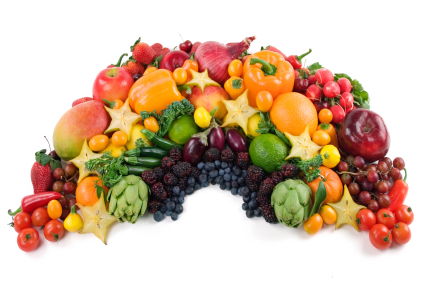
Edible RainbowEvery new client to Coach Stacy’s Healthy U is treated to a pep talk of sorts as he or she begins the journey toward better health.  We tout the importance of daily physical activity (“When you’re moving, you’re improving”), guide clients away from fads and extremes, and extol the virtues of balance and moderation.  And we always encourage healthier food choices through increased consumption of fruits and veggies.

It’s true – the more colors you eat, the more nutrients you get.  And so, as a general rule, we recommend that you fill half your plate at every meal with colorful fruits and vegetables.  Eat the rainbow – and what a great time of year to get in the habit, with Farmers Markets and roadside produce stands cropping up everywhere.  Fruits and vegetables contain essential fiber, vitamins, and minerals as well as numerous disease-fighting substances.  What’s more is they’re low in calories and quite filling, so they actually help you lose weight.  The choices are limitless:

Reds:  Red fruits and veggies are rich in Vitamins A and C, as well as manganese, quercetin (to fight colds and flu symptoms), and lycopene (to prevent cancer). Try tomatoes, red peppers, red apples, pomegranates, strawberries, red grapes, radishes, watermelon, beets, pink grapefruit, cranberries, cherries, and rhubarb.

Oranges/Yellows:  These foods provide Vitamins A, C and B6, plus potassium, manganese, and magnesium.  Good choices include bananas, yellow squash, pumpkin, yellow peppers, sweet potatoes, oranges, cantaloupes, peaches, carrots, nectarines, pineapples, and corn.

Greens:  Rich in Vitamin K, C and folic acid, these foods also contain powerful antioxidants that fight diseases and folate, which helps to maintain healthy blood.  Look for zucchinis, broccoli, spinach, green apples, peas, romaine lettuce, kale, asparagus, honeydew melon, avocados, artichokes, celery, okra, kiwi, and green grapes.

Blues/Purples:  These are the foods that provide flavonoids, which help to prevent short-term memory loss and maintain good cardiovascular health.  They’re also excellent sources of Vitamin A and C and antioxidants such as anthocyanin pigments, which keep your skin looking healthy and your blood vessels strong.  Try blueberries, purple grapes, plums, eggplant, blackberries, and purple cabbage.

Whites:  The “plain Janes” of the fruit and vegetable world, white foods still pack plenty of Vitamin C and K as well as folate.  Look for cauliflower, parsnips, onions, mushrooms, and potatoes.

Depending upon your age, gender, and activity level, it’s recommended that you consume 5 to 9 servings of fruits and vegetables each day for optimum health.  The overwhelming majority of Americans don’t even come close to that goal and if you’re in that category, here are a few ideas to help you sneak a few extra servings in each day:

  • Keep them handy.  Raw fruits and vegetables make great snacks.  Pack pre-cut servings in plastic bags or reusable containers and store them in the fridge so that you can grab them quickly when you need them.  Each snack, then, provides a serving.  Apple slices, berries and carrots are convenient choices.
  • Eat fruits for dessert.  They’ll satisfy your sweet tooth without adding to your waistline.
  • Enhance your food with fruit – sprinkle it on your pancakes or cereal or stir it into your yogurt.
  • Prepare vegetable dishes as your main dishes – experiment with stir fry and fancy salads.
  • Sneak veggies into your meals by incorporating them into sauces, dips, sandwiches, and casseroles.
  • Blend fruits and veggies into smoothies.

Ready to veg out and toot some fruit?  Here are a few resources to assist you in “eating the rainbow” for optimum health:

Local Harvest:  This is an outstanding website that will help you locate good sources of organic and locally grown produce.  It’s the number one informational resource for the “Buy Local” movement.  You can search the nationwide directory to find small farms and Farmers Markets in your area.  The site also features unique recipes for a wide variety of fruits and vegetables.

Fruits and Veggies – More Matters:  This is an initiative of the Product for Better Health Foundation, a nonprofit working to educate Americans about the obesity-fighting benefits of eating fruits and vegetables.  More Matters encourages the simple concept of filling half of one’s plate at mealtime with fruits and vegetables.

Pick FreshCooking Light Pick Fresh Cookbook:  Creating Irresistible Dishes From the Best Seasonal Produce – Rachel Quinlivan West, Editor

Vegetables PleaseVegetables, Please by Carolyn Humphries

Sunset Edible GardenSunset Edible Garden Cookbook: Fresh, Healthy Cooking From the Garden 

Share this:

  • Share on X (Opens in new window) X
  • Share on Facebook (Opens in new window) Facebook
  • Share on LinkedIn (Opens in new window) LinkedIn
  • Share on Pinterest (Opens in new window) Pinterest
  • Print (Opens in new window) Print
  • Email a link to a friend (Opens in new window) Email
  • Share on Reddit (Opens in new window) Reddit
  • Share on Tumblr (Opens in new window) Tumblr
Like Loading...

Posts navigation

← Older Entries
Newer Entries →
  • Enter your email address to follow this blog and receive notifications of new posts by email.

  • Recent Posts

    • Ask Coach Stacy: The 411 on Treadmills
    • No Excuses
    • Sage Advice from Our Favorite Cowboy
    • A Few of Our Favorite Fitness Things
    • Playing It Forward to Aurora Shooting Victims
  • Blogs I Follow

    • TED Blog
    • Denver Post Blogs
    • Blogging Runner
  • Categories

  • Twitter Updates

    Tweets by coachstacy101
  • Archives

Blog at WordPress.com.
TED Blog

The TED Blog shares news about TED Talks and TED Conferences.

Denver Post Blogs

When you're moving, you're improving!

Blogging Runner

COACH STACY'S HEALTHY U
Blog at WordPress.com.
  • Subscribe Subscribed
    • COACH STACY'S HEALTHY U
    • Join 131 other subscribers
    • Already have a WordPress.com account? Log in now.
    • COACH STACY'S HEALTHY U
    • Subscribe Subscribed
    • Sign up
    • Log in
    • Report this content
    • View site in Reader
    • Manage subscriptions
    • Collapse this bar
 

Loading Comments...
 

    %d