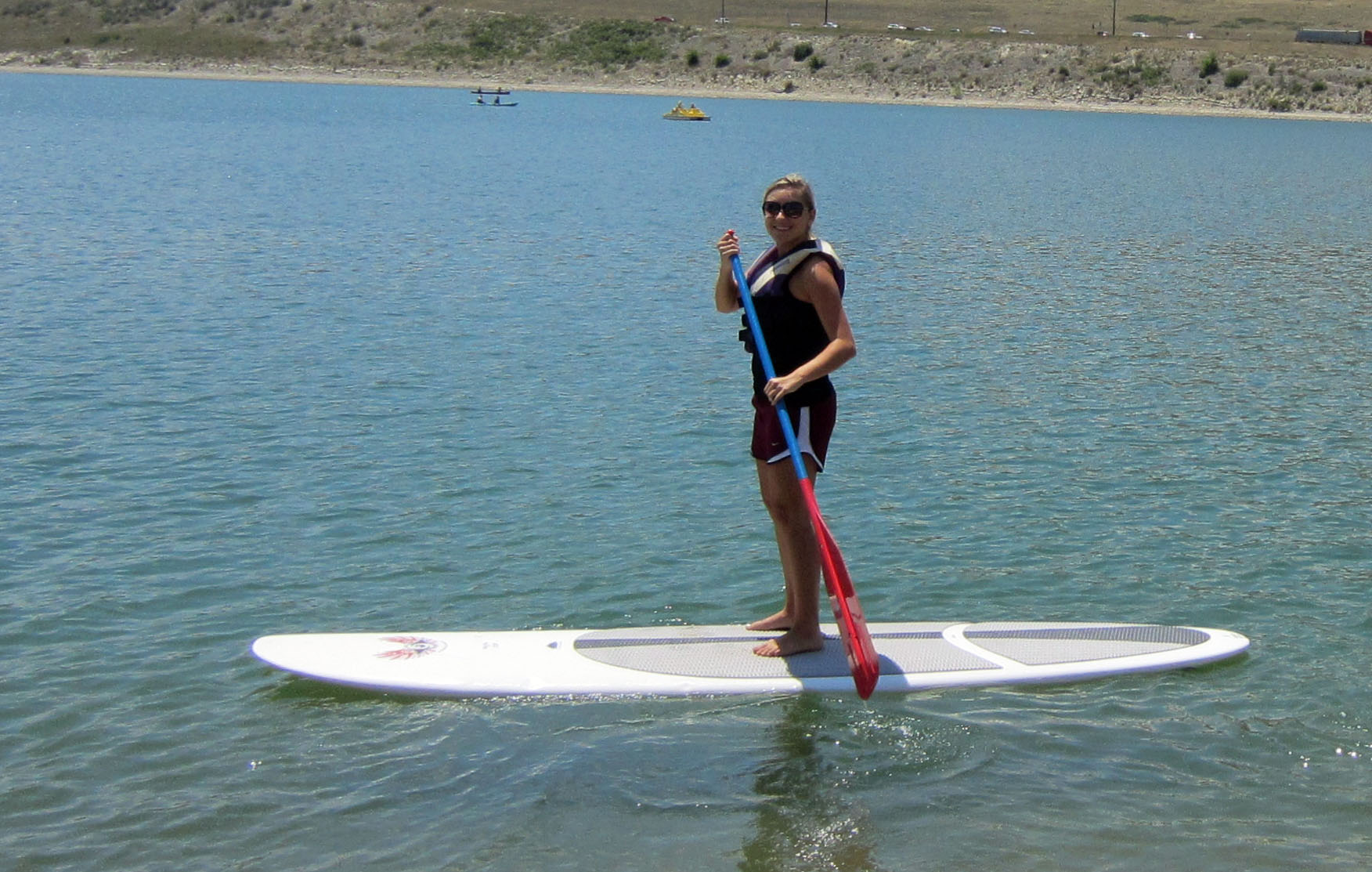
 If you’re looking for something new and fun to do on a hot summer day, look no further than your local lake or reservoir! These places offer a variety of awesome water sports from canoeing, to kayaking, to paddle boats, and the newest rage in the world of water: Stand Up Paddle Boarding, otherwise known as SUPing!
SUPing is a relatively easy activity to learn – much easier than, say, water skiing or kayaking. All you need is a board that resembles a surf board in design, and a one sided paddle for steering. Piece of cake, right?
Well…….not exactly.
A couple of weeks ago, my mom (Coach Stacy) and our editor (Debby) and I decided to take my cousin Tori, who was visiting from out of state, to experience this challenge. Hey, I was given the assignment to write about SUPing, so I figured I should at least try it first. Our outing started with canoeing, which was challenging, but great fun. The lake was so calm and peaceful – and once we got the hang of it, we didn’t want to stop. Plus it turns out that canoeing is a terrific arm workout. Minor details like, well, steering the canoe were somewhat over our heads, but fortunately, there weren’t that many other vessels out on the lake that day, so the Search and Rescue team never had to be called in…..
SUPing was next on our agenda. We started out just watching other SUPers out on the lake. They were so graceful and it all seemed so effortless. Well trust me, SUPing is not as easy as it looks, unless you have Hulk-like strength in both arms.
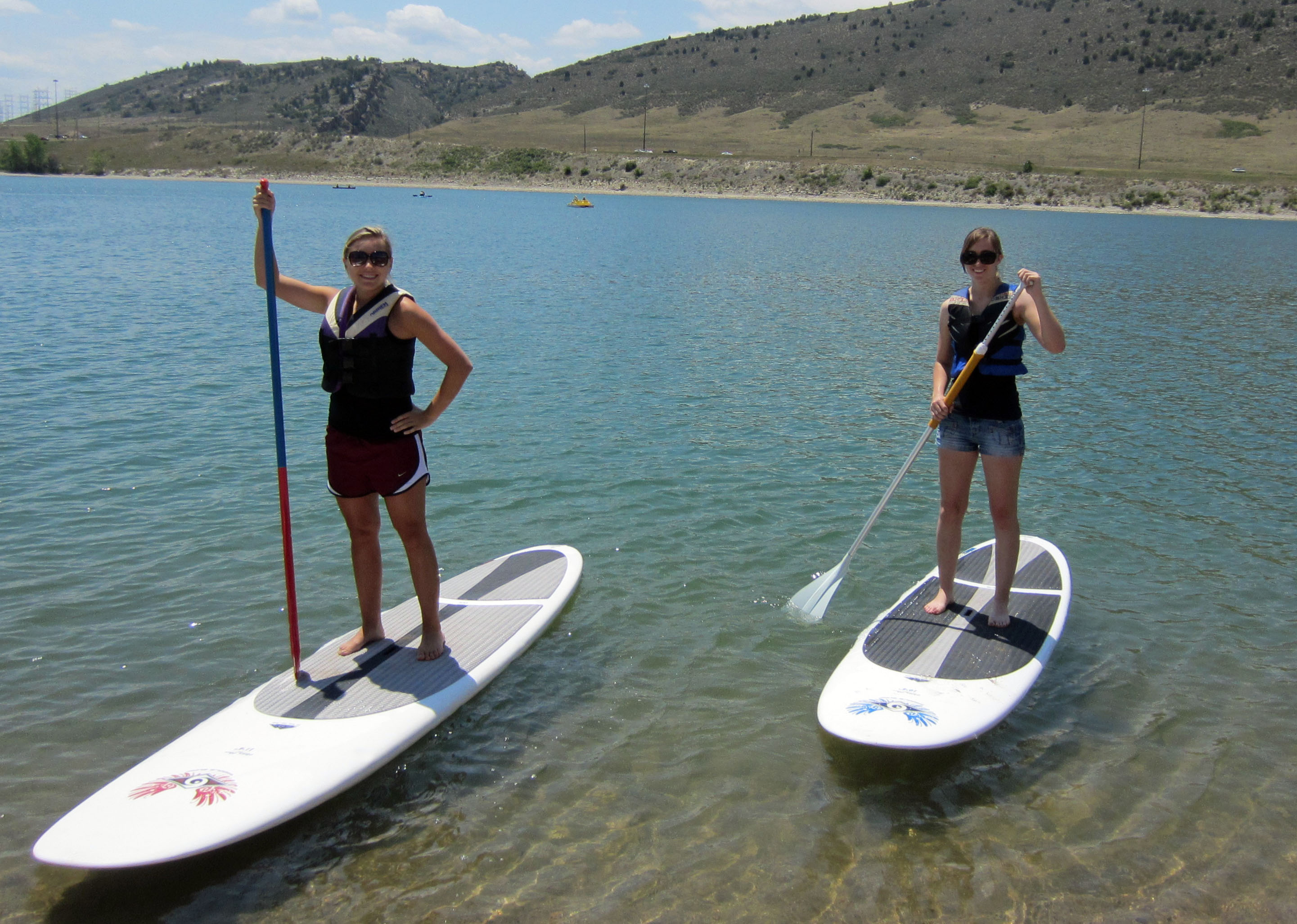 Tori and I went first; basically we were the guinea pigs. Coach Stacy and Debby wanted to see how the “pros” did it in order to avoid the risk of getting their hair wet when it was their turn! Wimps! However, once we got out to the deepest part of the lake, I was stuck in the same three foot area for a good five minutes. I tried steering every way possible, in fact it came to a point where I was lying flat on my stomach on the board attempting to paddle with my arms like I’ve seen surfers do. Unfortunately, that strategy didn’t work for me at all. In fact, everybody thought I’d just gotten sea sick.
So my cousin Tori, who was pretty good at SUPing and floating along just fine thank you very much, saw me lying face down on my board and quickly paddled over to save me. When she realized that I didn’t really need “saving,” and only needed to figure out how to steer the darned board, she gave me a quick lesson on “SUPing 101”: If you want to turn, you have to lean in the direction you want to go and paddle backwards, then just keep paddling straight to get back to shore. Thank goodness we brought her along because I would probably still be in the middle the lake today.
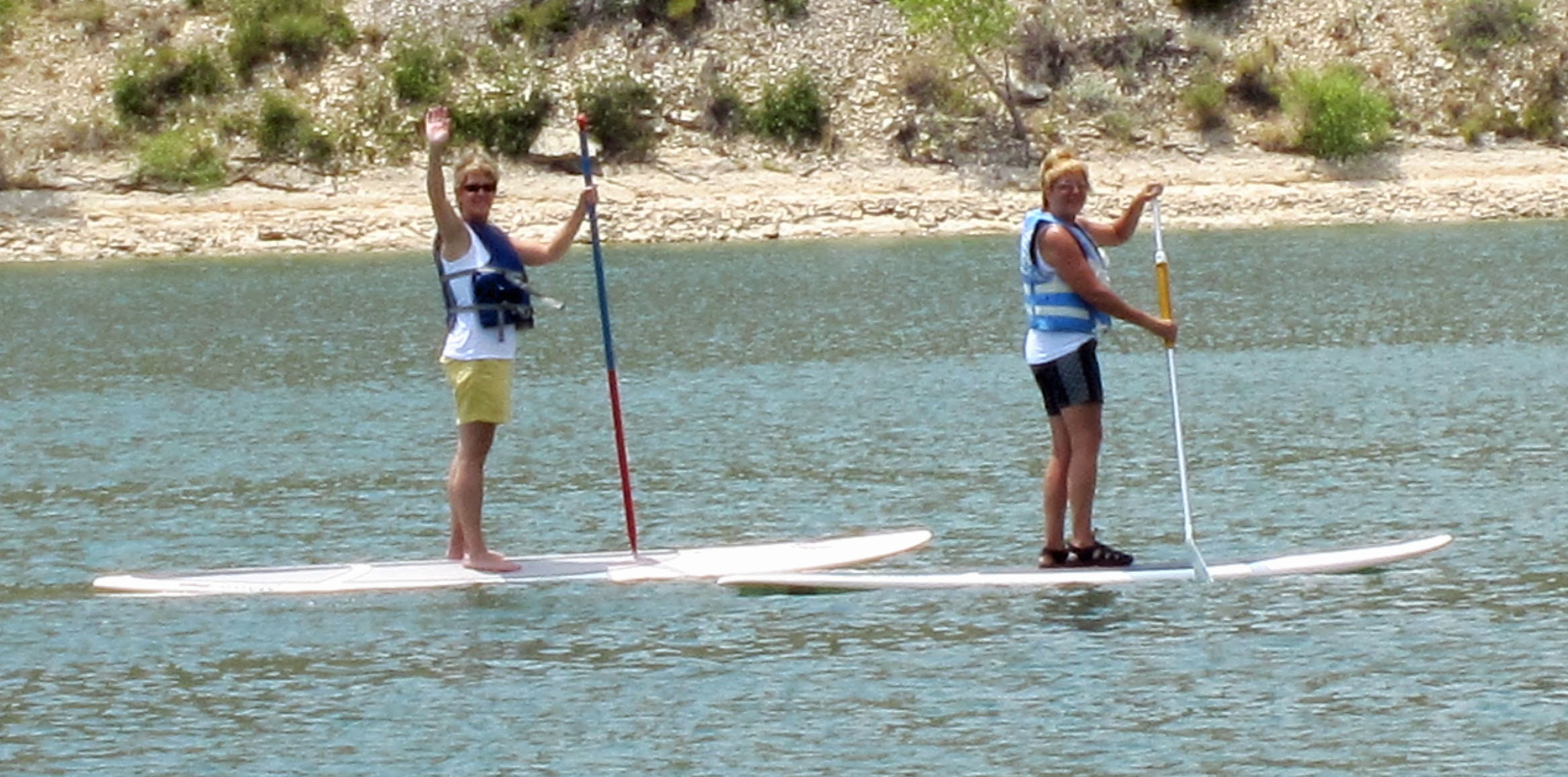
Once we all got the hang of it, it was literally smooth sailing from there! Don’t let my slight struggles scare you away from trying this exhilarating sport. It is definitely something you should go out and try before the summer is over! When the forecast for the day is sunny and blue skies, what better way to spend it than on the water? Here are some tips to get you started:
- You really only need three important pieces of equipment for Stand Up Paddleboarding: A paddleboard, a paddle, and a Personal Flotation Device (PFD), or lifejacket.
- As far as the board goes, there are different sizes. Usually any board in the 10-12 foot range will be fine for just about anyone. But the larger the board, the more weight it can comfortably hold. So 10 foot boards are good if you weigh under 150 lbs, 11 foot boards are good if you are in the 150-200 lb range, and 12 foot boards are good if you are 200 lbs or heavier.
- The paddle shouldn’t be too tall for you, otherwise steering will be difficult. It shouldn’t be taller than your reach, and you should have a slight bend in your elbow, that’s how you will know if it’s the right sized paddle.
- Some experts also recommend that you equip yourself with a whistle (for blowing if you’re in distress) and a flashlight (for night SUPing).
- Mounting the board may be the hardest part of SUPing. Mount the board in shallow water and start in the kneeling position. Once you’re ready, switch to a standing position, one foot at a time and place your feet just behind the center point (the sweet spot) of the board.
- Keep your feet parallel about hip-width. SUPing is a great core workout – use your core to help you balance. Try to stand up straight with your knees slightly bent.
- Paddling is easy. If you’re paddling on the right side, your left hand should be at the top of the paddle and your right hand about 1/3 of the way down. If you’re paddling on the left side, reverse that. Keep your strokes smooth and short and close to the paddleboard.
- Another easy method for turning your paddleboat: If you want to turn right, paddle on the left side. If you want to turn left, paddle on the right side.
Note from the Editor: Stand Up Paddleboarding is the fastest growing water sport in the U.S. today. It’s an outstanding full-body workout involving your arms, legs and core and it’s growing in popularity as a cross-training activity for ice skaters, skiers, snowboarders, and cyclists. AND it’s great fun.
If you’re ready to jump in, check out this excellent video, SUP: The Basics, produced by www.eastcoastpaddlesurfing.com. It’s very basic and includes step by step instructions on paddle boarding, everything from mounting to steering your board.

 COACH STACY'S HEALTHY U