COACH STACY'S HEALTHY U

When you're moving, you're improving!

  • About
  • Camp GO™
  • Class Schedules
  • Contact Us
  • We Play It Forward

…..and I Approve this Message

Posted by Coach Stacy & Debby Ridgell on November 7, 2012
Posted in: Coach's Daily Dose. Tagged: election stress, stress disorder, stress prevention, stress treatment. 6 Comments

It’s finally over.  The tsunami of robo-calls, campaign commercials, yard signs and debates – it’s all history, for now. But you may be feeling a bit shell-shocked these days, and for good reason.  Ugly political arguments – and the incessant one-upmanship – have significantly increased stress levels in many individuals who are already stressed by the sagging economy and unemployment.  However, if you can identify the stress triggers in your life, you can develop solid and consistent coping mechanisms to deal with them.

What exactly is stress?  You certainly feel it the moment you have a meltdown.  Loosely defined, stress is a physical, chemical or emotional factor that causes bodily or mental tension.  Stress can actually be very beneficial, at times, causing the adrenaline rush that helps you escape from extreme danger.  Everyday, however, persistent stress is not healthy, because it wears you down mentally, emotionally, and even physically.  Its sources are many – election overload for one, but also family, work, relationships, health issues, and financial problems. When left untreated, stress can result in disease and premature death.  The goal, then, is to keep it under control.

Start by focusing on those aspects of your life you can control such as your food diet, attitude and exercise habits. You can’t control the daily weather, taxes, traffic and death. But you can control how you respond to these stress triggers.

How do you know if you have stress overload?  Take an inventory of the symptoms below.  If you have more than one, you may be suffering from stress and should seek medical treatment if the symptoms continue:

  • Headaches often
  • Rapid heart rate
  • Increased respiration
  • Elevated blood pressure
  • Increased body temperature
  • Stomach distress
  • Fatigue
  • Depression
  • Weight gain/loss
  • Decreased libido
  • Hormonal issues in both men and women
  • Weakened immune system – tendency to catch colds or develop fever blisters often
  • Impaired memory – brain shrinkage

Stress can actually cause such maladies as cancer, heart disease, hypertension, diabetes and autoimmune disorders (lupus, arthritis, multiple sclerosis). These chronic diseases cost the U.S. 1 trillion dollars per year and the price tag is going up.  According to a report by Milken Institute, a research think tank, the economic impact of chronic illness goes far beyond the $277 billion to treat the disease and takes its biggest toll on economic productivity in sick days by employees. What’s more is that ongoing stress can shorten your life by 15-20 years.

The good news is that you can save both money and sick leave if you practice a little prevention where stress is concerned.  For the cost of your time spent taking your daily walk, you might just avoid having to take blood pressure and cholesterol medications.  Dodge diabetes and you save yourself $13,000 dollars per year.  If you keep your body healthy by exercising and eating right, you can delay or stop the likelihood of most diseases.

Life is full of peaks and valleys.  To help you experience more peaks than valleys, we have developed ten stress busters for you to incorporate into your daily routine:

  1. Think positively – expect good things
  2. Get active – keep moving
  3. Make healthy food choices
  4. Cultivate inner peace – meditate, pray
  5. Rest – take power naps
  6. Get out of the house or office each day and breathe, refresh, visit
  7. Unplug yourself from the TV, computer, iPod
  8. Get wet – soak in a hot tub or bubble bath with aromatherapy
  9. Take small steps – do one task at a time; prioritize, downsize, organize
  10. Laugh – find someone or something to make you smile


To complement your Stress Busters try these 3 exercises:

  1. Take a mental vacation to a place that you find peaceful.  Visualize a balloon – float with it to that peaceful place.
  2. Sit comfortably and focus on being relaxed and breathing normally.  Starting with your toes, tighten each muscle all the way up to your head for a 3 second squeeze, then release.
  3. Stand or sit and shadow box, starting with slow punches that get faster.  Warning:  Do not punch items or co-workers as that can be hazardous to both your health and career.

The bottom line is that if you reduce stress, you’ll be healthier and live longer.  So chill out and stay active.  As Coach Stacy always says “When you’re moving you’re improving!”

Share this:

  • Share on X (Opens in new window) X
  • Share on Facebook (Opens in new window) Facebook
  • Share on LinkedIn (Opens in new window) LinkedIn
  • Share on Pinterest (Opens in new window) Pinterest
  • Print (Opens in new window) Print
  • Email a link to a friend (Opens in new window) Email
  • Share on Reddit (Opens in new window) Reddit
  • Share on Tumblr (Opens in new window) Tumblr
Like Loading...

Coach’s Daily Dose: Aba-daba-do

Posted by Coach Stacy on November 2, 2012
Posted in: Coach's Daily Dose, Physical Activity. Tagged: Ab Exercises, ab muscles, abs, core fitness. Leave a comment

Most Americans today have a better chance of winning a million dollars than developing rippling, 6-pack ABS.  And while our society seems fixated on judging people by their midsections, a whopping 65% of the population is unfit.  Ironic, isn’t it?

Most people only think about their ABS when they want to look good.  But, actually your ABS serve many useful bodily functions like:

  • Supporting your back
  • Protecting internal organs
  • Assisting with good posture and core balance
  • Squeezing power
  • Providing movement through spinal flexion

Are you one of the many Americans whose ABS have gone missing?  If so, here’s how to scope them out.  Find your ribs and your pubic region.  The upper and lower rectus abdominis (technical name for ABS) are actually one thick sheath of vertical muscle that runs under the ribcage to the pubis and wraps around the waist like a girdle.  A popular myth you hear a lot in the gym is that you should perform separate exercises for upper and lower ABS.  In fact, these muscles are interconnected and work together.  Think of a rubber band.  You cannot pull one end without the other end working.  Both are working at all times even though the exercise may start at a different level.  ABS are like any other muscle group in that they require 24-48 hours of rest between workouts.

It takes strength training, aerobic activity, and a healthy food diet to beat the curse of the abdominal bulge.  Another myth you hear around the gym is that you can spot-reduce your ABS by doing thousands of sit-ups.  This is false – body fat loss is a process involving the whole body, not just the gut.  Exercising your ABS will strengthen your abdominal wall.  But without a proper food diet, abdominal exercises will do little to reduce your body fat stores.  So you could grunt through 1,000 crunches, but if you “biggie-size” your meals, you’ll never see results.

AB Fit Tips

  • Concentrate on quality not quantity
  • Start at the beginning level and progress up
  • Focus on overall fitness
  • Remember to breathe
  • Balance stomach and back exercises
  • Do not pull on your neck or lift with your neck
  • Relax hip and leg muscles
  • Keep feet flat on floor
  • Rest ABS every other day

Now, tackle your ABS with a variety of different exercises, not just crunches.  Here are some of my favorite AB exercises:

Floor Exercises

Reverse crunches: Lie flat on your back, your hands behind your head. Bend knees 90 degrees. Place hands by side or under buttocks for support and make sure your lower back remains flat on the floor. Tightening your lower abdomen, lift your buttocks a few inches off your hands/floor. Now, contracting your abdominal muscles, lift your pelvis off the floor, bringing your knees towards your chest. Then, without relaxing the contraction in your abs, lower feet to the floor. Then relax by straightening your body out. You can repeat another set or two. Remember to keep breathing during the exercise, and not allow your back to arch.

TIC TOC Abs – Lie on your back and lift both legs straight up with your arms out to each side for balance.  With feet together, move legs from side to side in tic-toc fashion.

Figure 8 – Lie on your back and lift both legs straight up.  With feet together, make a figure eight in the air with your feet.

Russian Twists (or “Tebows”) – Assume a boat pose position and with arms holding a ball or hands together twist to each side while maintaining the boat pose.

Sit and tucks – Assume boat position and slowly straighten legs and arms then tuck back in.

Bicycle move– Sit back with hands by your side on the floor and lift your legs up.  Slowly bicycle legs a few inches off the floor as if pedaling a bike.

Abs crisscross – Lie on back lift shoulders off the floor and touch hand to opposite knee.

Ab Scissors – Lie on your back legs bent 90 degrees and slowly open them like scissors in and out.

Fitness Ball – for the more advanced

Crunches on ball

Figure 8 (lying down, put ball between ankles and trace a figure 8 in the air)

Tick Tock (lying down with ball between ankles, move legs like a pendulum side to side)

Reverse crunches (lying down with ball behind knees, bring knees to chest)

Bosu Ball

Crunches

Sidebend crunches

Bicycles

Medicine Ball (or Playground ball)

Seated twist on the floor with legs bent and off the floor (rotate the ball from side to side)

Overhead sit-up (lifting ball either on your chest overhead while doing a sit-up)

Partner twist (while standing back-to-back with a partner, twist and hand ball to partner)

Share this:

  • Share on X (Opens in new window) X
  • Share on Facebook (Opens in new window) Facebook
  • Share on LinkedIn (Opens in new window) LinkedIn
  • Share on Pinterest (Opens in new window) Pinterest
  • Print (Opens in new window) Print
  • Email a link to a friend (Opens in new window) Email
  • Share on Reddit (Opens in new window) Reddit
  • Share on Tumblr (Opens in new window) Tumblr
Like Loading...

Best Bets: Halloween Candy

Posted by Debby Ridgell on October 30, 2012
Posted in: Diet & Nutrition. Tagged: Halloween Candy, tips for a healthy Halloween, weight gain from Halloween candy. 1 Comment

For many of us, the scariest part of Halloween is the heightened potential for calorie overload.  Of course, the best defense is a strong willpower.  But if you’re sensing your defenses weakening, your best bet is to buy and eat candy that is not terribly high in calories, fat, and sugar.  Unfortunately, that’s something of a tall order where typical Halloween treats are concerned.  Here are some of your best bets for Halloween candy:

For Nutty Candy

Choose:

Snickers Fun Size

80 calories; 1.5 g. saturated fat; 8 g. sugar

Avoid:

Baby Ruth Fun Size

85 calories; 2.3 g. saturated fat; 10 g. sugar

Candy Pieces

Choose:

Reese’s Pieces Snack Size

67 calories; 2.7 g. saturated fat; 7.3 g. sugar

Avoid:

M&Ms Peanut Fun Size

90 calories; 1.8 g. saturated fat; 9 g. sugar

Wafery/Cookie Bars

Choose:

Kit Kat Snack Size

70 calories; 2.3 g. saturated fat; 7 g. sugar

Avoid:

Twix Fun Size

80 calories; 3 g. saturated fat; 8 g. sugar

Caramel Candy Pieces

Choose:

Milk Duds Snack Size

53 calories; 1.2 g. saturated fat; 9 g. sugar

Avoid:

Rolo Snack Pack

80 calories; 2.5 g. saturated fat; 11 g. sugar

Gummy Candy

Choose:

Sour Patch Kids Mini Bag

50 calories; 0 g. saturated fat; 10 g. sugar

Avoid:

Dots Mini Box

70 calories; 0 g. saturated fat; 11 g. sugar

Fruity Candy

Choose:

Starburst Fun Size

40 calories; .8 g. saturated fat; 6 g. sugar

Avoid:

Skittles Fun Size

60 calories; .7 g. saturated fat; 11 g. sugar

Hard Tart Candy

Choose:

Smarties

25 calories; 0 g. saturated fat; 6 g. sugar

Avoid:

Nerds Mini Box

50 calories; 0 g. saturated fat; 12 g. sugar

Chewy Candy

Choose:

Wonka Mini Laffy Taffy

30 calories; .3 g. saturated fat; 4.2 g. sugar

Avoid:

Sugar Daddy

53 calories; .2 g. saturated fat; 8 g. sugar

Mixed Candy Bars

Choose:

3 Musketeers Fun Size

63 calories; 1.3 g. saturated fat; 10 g. sugar

Avoid:

Butterfinger Fun Size

85 calories; 1.8 g. saturated fat; 8.5 g. sugar

and

Reese’s Peanut Butter Cup Snack Size

110 calories; 2.5 g. saturated fat; 11 g. sugar

Sugary Candy Pieces

Choose:

Brach’s Candy Corn Fun Size Bag

53 calories; 0 g. saturated fat; 11.7 g. sugar

Avoid:

Sugar Babies Snack Size

80 calories; 0 g. saturated fat; 15 g. sugar

Despite all your good intentions, it’s challenging trying to avoid diet derailment this time of year.  Here are a few tips for avoiding weight creep from Halloween candy this year:

  1. Purchase candy you don’t like – then you’ll be less likely to eat it.
  2. Proactively manage your hunger so that you don’t experience hunger pangs.  Keep healthy finger foods and snacks readily available both at home and at work so that you’re reaching for those almonds or apple slices instead of the Snack Size Snickers.  Eat a good, healthy breakfast and lunch, and in between meals sip on a low cal beverage like tea.
  3. Hide the candy – out of sight = out of mind.
  4. Remember Coach Stacy’s mantra:  Everything in moderation.  Enjoy one piece of your favorite candy – eat it slowly and savor every bite.
  5. Schedule a little extra physical activity to help burn off candy calories.

Share this:

  • Share on X (Opens in new window) X
  • Share on Facebook (Opens in new window) Facebook
  • Share on LinkedIn (Opens in new window) LinkedIn
  • Share on Pinterest (Opens in new window) Pinterest
  • Print (Opens in new window) Print
  • Email a link to a friend (Opens in new window) Email
  • Share on Reddit (Opens in new window) Reddit
  • Share on Tumblr (Opens in new window) Tumblr
Like Loading...

Flu Fighters: Top Ten Immune Boosting Foods

Posted by Debby Ridgell on October 25, 2012
Posted in: Diet & Nutrition. Tagged: antioxidants, flu fighters, immune boosting foods. 1 Comment

The days are getting shorter, the air has turned crisp and the trees are all but bare.  Autumn has, indeed, arrived, along with our increasing susceptibility to colds and flu.  Coach Stacy has provided a Ten Step Prevention Game Plan for avoiding illness – including a well balanced diet.  But believe it or not, there are foods you can eat that actually help prevent the onset of colds or the flu by boosting your immunity:

  1. Citrus Fruits and Berries:  Oranges, grapefruit, strawberries, blueberries, kiwi and papaya – they’re all packed with immune-boosting Vitamin C, which is a powerful antioxidant that helps increase the production of white blood cells, your body’s first defense in fighting disease.
  2. Leafy Green Vegetables:  These contain Vitamin E, which is an antioxidant that promotes the production of bacteria fighting B-cells.  Eat a lot of spinach, kale and broccoli to ward off cold and flu germs.
  3. Salmon:  Coldwater fish such as salmon and mackerel are excellent sources of omega 3 fatty acids, which are great for heart health, but also for strengthening cell membranes against attacking germs.
  4. Pumpkin Seeds and Sunflower Seeds:  Both types of seeds are all-around healthy snacks and toppings, when eaten in moderation.  In addition, pumpkin seeds contain beta carotene, which is converted into Vitamin A, which assists those infection-fighting white blood cells.  Sunflower seeds are packed with Vitamin E, a fat-soluble antioxidant and immune booster.
  5. Yogurt: Live active cultures contain probiotics (the good kind of bacteria) which play a huge role in keeping harmful bacteria out of the gut.  One serving of organic or plain yogurt per day will serve to improve immune function in most people.
  6. Sweet Potatoes and Carrots: Served cooked or raw both of these vegetables contain Vitamin A, which plays a strong role in immune defense, but also assists the liver in flushing out harmful toxins from the body.
  7. Mushrooms: Try tossing a handful of these in your salad or stir-fry a couple of times per week.  Mushrooms contain selenium which helps your white blood cells fight bacteria and infections.
  8. Garlic:  Not only does garlic enhance the flavor of many dishes, but it also acts as a powerful antioxidant.  Garlic is composed of the sulfur-containing compounds allion and allicin, which serve to literally “stink out” various infections.
  9. Tea:  Drink tea daily to strengthen the body’s immune defense system.  Tea contains catechins, which combat free radicals.
  10. Lean Beef and Pork:  Not only does their protein serve as building blocks for bones, muscles and blood, these meats also contain iron and zinc, both of which help the immune system function optimally.

So there you are – ten flu fighters to keep you healthy and vibrant all winter long.  Eat ‘em up!

Share this:

  • Share on X (Opens in new window) X
  • Share on Facebook (Opens in new window) Facebook
  • Share on LinkedIn (Opens in new window) LinkedIn
  • Share on Pinterest (Opens in new window) Pinterest
  • Print (Opens in new window) Print
  • Email a link to a friend (Opens in new window) Email
  • Share on Reddit (Opens in new window) Reddit
  • Share on Tumblr (Opens in new window) Tumblr
Like Loading...

Coach’s Daily Dose: Staying in the Game During Cold and Flu Season

Posted by Coach Stacy on October 21, 2012
Posted in: Coach's Daily Dose. Tagged: preventing colds and flu, prevention. 1 Comment

Like it or not, the cold and flu season is upon us.  Germs are lurking all around – in our colleagues, our customers, in public places and in the privacy of our own homes.  In order to combat these germs, you’ll need this Ten Step Prevention Plan, which will help you stay in the game during cold and flu season. 

Meet “Team Prevention”

1.       Rest and Relaxation

When you’re run down, stressed and fatigued, you’re much more susceptible to colds and flu.  What’s more is that once you catch a cold or the flu, stress seems to make the symptoms worse.  Studies have shown that chronic stress and fatigue raises cortisol levels in the body, thus weakening your immune system and your ability to fight off and recover from a cold or the flu.   Your goal, then, is twofold:  keep stress under control and get plenty of rest.  Throughout the day when you feel yourself tensing up and stress seems to be taking over, take a mini “stress vacation” by practicing deep breathing or visualizing a peaceful place.  Also, take steps toward improving your sleep habits, if necessary, so that you’re getting 7 to 8 hours of sleep nightly.

2.       Get Vaccinated

Flu season peaks between late December and early March so the CDC recommends getting a flu shot in October or November. If you’re leery of shots, you can opt to receive the flu mist instead.  Within 2 weeks of the shot, antibodies develop and provide you protection against flu symptoms. Getting a good night’s sleep the day before is recommended as sleep boosts the effectiveness of the immunization.

3.       Hands Clean, Hands off

This is extremely important for those of us who work with the public and share work spaces.  The CDC recommends frequent hand/fingernails washing with soap and water for a minimum of 20 seconds or as long as it takes to sing a slow “Happy Birthday.”  If soap and water are not readily available, use hand sanitizer with at least 60% alcohol.  One more tip:  Make sure you close the toilet when you’re finished using it, as germs can propel up to 20 feet from the toilet when you flush.

Not letting your hands rub your eyes and nose is not as easy as it sounds.  In fact, the average adult touches his or her face 18 times per minute, and the average child 80 times per minute.  Obviously, if you limit the number of times you touch your face, you limit the likelihood that you’ll infect yourself with the germs lurking in your workstation, on the grocery cart, on doorknobs and TV remotes.  Live germs can live for 20 minutes to 2 hours on a surface.  At work, your hands touch many items that carry germs so it’s a good idea to wipe down your work station and shared pens and pencils frequently.  Be sure to wash your hands after you ride the light rail, the bus or an elevator or after you’ve opened a door.   Also, if you’re washing your hands in a public place get your towel first and stash it under your arm while you wash.  Then use it to open the door to the washroom as you leave.

4.       Take Cover

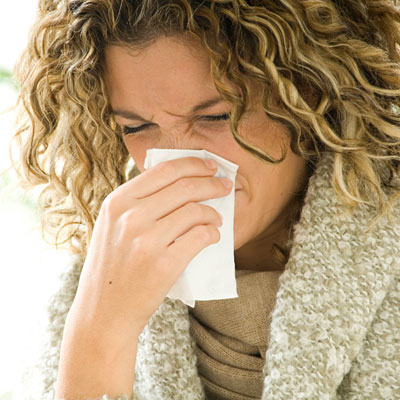
When people sneeze and cough, they spread thousands of droplets that can potentially infect those around them when they land.  Try to sneeze or cough into the crook of your elbow instead of your hands.  Another option is to sneeze into a tissue – if you can grab one fast and throw it away immediately afterward.  Also, if you see someone coughing or sneezing, move away and try not to walk into the path of their hacking so that the germs don’t land on you.

5.       Sunshine and the Vitamin D-efense

Vitamin D is known as the sunshine vitamin and is found in foods such as fish, eggs, fortified milk and cod liver oil.  The sun also contributes significantly to the daily production of vitamin D, and as little as 10-15 minutes two to three times per week of exposure is thought to be enough to prevent deficiencies.  Though getting plenty of vitamin D — more than your diet can offer — appears to provide potent protection against colds, flu and even pneumonia, real sun exposure packs extra benefits.  Vitamin D is the only vitamin that the body can manufacture itself. The only requirement is sunshine, specifically ultraviolet B rays. But the sunshine approach doesn’t work for everyone.  Be sure to take a break and get outdoors for a little while each day, as fresh air and sunshine are healthy for you.  In fact, whenever possible, let some fresh air in during the winter months to blow out the germs that circulate in crowded rooms.

The Big D’s major job is to maintain normal blood levels of calcium and phosphorus. Vitamin D aids in the absorption of calcium, helping to form and maintain strong bones. Recently, research shows vitamin D may provide protection from osteoporosis, hypertension (high blood pressure), cancer, and several autoimmune diseases.  Vitamin D is listed in most multivitamins, usually in strengths from 50 IU (International Units) to 1,000 IU as soft gels, capsules, tablets and liquids.  Adult recommendations are 5 micrograms (200 IU) daily for all individuals under the age of 50.  For individuals 50-70 years of age, 15 micrograms daily (600 IU) is suggested.  The upper limit for vitamin D has been recommended as 2,000 IU daily due to toxicities that can occur when taken in higher doses.

6.      Physical Activity

Being physically active is one of the best ways Americans of all ages can improve their health.  Research has established a link between moderate, regular exercise and a strong immune system.  Studies report that recreational exercisers reported fewer colds once they begin running.  Moderate exercise is linked to a positive immune system response and a temporary boost in the production of macrophages, the cells that attack bacteria.  It is believed that regular, consistent exercise can lead to substantial benefits in immune system health over the long term.  Recent studies have shown that there are physiological changes in the immune system as a response to exercise.  During moderate exercise, immune cells circulate through the body more quickly and are better able to kill bacteria and viruses.  After exercise ends, the immune system generally returns to normal within a few hours, but consistent, regular exercise seems to make these changes a bit more long-lasting.

 7.     Healthy Eating

Eating a well balanced, healthy food diet is not only good for your overall health, but it boosts your immune system.  There are many healthy foods that can help you fight off the flu and other viral infections, but in general the best foods you can consume are those that are as close to their natural state as possible.  Foods that are highly processed lose most of their nutritional value.  Tune in later this week for healthy eating tips for combating colds and the flu.

8.      Operation Hydration

Survival is dependent upon water.  You can survive for weeks without food – but you’ll die within days without water.  Water makes up approximately 65% of our body weight:  20% of our bones, 70% of our brains, 75% of our muscles, and 80% of our blood is made up of water.  A loss of more than 10% poses a significant health risk and a loss of 20% will result in death.  The body’s need for water is second only to oxygen, as it flushes out your system, washing out toxins.   And frankly, proper hydration helps to keep wrinkles at bay.  A typical, healthy adult needs the equivalent of eight 8-ounce glasses of water each day.  How can you tell if you’re getting enough liquid?  If the color of your urine runs close to clear, you’re getting enough.  It it’s deep yellow, you need more. 

9.      Probiotics

Some studies have shown that eating a daily cup of low-fat yogurt can reduce your susceptibility to colds by 25%.  Researchers think the beneficial bacteria in yogurt may stimulate production of immune system substances that fight disease.  If you do not like yogurt you can purchase probiotics in pill form with the beneficial bacteria in it.

10.  Limiting Alcohol

Heavy alcohol use destroys the liver, the body’s primary filtering system, which means that germs of all kinds won’t leave your body as fast.  Heavier drinkers are more prone to initial infections as well as secondary complications.  Alcohol also dehydrates the body, which slows the flushing away of toxins.

Share this:

  • Share on X (Opens in new window) X
  • Share on Facebook (Opens in new window) Facebook
  • Share on LinkedIn (Opens in new window) LinkedIn
  • Share on Pinterest (Opens in new window) Pinterest
  • Print (Opens in new window) Print
  • Email a link to a friend (Opens in new window) Email
  • Share on Reddit (Opens in new window) Reddit
  • Share on Tumblr (Opens in new window) Tumblr
Like Loading...

Health-e Apps: Food + Educate = Fooducate

Posted by Debby Ridgell on October 18, 2012
Posted in: Diet & Nutrition, Health-e Apps. Tagged: Fooducate, healthy apps, healthy eating. Leave a comment

Here’s a handy little app – and perfect for those who want to eat healthier, without the rigors and pitfalls of a structured diet.  Fooducate will help you lose weight and improve your overall health simply by making better food choices.

Get the app on your iPhone or Android, then head to the supermarket and start scanning product barcodes.  Fooducate will assign each product a letter grade then translate its food label, outlining the products’ nutritional hazards and highlights – such as trans fats, artificial colors or flavors, and added sugars – as well as the realities of its calories per serving.  Then – and here’s the cool convenience perk – Fooducate offers better product options, which you’ll find right there in the same grocery aisle.

Users like the fact that Fooducate rates processed and packaged foods which, for better or worse, are staples in most of our daily diets.  Recently chosen by Apple as the best health app of the year, Fooducate also won First Place for the Nutrition/Healthy Eating category in the Surgeon General’s 2012 Healthy Apps Challenge.

Download the app today to “healthify your supermarket choices.”

Share this:

  • Share on X (Opens in new window) X
  • Share on Facebook (Opens in new window) Facebook
  • Share on LinkedIn (Opens in new window) LinkedIn
  • Share on Pinterest (Opens in new window) Pinterest
  • Print (Opens in new window) Print
  • Email a link to a friend (Opens in new window) Email
  • Share on Reddit (Opens in new window) Reddit
  • Share on Tumblr (Opens in new window) Tumblr
Like Loading...

Happy Boss’s Day, by George!

Posted by Coach Stacy on October 16, 2012
Posted in: Motivation. Tagged: Boss's Day, Coach Stacy, George Washington. 5 Comments

Today is my birthday.

And unless you’re totally immune to the clever marketing of Hallmark, you’re probably aware that today is also National Boss’s Day.  Ironic isn’t it?  My husband Joe sees it more as a cruel twist of fate, as if I’m not bossy enough already.

But on this Boss’s Day, I thought it fitting to send warm kudos to our nation’s first boss, George Washington.

I was at a fitness conference in Washington, DC a week ago.  Such an amazing city – the monuments, the museums, the remarkable history.  Fortunately, we were able to squeeze a little play time in between the meetings and the sessions, but we hardly knew where to start.  The Smithsonian?  The Lincoln Memorial?  The White House?  But for some strange reason, a little voice inside of me whispered, “Mount Vernon.”

George Washington’s plantation and estate, Mount Vernon, includes over 50 wooded acres, gardens and outbuildings overlooking the Potomac River just outside of the District.  It was there that George Washington laid forth his aspirations for a fledgling United States, free of the tyranny of King George and the British.  As I toured the grounds of Mount Vernon I was overcome with emotion at times contemplating the courage of Washington and our other forefathers who fought to be free.  The liberty of our nation rested on their shoulders.  I saw Washington’s dining room, where he and Thomas Jefferson mapped out their vision for our nation.  I sat on the back porch and imagined George and Martha rocking in their chairs while overlooking the cool waters of the Potomac.  I saw the bed where he died – and I imagined George whispering his last words to Martha.

What a legacy – and what a remarkable leader.  I left Mount Vernon invigorated and inspired – my “inner George” all fired up.  I’m all the more motivated to make a difference in the world by encouraging our citizens to be physically active and live healthy lifestyles. 

Happy Boss’s Day, George – and thank you.

Share this:

  • Share on X (Opens in new window) X
  • Share on Facebook (Opens in new window) Facebook
  • Share on LinkedIn (Opens in new window) LinkedIn
  • Share on Pinterest (Opens in new window) Pinterest
  • Print (Opens in new window) Print
  • Email a link to a friend (Opens in new window) Email
  • Share on Reddit (Opens in new window) Reddit
  • Share on Tumblr (Opens in new window) Tumblr
Like Loading...

Pass the Health: The Flu Shot Debate

Posted by Coach Stacy & Debby Ridgell on October 11, 2012
Posted in: Pass the Health. Tagged: benefits of the flu shot, flu shot, flu shot pros and cons. Leave a comment

Every fall Coach Stacy and I spar in the same debate – to vaccinate, or not to vaccinate.  I’m a huge fan of the preventive powers of the flu shot, having spent the majority of my professional life working in classrooms and public libraries.  Coach Stacy?  Not a fan – primarily because of her life-long needle phobia.  For Coach Stacy, the very thought of getting the flu shot is enough to make her swoon and her avoidance maneuvers where needles are concerned are the stuff of legend.  For example, one day as a youngster, upon realizing her mother had tricked her into going to the doctor’s office for a booster shot, Coach made a dash to the parking lot and locked herself in the family car.  Subsequently, it took one pediatrician, three nurses, six moms from the waiting room and the San Antonio Fire Department a full hour to coax her out of the car.

Fast forward a few years and Coach is still easily fooled.  When I first started working for her I thought I’d deceive her into going for a flu shot – at the mall, of all places.  Since she believed we were shopping for tennis shoes, it wasn’t terribly difficult luring her into Macy’s.  However, her eagerness over the prospect of shopping tennies quickly turned to suspicion when we made a beeline past the shoe department and then to horror when we arrived at the Visiting Nurses Association kiosk in the house wares department.  Momentarily distracted while filling out my paperwork, I somehow managed to let Coach escape, but found her hiding, trembling and pale, in active wear ten minutes later. 

“I.  Don’t.  Do.  Shots,” she hissed. To this day, I still haven’t convinced Coach Stacy with regard to the relative merits of flu shots.  But naturally, I enjoy “needling” her every year when I get mine.  Here’s a snippet of our recent conversation on the topic:

Debby:  Coach, I think you should do it this year.

Coach Stacy: What’s that?

Debby:  Get the flu shot.

Coach Stacy: Here we go again.

Debby:  Seriously.  With all the traveling you do, it only makes sense, given the nasty germs you’re exposed to every time you fly.

Coach Stacy: You know I hate needles.

Debby:  Really.  It could save your life.  Did you know that every year about 200,000 people are hospitalized for flu symptoms – and about 20,000 of them actually die from complications associated with the flu?

Coach Stacy: I’d rather suffer the symptoms than get a shot.

Debby: The aching?  The chills?  The fever?  All the missed work?

Coach Stacy:  Well, even if I get the shot, it’s no guarantee that I won’t get the flu.  You know, the vaccine contains only the flu strains that scientists predict will be circulating in the upcoming season?

Debby:  Yes, I suppose developing the vaccine each year is a bit like shooting at a moving target.  But according to the CDC, the shot cuts your chances of coming down with the flu by around 70%. 

Coach Stacy:  I’m still not convinced.  Plus, last year one of my clients got the shot and two days later – wham!  She was sick in bed with the flu.

Debby:  Nope – a total coincidence.  You can’t catch the flu from the flu shot.  She would have had to have been exposed to the germs before the shot.  The virus can actually incubate for a week, so it only seemed like the shot caused her to have the flu.  And for some people, the side effects of the shot resemble flu symptoms – low-grade fever, achiness – especially in the arm the shot is administered. 

Coach Stacy:  Still……I don’t do needles.

Debby:  Then get the nasal mist vaccine.

Coach Stacy:  Seriously?  You realize, of course, that the nasal vaccine contains weakened live viruses.  Do you really think I’d willingly sniff a live flu virus?  Not only that, but I read somewhere that the vaccine contains the preservative thimerosal, which is made from mercury.  And the shot has also been linked to Guillain-Barré syndrome?

Debby:  Okay, yes, the shot does contain thimerosal, but only trace amounts.  Talk to your doctor about that.  Flu vaccines without the preservative are available out there, but they’re a little harder to find.  And yes, there’s like a one in a million chance that you could develop Guillain-Barré after having the flu shot.

Coach Stacy: Still, I’d rather take my chances of getting the flu than get stuck with a needle or snort a live virus.  Besides there are other ways to prevent the flu, like being diligent about hand washing, healthy eating, being physically active and avoiding people who are coughing and sneezing.

Well, I got my flu shot last week.  Coach, of course, passed.  We’ll likely repeat the debate again next year…..and the year after that.  Bottom line is that the vaccine is easy to come by this time of year and even Coach will tell you that it’s highly recommended for some people who are at high risk:

  • People who are 50 years of age or older
  • Those who have weakened immune systems or chronic conditions such as asthma or heart disease
  • Anyone who works with young children or with high risk populations

You shouldn’t get the shot if:

  • You’re allergic to chickens or eggs (the shots are cultivated inside chicken eggs)
  • You have a fever or illness
  • You’ve had a bad reaction to a flu shot previously
  • You’re pregnant or trying to conceive

If you’re not sure what to do, talk to your primary care physician.  Meanwhile, check out this Flu IQ, developed by the Centers for Disease Control.  Later this month Coach Stacy will be back with tips for staying healthy during the upcoming cold and flu season. 

Weigh in below on your plans for getting a flu shot this year:

Share this:

  • Share on X (Opens in new window) X
  • Share on Facebook (Opens in new window) Facebook
  • Share on LinkedIn (Opens in new window) LinkedIn
  • Share on Pinterest (Opens in new window) Pinterest
  • Print (Opens in new window) Print
  • Email a link to a friend (Opens in new window) Email
  • Share on Reddit (Opens in new window) Reddit
  • Share on Tumblr (Opens in new window) Tumblr
Like Loading...

Coach’s Kitchen: How Do You Like These Apples?

Posted by Debby Ridgell on October 7, 2012
Posted in: Coach's Kitchen, Healthy Recipes. Tagged: healthy apple recipes. Leave a comment

Cranberry Apple Cider from www.SamsClub.com/healthyliving

One 64-ounce bottle of apple juice

One 12-ounce bag fresh or frozen cranberries

2 cinnamon sticks

1/3 cup whole cloves

Honey, to taste (optional)

Place all ingredients in a slow cooker.  Cook for 4 hours.  Pour cranberries, cloves and cinnamon sticks through a strainer and discard solids before serving.  Serve hot or refrigerate until cold.  Garnish with a cinnamon stick, if desired.


Granola-Topped Baked Apple from www.dashrecipes.com

Fuji or Gala apple

2 tsp brown sugar

¼ tsp cinnamon

Pinch of nutmeg

1 tsp butter

Granola and/or low-fat frozen vanilla yogurt

Core the apple, leaving the bottom intact.  Remove apple seeds and place in a glass bowl.  Top with the sugar, cinnamon, nutmeg and butter.  Cover and microwave for 2-3 minutes or until apple is soft.  Sprinkle with granola or top with a dollop of low-fat frozen vanilla yogurt.


Apple-Maple Galette from www.health.com

Crust

2 cups all-purpose flour

1 Tbs granulated sugar

½ tsp salt

4 Tbs cold butter, diced

2 Tbs vegetable oil

1 tsp apple cider

3 Tbs water

Filling

3 medium apples, peeled, cored, halved and sliced crosswise into ¼ inch thick slices (about 2 ½ cups)

2 Tbs fresh lemon juice

1 Tbs brown sugar

¼ cup maple syrup, divided

3 Tbs all-purpose flour

1 Tbs unsalted butter, diced

1 large egg white

1 Tbs water

1 Tbs coarse sanding sugar

To make crust:  Combine first 5 ingredients (through oil) in a food processor and pulse until mixture resembles coarse meal.  Combine the cider and water in a small bowl and drizzle on the dough, while processing, until dough is moist and begins to stick together.  Cover in plastic wrap; chill 30 minutes.  Preheat oven to 400°.

To make filling: Toss apples with lemon juice, brown sugar, 3 tablespoons maple syrup, and flour.  Unwrap dough and place on 16-inch square of parchment paper.  Roll into a 15-inch circle.  Place dough and parchment on rimmed baking sheet; arrange apples in center, leaving a 2-inch border.  Fold edges in; press gently to seal.  Dot apples with butter.  Whisk egg white and water together in a small bowl.  Brush edge of dough with egg wash and sprinkle with coarse sugar.  Loosely cover with foil; bake additional 25 minutes.  Uncover; bake 15-20 minutes or until tender and golden.  Let stand 20 minutes.  Brush apples with remaining 1 Tbs maple syrup.  Cut into 8 wedges; serve.

Share this:

  • Share on X (Opens in new window) X
  • Share on Facebook (Opens in new window) Facebook
  • Share on LinkedIn (Opens in new window) LinkedIn
  • Share on Pinterest (Opens in new window) Pinterest
  • Print (Opens in new window) Print
  • Email a link to a friend (Opens in new window) Email
  • Share on Reddit (Opens in new window) Reddit
  • Share on Tumblr (Opens in new window) Tumblr
Like Loading...

An Apple a Day? 10 Good Reasons Why

Posted by Debby Ridgell on October 5, 2012
Posted in: Diet & Nutrition. Tagged: apple nutrition, health benefits of apples. Leave a comment

Everyone’s familiar with the adage, “An apple a day keeps the doctor away.”  While the origins of the proverb are not exactly clear, it’s a widely known fact that a diet rich in fresh fruits and vegetables reduces the risk factors of numerous diseases and increases the odds of overall good health.  But why apples in particular?

Until relatively recently I was never big on apples.  I didn’t care for the texture of the Red Delicious variety and Granny Smiths were just too tart.  Then, a couple of years ago, Coach Stacy invited me to an impromptu apple tasting that featured sample slices from more than a dozen different apple selections.  That was the day I found my “apple groove,” so to speak, and have been starting each day with an apple ever since – mainly because it’s a delicious and satisfying treat – but the health benefits of my daily apple are alluring as well.  Here are 10 good reasons for my apple-a-day habit:

  1. Apples are low in calories, but satisfying.  An average, medium sized apple is roughly 80 calories and will stave hunger off for most people for at least two hours.
  2. Those 80 calories contain no saturated fats, sodium or cholesterol. 
  3. Apples are high in the B-complex vitamins riboflavin, thiamine and pyridoxine which work to stabilize the body’s metabolism.
  4. Eating an apple before exercise boosts your endurance – hence you’ll be able to work out harder and longer.
  5. Apples are high in the antioxidant Quercitin which is known to increase the strength of the neuron connections in the brain, thereby decreasing age-related deterioration of mental function.  Quercitin also boosts immunity and is a natural antihistamine.
  6. Apples stimulate the production of saliva, which helps to reduce bacterial levels and tooth decay.
  7. The fiber in apples helps ease the symptoms of irritable bowel syndrome, including constipation and diarrhea, as well as abdominal bloating and pain.  The fiber can either absorb extra water to slow things down or keep waste moving when your system is backed up.
  8. Apples are rich in flavonoids and phenolic compounds which help combat the damaging effects of free radicals, and thus protect against various cancers and infectious diseases.
  9. People who eat apples regularly are significantly less likely to develop Type 2 diabetes.
  10. Apples are healthy food for the heart.  Their skin helps slow down the buildup of plaque in the arteries, thus lowering the chances of the development of coronary artery disease.

There you have it – 10 good reasons to start an apple-a-day regimen.  In fact, don’t stop at one!  And be sure to weigh in on the apple poll below and tell us which apple is your favorite.

Share this:

  • Share on X (Opens in new window) X
  • Share on Facebook (Opens in new window) Facebook
  • Share on LinkedIn (Opens in new window) LinkedIn
  • Share on Pinterest (Opens in new window) Pinterest
  • Print (Opens in new window) Print
  • Email a link to a friend (Opens in new window) Email
  • Share on Reddit (Opens in new window) Reddit
  • Share on Tumblr (Opens in new window) Tumblr
Like Loading...

Posts navigation

← Older Entries
Newer Entries →
  • Enter your email address to follow this blog and receive notifications of new posts by email.

  • Recent Posts

    • Ask Coach Stacy: The 411 on Treadmills
    • No Excuses
    • Sage Advice from Our Favorite Cowboy
    • A Few of Our Favorite Fitness Things
    • Playing It Forward to Aurora Shooting Victims
  • Blogs I Follow

    • TED Blog
    • Denver Post Blogs
    • Blogging Runner
  • Categories

  • Twitter Updates

    Tweets by coachstacy101
  • Archives

Blog at WordPress.com.
TED Blog

The TED Blog shares news about TED Talks and TED Conferences.

Denver Post Blogs

When you're moving, you're improving!

Blogging Runner

COACH STACY'S HEALTHY U
Blog at WordPress.com.
  • Subscribe Subscribed
    • COACH STACY'S HEALTHY U
    • Join 131 other subscribers
    • Already have a WordPress.com account? Log in now.
    • COACH STACY'S HEALTHY U
    • Subscribe Subscribed
    • Sign up
    • Log in
    • Report this content
    • View site in Reader
    • Manage subscriptions
    • Collapse this bar
 

Loading Comments...
 

    %d