COACH STACY'S HEALTHY U

When you're moving, you're improving!

  • About
  • Camp GO™
  • Class Schedules
  • Contact Us
  • We Play It Forward

Ask Coach Stacy

Posted by Debby Ridgell on March 30, 2012
Posted in: Ask Coach Stacy, Physical Activity. Tagged: fitness, strength training, walking, weight loss. Leave a comment

Q: About a year ago I started walking several days each week in order to help me lose weight.  I’ve lost 24 pounds so far but still have a way to go before I reach my goal.  Recently I seem to have hit a plateau and haven’t lost a single pound for almost two weeks.  What should I do to kick my weight loss back into gear?  – Lisa, Denver

A:  Great question, Lisa.  There are actually several things you can do to rev it up a bit.  First, try increasing the pace of your walks.  The “ideal” for a training heart rate is 60 to 90 percent of the fastest your heart can beat in a minute.  You can figure out your maximum heart rate by subtracting your age from 220.  Then multiply the result by .6 to get the bottom and .9 to get the top of your target zone for aerobic training.  If you can get your heart working a little harder, you’ll start shedding those pounds again.

You didn’t mention how long your walks are, but another way to pass the plateau is to increase the duration of your walks.  If you’ve been spending 30 minutes a day on fitness walking, try stretching it to 35, 40 or 45 minutes.  Also try walking more frequently.  If you’re currently following a three walk per week schedule, try getting out four or five days per week.

You might also try mixing things up a bit.  For example, if the only exercise you’re getting each day is your cardio walking, you might try adding strength training, Zumba, or bicycling to your workout regimen.  Strength training is particularly helpful if you’re trying to lose weight because stronger muscles help you to burn calories more efficiently.

One last thing.  You’ll also want to be mindful of your eating.  Don’t use the fact that you’re walking a few days per week  as an excuse for biggy-sizing your meals!

Share this:

  • Share on X (Opens in new window) X
  • Share on Facebook (Opens in new window) Facebook
  • Share on LinkedIn (Opens in new window) LinkedIn
  • Share on Pinterest (Opens in new window) Pinterest
  • Print (Opens in new window) Print
  • Email a link to a friend (Opens in new window) Email
  • Share on Reddit (Opens in new window) Reddit
  • Share on Tumblr (Opens in new window) Tumblr
Like Loading...

HealthyLib: Walking Fun Facts & Resources

Posted by Debby Ridgell on March 28, 2012
Posted in: Health & Fitness Library, Physical Activity. Tagged: fitness, pedometer, step equivalents, walking. Leave a comment


Speaking of walking…….did you know:

  • There are 2,000 steps in a mile.
  • Approximately 75 calories are burned with every 2,000 steps.
  • You burn 300-500 calories walking 10,000 steps.
  • It takes a half marathon, or 13 miles, to burn off a super-sized meal.
  • An average 30 minute walk is about 4,000 steps.
  • Walking all 18 holes at a golf course is about 12,000 steps (but if you wimp out and use a cart it’s only 4,000 steps).
  • If you park in the farthest-most parking space at Target, you’ll walk 500 steps to the door (and then 500 steps back to the car when you’re finished shopping).
  • An average city block is 500 steps.
  • If you walk up and down each and every aisle of the supermarket, you’ll have walked about 500 steps.

 Wondering how to boost the number of steps you take each day?  Try these:

  • Skip the elevator – take the stairs.
  • Walk the dogs – and the kids.
  • Walk your errands.
  • Park further away…..if it’s safe.
  • Walk your meeting instead of sitting through it.
  • Meet your friends for activities instead of meals or drinks.
  • Walk the mall before you shop it.
  • Walk around while talking on the phone.
  • Walk around during your breaks at work.
  • Walk to your co-workers’ desks instead of emailing them.

 Do you really hate walking, but still want to get your “steps” in?  Try these step equivalents instead:

  • Bicycling – equivalent to 242 steps per minute (spm)
  • Gardening – 121 spm
  • Ice Skating – 212 spm
  • Kayaking – 152 spm
  • Ballroom Dancing – slow, 91 spm;  fast 167 spm
  • Circuit Training – 242 spm
  • Frisbee – 91 spm
  • Shooting Baskets – 136 spm
  • Rock Climbing – 273 spm
  • Lawn Mowing – 152 spm
  • Skateboarding – 152 spm
  • Skiing – cross country, 242 spm; downhill 182 spm
  • Tennis – 212 spm
  • Tai Chi – 121 spm
  • Weight Training – 121 spm
  • Yoga – 76 spm
  • Swimming Laps – moderate 212 spm; vigorous 303 spm
  • Shoveling Snow – 278 spm

Walking Resources

Walking expert and advocate, Mark Fenton, has written two good books on walking for improved health:  The Complete Guide to Walking for Health, Weight Loss, and Fitness and Pedometer Walking: Stepping Your Way to Health, Weight Loss, and Fitness.  Both books are comprehensive, up to date and informative guides to walking fitness programs and you’ll find them at your local library or bookstore.

 You’ll also want to check out the website mywalks.com.  The site boasts a free online walking log which anyone can register to use for recording and tracking information about daily walks, including distance, time, number of steps and route.  The site also includes links to various websites devoted to fitness walking.

Share this:

  • Share on X (Opens in new window) X
  • Share on Facebook (Opens in new window) Facebook
  • Share on LinkedIn (Opens in new window) LinkedIn
  • Share on Pinterest (Opens in new window) Pinterest
  • Print (Opens in new window) Print
  • Email a link to a friend (Opens in new window) Email
  • Share on Reddit (Opens in new window) Reddit
  • Share on Tumblr (Opens in new window) Tumblr
Like Loading...

Coach’s Daily Dose: Walking the Walk

Posted by Coach Stacy on March 27, 2012
Posted in: Coach's Daily Dose, Physical Activity. Tagged: fitness, pedometers, walking. 2 Comments

The deep freeze of winter has long-since loosened its grip on Colorado.  The days are getting longer, the daffodils and apple blossoms are in full bloom and mild temperatures are beckoning people outdoors.  There’s no time like the present to head out the front door and take a walk!

Walking is the perfect exercise for weight loss, improved overall health, and stress reduction.  It’s cheap – no special equipment or lessons are required – and relatively gentle on the body.  And the health benefits of a regular walking routine are enormous:

  • Reduced risk for heart disease, stroke, osteoporosis, diabetes and other chronic illnesses
  • Stronger bones and toned muscles
  • Decreased feelings of depression and anxiety as well as reduced stress
  • Increased energy, productivity, and creativity
  • Improved sleep
  • Improved blood pressure and cholesterol readings
  • Weight loss

The surgeon general recommends that Americans walk to the tune of 10,000 steps per day.  Why?  Research has shown that those who burn 2,000 calories per week are healthier and live longer than those whose lifestyles are more sedentary.  The average walker might burn 300-450 calories in 10,000 steps, so over the course of a week, the net burn will be 2,000-3,000 calories.  I’m sold!  What better way to stay healthy?  So let’s tie on our tennies and get started!

Walking Basics

  1. If you’re new to exercise, you’ll want to start slowly.  Aim for ten to fifteen minutes the first time out then gradually increase your walks by about 5 minutes each week. 
  2. Be sure to choose a safe place to walk, and find a friend or two to walk with you – and always be aware of your surroundings. 
  3. Be sure to wear shoes that provide plenty of support in the arch and cushioning in the heel, and wear clothes that are dry and comfortable and that absorb perspiration.
  4. Walk at a medium pace at first in order to warm up your muscles then gradually increase your speed.  Eventually, you’ll want to build up enough strength and stamina so that you’re walking fast enough to elevate your heart rate but not get so out of breath that you can’t talk comfortably.  Toward the end of your walk, decrease your pace gradually in order to allow your muscles to cool down and your heart rate to lower. 
  5. Walk with your head up, and shoulders relaxed, leaning forward slightly from the ankles.
  6. Hydrate before, during and after your walk, particularly if the weather is hot.
  7. Gradually increase your outings to 30-45 minutes, three to five days per week or more.
  8. If you can’t commit to an extended walk once a day, try breaking it up into several short walks throughout the day.

 Stretching

You’ll want to incorporate a stretching regimen into your walking routine after warm-up and cool-down, since warm muscles respond better to stretching than cold ones:

 Side Reach:  Stretch one arm up over your head and to the side.  Hold for 10 seconds then repeat on the other side.  Repeat 5 times on each side.

Hamstring Stretch:  Stand on one leg and prop the other leg parallel to the ground on a bench or fence with toes pointing up.  Hold for 10 seconds, leaning forward from the waist.  Repeat on other leg, 5 times on each side.

Quadriceps Stretch:  With one hand lean against a fence or tree.  With opposite hand, reach behind your back and grasp your ankle pulling it toward your buttocks until you feel the stretch in the front of your thigh.  Hold for 10 seconds and repeat with opposite leg.  Repeat 5 times on each side.

Calf Stretch:  Rest both hands on a wall or tree.  Bend one knee and point it toward the wall keeping the opposite leg straight until you feel the muscles in your calf stretch.  Repeat with opposite calf, 5 times on each side.

Pedometers

10,000 steps per day is no easy feat, especially if your job tends to be sedentary.  One way to track your steps and gradually work your way up to 10,000 is with a pedometer.  Originally invented by Leonardo Da Vinci, pedometers made their way to America during colonial times by Thomas Jefferson.  But it was Japan who commercialized the pedometer in 1965, calling it “manpo-kei,” meaning “10,000 steps meter.”  Pedometers are inexpensive and effective tools for those wanting to track and increase their daily steps.  Most sporting goods and discount stores carry pedometers or you can purchase one online at Sun Company.

 So there you have it.  If you’re looking to lose a few pounds or just want to get in shape but don’t know where to begin – start by just walking out the door!  Because – when you’re moving, you’re improving!

Share this:

  • Share on X (Opens in new window) X
  • Share on Facebook (Opens in new window) Facebook
  • Share on LinkedIn (Opens in new window) LinkedIn
  • Share on Pinterest (Opens in new window) Pinterest
  • Print (Opens in new window) Print
  • Email a link to a friend (Opens in new window) Email
  • Share on Reddit (Opens in new window) Reddit
  • Share on Tumblr (Opens in new window) Tumblr
Like Loading...

Recess: “Fun” is in the Eye of the Beholder

Posted by Debby Ridgell on March 20, 2012
Posted in: Physical Activity, Recess. Tagged: bicycling, hiking, outdoors, physical activity, trails. 8 Comments

Finding a fitness regimen and sticking with it have mostly to do with discovering activities you enjoy.  Yesterday a friend of mine mentioned that he was preparing for a half-marathon in Kentucky, which he was anticipating would be “fun.”

Really?  Fun?   Reminds me of a story Coach Stacy told me a number of years ago.  Seems Mother’s Day was looming and Coach’s husband, Joe, had asked her what she wanted in honor of the occasion.  In a surprising maneuver, Coach responded that what she wanted more than anything else in the whole world was for Joe to go on a hike with her.

“It’ll be fun,” she pleaded.

Turns out Joe would have rather had root canal surgery than go hiking with Coach.  She did, after all, tend to approach any form of physical activity with an alarming gusto.

In an inspired counter-maneuver, Joe quietly hired one of Coach’s clients to accompany Stacy on that hike. 

“Fun,” he argued, “Is in the eye of the beholder.”

Indeed.

Through the years, I’ve been conditioned to respond with a mixture of panic and terror any time Coach has plotted an afternoon’s course of fitness or activity.  Take, for example, Independence Day five years ago, which dawned with a brilliance rarely seen in Denver’s warm and smoggy Julys.  A perfect day for a hike, Coach surmised, when she called me that morning.

“I don’t know,” I hedged, desperately trying to think of something…..anything……that would preclude me from having to leave the cool comfort of my house that day.  “Be ready at 11:00 – and bring a water bottle,” she ordered, then hung up.

The Royal Arch trail is a popular hiking attraction in Colorado.  The apex of the trail boasts a huge sandstone arch beyond which are stunning vistas of Boulder and the Flatirons – quite the treat for those hikers who succeed all the way to the top.

“Oh yea, it’s a piece of cake,” a suspiciously fit-looking Ranger commented as we prepared to make our ascent.  “Ninety minutes round trip, tops.” 

We encountered two problems right off.  First, I’d forgotten my water, despite Coach’s reminder, a problem that I discovered within the first ten minutes.  Then, after a deceiving initial drop into a grassy gulch, the trail began to climb steadily through a pine forest up steep slab steps and rocky ledges – so not a piece of cake.  Ninety minutes into the ascent, we still hadn’t reached the top.  Coach and I started pleading with hikers making their way down, “Are we almost there?  How much further?” we asked in breathless, thirsty desperation.

Three miles and over 1,000 feet in elevation later, we finally reached the arch, only to discover that we’d also forgotten a camera.  We asked a couple of newlyweds to take our picture, dazed, grubby and exhausted, beneath the arch.  To this day, I wonder if proof of our ascent is glued incongruously in that couple’s honeymoon album.

 _____________________

Some years later, Coach had purchased a new trail bike and had a hankering to try it out.  Joe, of course, had developed a sudden urge to rebuild their deck and was therefore too “busy”  to go for a ride.

“Have fun,” Joe shouted, as we drove off.

Wise guy.

I grilled Coach all the way to the trailhead.  “No hills?” I asked.

“No hills.”

“Did you pack plenty of water?”

“Yep…and Gatorade.”

“Now you researched this beforehand, right?  How long is this trail?”

“Relax.  Joyce and Jerry rode it a couple of weeks ago.  They said it was easy.”

Our friends Joyce and Jerry, while very fit, were a bit older than Coach and me.  Surely, if they had no problems with the trail, neither would I.  Right?

Wrong.

The ride started out just fine.  In fact I was having a blast.  No hills.  No perilous cliffs. Gorgeous mountain meadow views.  And a high cloud cover that buffered the 90+ degree heat.  That day, however, I learned a lesson in simple Newtonian physics:  What goes up must come down.  In “trail-speak” – don’t go farther than you can make your way back. 

Coach and I rode a little too far that day.  And about half way back the cloud cover broke and sunshine bathed the trail as the temperature started to soar.  I began to feel a bit shaky and weak.  As we continued along the trail, nausea set in along with muscle cramps.

“I can’t go any further, Coach,” I wheezed as I collapsed in a heap on a patch of grass.  “I think I’m dying.”

“You’re not dying, you nut,” Coach said, shoving a bottle of Gatorade into my hand.  “You have heat exhaustion.  Drink this.”

After a few minutes of rest, I was able to continue on and we eventually made it back to the trailhead. 

“You okay?” Coach asked on the drive home.

“Yea.  One question, though. 

“Hit me.”

“Are Joyce and Jerry on steroids?”

To this day, we still refer to that route as “The Trail of Tears.”

______________________ 

For a long time after that I avoided going on bike rides with Coach.  Then one gorgeous spring day about a year ago she called up and suggested that we go for a spin.  Evidently suffering from some sinister form of amnesia, I agreed.

The trail was one we both knew and had ridden – uneventfully – several times before.  Somewhat deceiving, the trail stretches out for miles into a beautiful mountain valley and appears to go uphill.  However, because of some sort of geographic anomaly having to do with the fact that the trail is plotted along the continental divide, it doesn’t feel like you’re traveling uphill at all.  In fact, the trail is quite easy, despite appearances to the contrary.

And so off we went, peddling leisurely along the dirt path.  Until we heard the distant sound of rolling thunder.

The clouds had rolled in behind us and caught us off guard.  Moments later, large drops of rain pelted the ground and we started peddling a little faster.  Soon, the rain gave way to pea-sized hail as lightning pierced the sky and stabbed at the valley floor.  At that point Coach remembered her fourth grade science, specifically the part about metal being an excellent conductor of electricity.  And there we were, two blondes peddling furiously across the valley floor on metal torpedoes. 

“Quick, ditch the bikes,” Coach hollered above the thunder.  “Follow me.”

We sprinted away from our bikes and dove headfirst into a nearby ravine.  There we lay prone, arms over our heads until the storm receded.  Soaked and muddy, we eventually made our way back to Coach’s jeep and drove home in stunned silence.

______________________ 

2012 has been fairly uneventful so far.  Our bikes are still locked up in our garages for the winter and there have been no brushes with death.  But the warm weather is just around the corner and I sense that Coach is getting restless.  She and Joe just returned a couple of days ago from a Caribbean cruise, where they had the opportunity to try out kayaking in Belize.

“You know, as soon as the weather’s nice, we can go kayaking along Clear Creek,” Coach casually mentioned yesterday. 

Suddenly fearing that now she was going to attempt to drown me I quickly replied, “No we can’t.  We don’t own kayaks.”

“C’mon, Ridge, it’ll be fun.”

Uh-huh……kind of like a root canal.

Share this:

  • Share on X (Opens in new window) X
  • Share on Facebook (Opens in new window) Facebook
  • Share on LinkedIn (Opens in new window) LinkedIn
  • Share on Pinterest (Opens in new window) Pinterest
  • Print (Opens in new window) Print
  • Email a link to a friend (Opens in new window) Email
  • Share on Reddit (Opens in new window) Reddit
  • Share on Tumblr (Opens in new window) Tumblr
Like Loading...

National Association for Health and Fitness Forum – March 25-27, Paris Hotel, Las Vegas

Posted by Debby Ridgell on March 18, 2012
Posted in: Physical Activity. Tagged: fitness, Forum, NAHF. Leave a comment

Based on “Welcome to Fabulous Health” theme, the non-profit National Association for Health and Fitness announces its 2012 Forum on March 25, 26 and 27, 2012 at the Paris Hotel in Las Vegas, Nevada.  This Forum is being conducted in partnership with the American College of Sports Medicine’s Health and Fitness Summit and Exposition on March 27-30, 2012.  “This is a tremendous value-packed opportunity for health and fitness professionals to attend outstanding back-to-back professional meetings at the same location,” stated Diane H. Hart, President of NAHF and co-chair of the Forum.

“ACSM is honored to have NAHF as a strategic partner.  ACSM and NAHF have a powerful common cause in improving the public’s health by working with organizations around the United States at the national, state and community levels.  If the answer is NAHF, the question is: What is an essential part of the solution to promoting health and preventing disease in the U.S.?  ACSM looks forward to vital collaborations with NAHF on Employee Health and Fitness Month, Exercise is Medicine and more,” stated Jim Whitehead, Executive Vice President/CEO of the American College of Sports Medicine.

This cutting-edge meeting will feature:  

  • Shellie Pfohl, M.S., Executive Director of the President’s Council on Fitness, Sports and Nutrition
  • Tom McMillen, Board Chairman and Richard E. Killingsworth, Executive Director and Chief Operating Officer of the National Foundation on Fitness, Sports and Nutrition
  • Jacqueline N. Epping, Lead Health Scientist, Centers for Disease Control
  • Updates on Exercise is Medicine, the National Physical Activity Plan and Global Employee Health and Fitness Month

Those attending the two-day meeting will also enjoy the NAHF Gold Star Awards Reception honoring states, individual and organizations for their contributions to the improvement and promotion of physical activity and wellness.  The prestigious Glenn V. Swengros Award will also be presented at the luncheon to Tom McMillen.

“The National Association for Health and Fitness Forum 2012 will be a ‘Who’s Who’ of fitness leaders across the nation,”  said Coach Stacy Fowler, Vice President of NAHF, chair of the Forum and Gold Star event coordinator.  “If you want in on the hottest trends and latest fitness research, this is a Forum you won’t want to miss.  We hope you’ll want to join our team.”

For additional information or to register, visit the NAHF website at www.physicalfitness.org.

Share this:

  • Share on X (Opens in new window) X
  • Share on Facebook (Opens in new window) Facebook
  • Share on LinkedIn (Opens in new window) LinkedIn
  • Share on Pinterest (Opens in new window) Pinterest
  • Print (Opens in new window) Print
  • Email a link to a friend (Opens in new window) Email
  • Share on Reddit (Opens in new window) Reddit
  • Share on Tumblr (Opens in new window) Tumblr
Like Loading...

Coach’s Kitchen: Eat Your “Greens” – Veggies, That Is

Posted by Debby Ridgell on March 14, 2012
Posted in: Diet & Nutrition. Tagged: cooking, diet, healthy, vegetables. 1 Comment

Saturday is St. Patrick’s Day and in honor of the occasion, Coach Stacy and I challenge you to not only wear your green, but eat your greens as well.  And no, green cake and lime jello shots don’t count………Here are a few recipes to help you “green up” your St. Patrick’s Day:

Artichoke Spinach Salad (from yummly.com)
12 cups spinach (fresh, torn)

8 scallions (chopped)

6 hard-boiled eggs (sliced)

½ lb fresh mushrooms (sliced)

8 oz water chestnuts (sliced, drained)

6 ½ oz artichoke (marinated, drained and quartered)

8 slices cooked bacon (crumbled)

½ cup cider vinegar

½ cup sugar or ¼ cup Splenda

½ tsp salt

½ tsp dry mustard

1 tsp onion salt

1 cup vegetable oil

In a large bowl combine spinach, scallions, eggs, mushrooms, water chestnuts, artichokes and bacon.  For dressing, combine vinegar, sugar or Splenda, salt, mustard and onion salt and whisk.  Gradually stir in oil.  Drizzle over salad.  Gently toss to coat.  Refrigerate leftover dressing.

______________________________________

Broiled Asparagus Parmesan (from allrecipes.com)

1 lb fresh asparagus, tough ends trimmed

2 tablespoons water

2 tablespoons melted butter

1 lemon wedge

¼ cup grated Parmesan cheese

Ground white pepper to taste

Place asparagus and water in 8X8 inch microwave-safe dish and cover.  Heat in microwave on high until tender, 6-7 minutes.  Line a baking sheet with foil.  Preheat the oven’s broiler and set the oven rack about 6 inches from the heat source.  Remove asparagus from dish and place in a single layer on the prepared baking sheet.  Squeeze lemon wedge into melted butter and drizzle over asparagus.  Sprinkle Parmesan cheese and ground white pepper over asparagus.  Place under broiler until lightly browned, about 2 minutes.

_______________________________________

Reduced Fat Impossibly Easy Zucchini Pie (from Betty Crocker Bisquick Impossisbly Easy Pies, Betty Crocker editors)

1 cup chopped zucchini (about 1 small zucchini)

1 cup chopped tomato (about 1 large tomato)

½ cup chopped onion (about 1 medium onion)

2/3 cup Reduced Fat Bisquick mix

1/3 cup grated Parmesan cheese

¾ cup skim milk

½ tsp salt

1/8 tsp pepper

3 egg whites or ½ cup egg substitute

Preheat oven to 400 degrees.  Spray pie plate with cooking spray.  Layer zucchini, tomato and onion in pie plate.  Stir remaining ingredients in medium bowl with wire whisk or fork until blended.  Pour into pie plate.  Bake about 35 minutes or until knife inserted in center comes out clean.  Let stand 5 minutes before serving.

Share this:

  • Share on X (Opens in new window) X
  • Share on Facebook (Opens in new window) Facebook
  • Share on LinkedIn (Opens in new window) LinkedIn
  • Share on Pinterest (Opens in new window) Pinterest
  • Print (Opens in new window) Print
  • Email a link to a friend (Opens in new window) Email
  • Share on Reddit (Opens in new window) Reddit
  • Share on Tumblr (Opens in new window) Tumblr
Like Loading...

Pass the Health: Picking Yourself Up Off the Asphalt

Posted by Coach Stacy on March 12, 2012
Posted in: Pass the Health. Tagged: life challenges, motivation, parenting. 2 Comments

Ouch! Do you remember the first boo-boo you received on the playground asphalt?  I certainly got my share of raspberries as a child but I vividly remember one of my first when I was in Kindergarten. A dreadful boy named Stevie had asked me to see-saw with him.  I had never played on the see-saw before and I bravely jumped right on – only to have Stevie jump right off, with me in mid-air! 

 In that split second I learned three lessons. One was that it was up to me to try to minimize my fall because mom was not there to catch me.  The second was that boys really are made of snips and snails and puppy dog tails!  I spent what seemed like an eternity in the fall and then finally, painfully hit the asphalt. Funny how you never really notice all those tiny playground pebbles until they’re embedded in your knee.

 I learned a third lesson that day – about landing and then picking myself up. You can bet on my first bike ride that I headed for green — grass that is, soft and easier on the knees.  And now that I’m a mother myself, I understand that there are certain lessons we must allow our children to learn themselves.  We cannot always be there 24/7 to protect them so it’s best to arm them with the confidence they need to handle situations.

 Educators know that we tend to learn more from our mistakes than from our successes.  Even now as an adult I am faced with challenges every day – and still hit the proverbial asphalt on a regular basis.  We all do – illnesses, money problems, trouble with the kids, rocky patches in our marriages. But my parents instilled in me the confidence to pick myself up and continue trying. 

 And so the cycle continues with my daughter and me.  I’m not saying it isn’t hard for me to watch her go through tough times in life with friendship issues and the stresses of school and homework. I’m there to guide her but I know that she, too, needs to take her spills and hit the asphalt from time to time – and then pick herself up and dust herself off – and try again, a little wiser and a little stronger.

 We as parents need to give our children the confidence and tools they need to face life’s challenges.  And then be there to give them hugs and say that it’s okay when the inevitable boo-boos come their way.

Share this:

  • Share on X (Opens in new window) X
  • Share on Facebook (Opens in new window) Facebook
  • Share on LinkedIn (Opens in new window) LinkedIn
  • Share on Pinterest (Opens in new window) Pinterest
  • Print (Opens in new window) Print
  • Email a link to a friend (Opens in new window) Email
  • Share on Reddit (Opens in new window) Reddit
  • Share on Tumblr (Opens in new window) Tumblr
Like Loading...

HealthyLib: Finding Your “Inner Gumby”

Posted by Debby Ridgell on March 6, 2012
Posted in: Health & Fitness Library. Tagged: fitness, HealthyLib, library, resources, stretching. Leave a comment

Do you remember Gumby, the versatile claymation star, and his pony pal Pokey?  Gumby was a “little green slab of clay” who could morph into any shape or figure and did so through 233 television episodes from 1957 to 1968.  I don’t remember much about the series, but I do recall that Gumby was freakishly adroit at bending and stretching, talents that I do not, unfortunately, share. 

 Last week Coach Stacy provided the foundation for a healthy stretching regimen.  Here are additional resources for you to explore, whether you’re interested in stretching for improved posture and health or you’re hoping to better your golf swing, back hand or race time.  Read on – find your “inner Gumby.”

Books

Stretching by Bob Anderson

According to Coach Stacy, Anderson’s classic is considered the “Bible” of stretching books.  And I can see why – dozens of stretches are presented with simple and straightforward illustrations and explanations.  Originally published over 30 years ago, more than 3 ½ millions copies of this book have been sold worldwide and it’s been translated into 23 languages. 

Stretching for 50+: A Customized Program for Increasing Flexibility, Avoiding Injury and Enjoying an Active Lifestyle by Dr. Karl Knopf

This book’s not particularly glossy or sleek.  Its 112 pages feature black and white photos of people who look like – well, me – doing a variety of stretching exercises designed mainly to maintain a healthy range of movement and flexibility.  I like it – no handstands or “double-jointedness” required.

15 Minute Stretching Workout by Suzanne Martin P.T., D.P.T.

This stretching book is eye candy compared to Stretching for 50+.  And no wonder – it’s published by Dorling Kindersley.  The book, which includes a demonstration DVD, presents four stretching sequences:  Wake up the Stretch, Flexibility Stretch, Posture Stretch and Strength Stretch.  The author provides a concise and easy to understand explanation of stretching for flexibility and posture, as well as modifications and relaxation tips.  Word of warning, though, some of the stretches are quite advanced.  To wit:  on page 105, one of the stretching models is engaged in a full split.  You won’t see me doing that……

Stretching Anatomy by Arnold G. Nelson and Jouko Kokkenen

This is my favorite stretching book.  It’s divided into seven chapters, each focused on a different anatomical “region,” such as knees and thighs and feet and calves.  There are two reasons that I love this book:  1) Each stretch’s technique is described in detail, and 2) Each stretch includes a diagram of the muscles that are being worked during the stretch.  The stretches included are “accessible,” meaning I can do them – but they’re not easy, meaning they’re also worthwhile.

 DVDs

AM and PM Stretch with Madeleine Lewis

The participant is led through two 35-minute stretch routines – the AM routine designed to energize and invigorate in the morning and the PM routine, designed to calm and realign the body at night.  Good stuff, this DVD – and particularly for beginners and those with flexibility issues.

Perfect in 10: Stretch – 10-minute Workouts with Annette Fletcher

Perfect for any fitness level, this DVD is helpful for those hoping to gain more flexibility, decrease pain, and de-stress.  Five 10-minute stretching sequences are included.  You can do one – or just keep stretching through all five if you have the time and the inclination.

Stretching for Sport and Athletics:  Helpful Links

 Golf

 Tennis

 Running

 Dance

 Rowing

 Swimming

 Cycling

Share this:

  • Share on X (Opens in new window) X
  • Share on Facebook (Opens in new window) Facebook
  • Share on LinkedIn (Opens in new window) LinkedIn
  • Share on Pinterest (Opens in new window) Pinterest
  • Print (Opens in new window) Print
  • Email a link to a friend (Opens in new window) Email
  • Share on Reddit (Opens in new window) Reddit
  • Share on Tumblr (Opens in new window) Tumblr
Like Loading...

Coach Stacy’s Daily Dose: Do Your Stretches…You’ll Thank Me Later

Posted by Coach Stacy on March 3, 2012
Posted in: Coach's Daily Dose, Motivation, Physical Activity. Tagged: fitness, stretching. 2 Comments

Here are some basic pre- and post-workout stretching exercises.    As a personal trainer and coach it is my desire to help my clients strengthen their cores and get in shape for long and healthy lives.  These exercises can be performed 2-3 times a week no matter where your travels take you, as long as you have access to a carpeted floor or mat.  As your core improves, you will find it easier to do your daily tasks and physical activities. You will also notice improved posture, a stronger back and an overall sense of improved muscle support. Do your stretches, work your core, and eat a healthy food diet and you’ll find your belly fat shrinking as your performance improves.  Start by adding some of these exercises into your daily routine:

Standing Warm ups:  10 minutes – one set, 10-15 reps on each side

  1. Standing leg swing – 1 leg at a time.
  2. Standing bicycle peddling – 1 leg at a time.
  3. Tennis Match – swivel head from side to side as though watching a tennis ball volley back and forth across a net
  4. Apple Pickers – reach above your head, one arm at a time as though you’re picking apples off a tree.
  5. Half Jacks – jumping jacks without the jump, moving arms only.
  6. Soccer kicks low and sweeping.
  7. Arm Circles – front and back.
  8. Side bends.
  9. Knee/toe touches.
  10. Shoulder rolls followed by shrugs.
  11. Torso Twist helicopter – slowly twist and swing arms and torso to each side.
  12. Neck Leans – with head centered, slowly lean to each side, front and back holding the lean for 10-12 seconds each side. Return to center each time.
  13. Hula pelvic circles each side.
  14. Swim strokes – Vary some dry land swim strokes such as the crawl, breast and backstroke.
  15. Boxing – Vary punches straight, up and undercuts.
  16. March – lift knees hip high and march around straight or in circle.
  17. Snow Angels – while standing
  18. Butt kicks – in place or walking try to imagine your heel kicking your butt.
  19. Standing Wood Chops – standing with feet shoulder and interlock your fingers – swing hands over your head as though chopping a piece of wood in front of you.
  20. Single hip circles with one bent knee, sweep from center to out to open your hip.
  21. Blowing tree — raise both arms above your head and slowly lean to your left then your right so that you feel a stretch along the sides of your body.
  22. Gas Pedal – point and flex your foot as though pushing then backing off a gas pedal

 Post Work-Out Stretching

  1. Knee swish or Segmental Rotation – lying on your back with your knees bent and your back in a neutral position, tighten your abdominal muscles. Keep your shoulders on the floor let your knees fall slowly to the each side and hold. Go only as far as is comfortable. You should feel a stretch, but no pain. Return to the start position.
  2. Quad Stretch — lying flat on your stomach or standing tall and using a chair or the wall as needed, bend one knee and reach behind and grab onto your ankle. Slowly pull your knee toward your rear until you feel a stretch in your thigh. Repeat on the other side.
  3. Cat/Camel – on all fours, arch your back like a cat and then let it sag like a camel.
  4. The Cobra – lying flat on your stomach, forehead to floor, with arms straight out in front of you, slide your arms as you slowly raise your upper torso and slowly arch your back. Then slowly bring the upper torso back down to the floor. Do not over arch, and stop if there’s pain. May be modified to elbows.
  5. Knee to chest – lie on your back with one leg straight then bend one knee up towards chest and grab the underside of that knee and repeat both sides.
  6. Rolling egg – lie on your back with knees bent to chest.  While hugging knees, rock back and forth.
  7. Number Four – lie on your back and bend your knees.  Cross your leg one on top of the other knee so that is looks like the number 4 when you have them crossed. Reach in the circle of the 4 and grab behind your knee pulling it in towards your chest as you stretch.
  8. Choker – place right hand on left shoulder, then with left hand, gently press your right elbow toward your throat and hold
  9. Picture Frame – extend arms in front of you and place your hands on opposite elbows then left your arms as high over your head as you can as though framing your face in a picture frame.
  10. Zipper – stretch right hand over your shoulder and down your back, then stretch left hand behind and up your back and try to grab your fingertips.
  11. Hold up Pec Stretch – place hands behind your head and stretch elbows back behind your head and hold.
  12. Hurdlers Modified Stretch – sit with one leg out and the other flexed in with the sole of your foot touching the inside knee. Lean towards the stretched leg and hold.
  13. Pretzel – put one leg over the other and slowly twist to the opposite side with your arms.
  14. Ankle Circles – slowly roll each ankle around and then point and flex.
  15. Butterfly Groin Stretch – put soles of feet together, gently lean forward as you hold onto your ankles.

Shake it out and hydrate – good job!

Before beginning any new exercise program always consult your doctor. If you experience any discomfort stop the exercise or try doing a modified version.  Most of all know that “when you’re moving you’re improving.”   That’s a guarantee!

Share this:

  • Share on X (Opens in new window) X
  • Share on Facebook (Opens in new window) Facebook
  • Share on LinkedIn (Opens in new window) LinkedIn
  • Share on Pinterest (Opens in new window) Pinterest
  • Print (Opens in new window) Print
  • Email a link to a friend (Opens in new window) Email
  • Share on Reddit (Opens in new window) Reddit
  • Share on Tumblr (Opens in new window) Tumblr
Like Loading...

Coach Stacy’s Daily Dose: Stretching for Health

Posted by Coach Stacy on February 29, 2012
Posted in: Coach's Daily Dose, Physical Activity. Tagged: health and fitness, stretching. 4 Comments

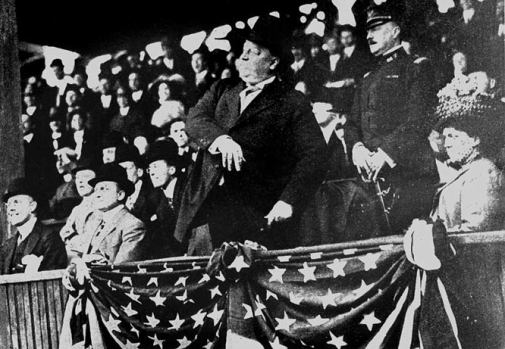
Do you know the story behind the traditional 7th inning stretch in baseball?  One urban legend dates it all the way back to April 14, 1910 when President William Howard Taft was attending a Washington Senators game.  In the middle of the 7th inning, Taft stood up to stretch his cramped legs.  Out of respect for the President, everybody else in attendance at Griffith Stadium stood up too – and voila – a tradition was born.  I don’t know if the story is true, but I do know President Taft had the right idea.  A little extra therapeutic attention to your muscles seems to go a long way in prevention.  And now that Spring Training is in full swing, it seems fitting that we address the therapeutic benefits of a sound stretching program.

Studies have shown that adding stretching to your fitness regimen can add 8.1 years to your life.  It not only keeps your limbs more flexible but also slows down arterial stiffening and subsequent heart disease.   For sport-minded individuals, a regular stretching program can improve athletic performance and decrease the chance of injuries. Tight muscles also contribute to the hunching over that gives the appearance of “shrinking” in many senior citizens.  My great Aunt Ruby, for example, was 5’7” in her youth – but had shrunk to a diminutive 5’0” in her twilight years.  Why?  Because she never knew the benefits of a stretching regimen and her muscles had tightened up as she aged.

Our bodies were designed to move, a fact which was noted ages ago by Hippocrates, the father of medicine:

“Use and move your body in moderation and exercise and it will keep you healthy and age you more slowly but if unused and left idle it will be liable to disease, defective in growth and age quickly.”

 Whether you’re an athlete trying to stay at the top of your game, or you just want to look and feel good, stretching is the best place to start.  And the best time to stretch is when your joints and muscles are warm, like right after your workout or after a hot bath or shower.   Here are some guidelines to follow as you begin a routine stretching regimen:

  • Active warm ups and stretches are recommended for 10-20 minutes 3 times per week.
  • Consult your doctor, particularly if you have any injuries or health limitations, prior to embarking on any stretching or therapeutic exercise program.
  • Begin with a warm up.  An effective, active warm up raises your body temperature and prepares you for your workout.  It should mimic the activity you will be doing, only at a lower intensity.  For example, if you’re going for a run, warm up by walking slowly for the first for 5-10 minutes before you run.  Stretch when you are finished your run.
  • Stretching without warming up is like starting a cold car engine, so be gentle to avoid pulling a cold muscle.
  • Make sure you perform your stretches in the correct position.
  • Breathe and relax – maybe play some relaxing music while you stretch.
  • Do not bounce! Think of a rubber band and if you pull it enough – it will snap.
  • Do not get in a fight with your muscles – stretch, but do not strain. Reach slowly and stop when you feel the muscle start to fight back.  Hold each stretch for at least 15-30 seconds and ease up so the position is easy to hold, breathe into it and repeat.  If you feel too much pain you may be trying to stretch too far.
  • Do not compare your stretching ability to others, but rather focus on improving your limberness.  Stretching is not a contest.

Take stretch breaks at work to reduce tension from sitting.  This is not only good for your muscles and joints, but it also helps refresh your brain!  Tune in later this week for pre- and post-workout stretching programs.  Debby will also point you to some good books and DVDs on stretching as well as sport-specific stretching regimens.

Share this:

  • Share on X (Opens in new window) X
  • Share on Facebook (Opens in new window) Facebook
  • Share on LinkedIn (Opens in new window) LinkedIn
  • Share on Pinterest (Opens in new window) Pinterest
  • Print (Opens in new window) Print
  • Email a link to a friend (Opens in new window) Email
  • Share on Reddit (Opens in new window) Reddit
  • Share on Tumblr (Opens in new window) Tumblr
Like Loading...

Posts navigation

← Older Entries
Newer Entries →
  • Enter your email address to follow this blog and receive notifications of new posts by email.

  • Recent Posts

    • Ask Coach Stacy: The 411 on Treadmills
    • No Excuses
    • Sage Advice from Our Favorite Cowboy
    • A Few of Our Favorite Fitness Things
    • Playing It Forward to Aurora Shooting Victims
  • Blogs I Follow

    • TED Blog
    • Denver Post Blogs
    • Blogging Runner
  • Categories

  • Twitter Updates

    Tweets by coachstacy101
  • Archives

Blog at WordPress.com.
TED Blog

The TED Blog shares news about TED Talks and TED Conferences.

Denver Post Blogs

When you're moving, you're improving!

Blogging Runner

COACH STACY'S HEALTHY U
Blog at WordPress.com.
  • Subscribe Subscribed
    • COACH STACY'S HEALTHY U
    • Join 131 other subscribers
    • Already have a WordPress.com account? Log in now.
    • COACH STACY'S HEALTHY U
    • Subscribe Subscribed
    • Sign up
    • Log in
    • Report this content
    • View site in Reader
    • Manage subscriptions
    • Collapse this bar
 

Loading Comments...
 

    %d