COACH STACY'S HEALTHY U

When you're moving, you're improving!

  • About
  • Camp GO™
  • Class Schedules
  • Contact Us
  • We Play It Forward

Pass the Health: Planet ZZZ

Posted by Debby Ridgell on March 11, 2013
Posted in: Pass the Health. Tagged: daylight saving time, getting a good night's sleep, sleep problems. Leave a comment

Planet ZZZTell the truth – did you need an extra jolt of java this morning?  If you’re draggin’ your wagon today there’s a good reason.  Losing that extra hour of sleep is a tough adjustment for many, the effects of which are similar to the jetlag experienced by travelers flying from, say, Denver to Chicago.  The problem is that your return flight – or the return to standard time – is not for another eight months, so the sooner you can adjust your internal clock to Daylight Saving Time, the better.

Of course, that adaptation time is greatly reduced if you manage to get plenty of sleep in the nights preceding and immediately after the time change.  However, if for you, sound sleep is an elusive luxury, you’re in for a little grogginess.

Sleep deprivation is known to cause a host of problems, including diminished cognitive function and memory, depression, decreased immunity, heart disease, slow response and reaction time leading to accidents, stroke, diabetes, high blood pressure, premature signs of aging, weight gain, and poor judgment.  Most adults need 7 to 8 hours of sleep nightly in order to maintain peak physical and mental health.  Unfortunately, few of us get that much shut-eye.  If you’re looking for help in getting and staying asleep at night, look no further.  Here are ten tips that will lead you to the discovery of Planet ZZZ:

  • Exercise daily – the earlier in the day the better.  In a recent study at Appalachian State University, participants who ran on treadmills for a half hour at 7 a.m. experienced better quality sleep at night than those who exercised at mid-day or in the evening.  Strenuous exercise within a couple of hours of bedtime tends to keep some people awake.
  • Be consistent.  Try to go to bed and wake up at about the same times every day and avoid straying from those times by more than an hour on the weekends.
  • Manage your melatonin by controlling your light exposure.  Light slows the secretion of melatonin, a sleep inducing substance produced by the pineal gland.  So you’ll want to expose yourself to light as much as possible by day.  But try dimming the lights around the house and in your bedroom an hour before bedtime.  Also, install a nightlight in your bathroom so that you don’t have to turn on the lights in the middle of the night when making a pit stop.
  • Keep the bedroom temperature comfortable.  Most people sleep best in a room on the cool side – around 65° F.
  • Create a bedtime routine in which you begin winding down 30-60 minutes before bedtime.  Relax with a good book or magazine, or listen to soothing music.  Try some deep breathing and progressive muscle relaxation techniques.  Avoid using electronic devices including your laptop, television, smart phone or tablet at bedtime, as the lights from these devices will keep you awake (see number 3 above), and television noise tends to stimulate the mind.
  •  Avoid eating a large or high-fat meal within two hours of bedtime, but don’t go to bed hungry either.  If necessary, have a small snack before bedtime so that hunger pangs don’t awaken you in the middle of the night.
  • Limit caffeine to 300 mg a day and avoid caffeinated beverages and energy drinks within eight hours of bedtime.
  • Trade in that lumpy old mattress and worn out pillow.  If you tend to awaken frequently during the night or feel stiff and sore in the morning, it may be time to invest in a new mattress.  There are many factors that determine a mattress’s lifespan, but generally speaking most are good for seven to eight years.  After that their overall comfort and support decreases.
  • Avoid drinking alcohol before bedtime, as it tends to reduce sleep quality.  Drinking a little water before bed is good, but drinking voluminous liquids of any kind just prior to bedtime will result in the need for frequent bathroom trips during the night.
  • Get up out of bed if you can’t get to sleep.  Try reading or listening to soft music for a little while in another room.  Lying awake in bed will lead to frustration, which will cause you to stay awake even longer.

If you tend to think of a good night’s sleep as something optional, think again.  It’s every bit as important to your overall health as a well-balanced food diet and daily physical activity.  Make it a priority – starting tonight!
Share this:

  • Share on X (Opens in new window) X
  • Share on Facebook (Opens in new window) Facebook
  • Share on LinkedIn (Opens in new window) LinkedIn
  • Share on Pinterest (Opens in new window) Pinterest
  • Print (Opens in new window) Print
  • Email a link to a friend (Opens in new window) Email
  • Share on Reddit (Opens in new window) Reddit
  • Share on Tumblr (Opens in new window) Tumblr
Like Loading...

Pass the Health: GLOBAL EMPLOYEE HEALTH AND FITNESS MONTH 2013

Posted by Coach Stacy on March 5, 2013
Posted in: Motivation, Pass the Health. Tagged: Coach Stacy Fowler, corporate wellness, Diane Hart, GEFM, Global Employee Health and Fitness Month, health promotion, NAHF, physical activity. Leave a comment

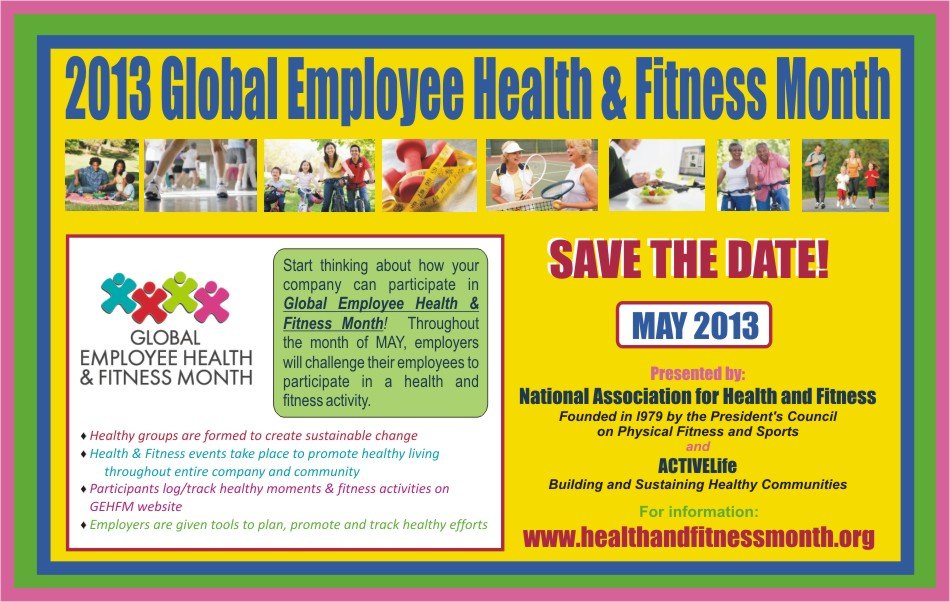
Save the Date GEHFM

During the 1980s May was proclaimed National Health and Fitness month.  Fast forward 30 years to the recession, continued budget cuts, and the looming fallout from sequestering – and we find wellness programs consistently showing up on employers’ chopping blocks.  But fitness and wellness don’t need to be casualties of your employer’s ongoing financial woes.  Why?  Because you are about to become your organization’s MVE – Most Valuable Employee – by introducing a FREE and EFFECTIVE corporate wellness initiative which will lead to happier, healthier and highly productive employees all around.

The program is the Global Employee Health and Fitness Month, or GEHFM.  Not familiar with GEHFM?  Here’s a little background.  For over 25 years, the National Association for Health and Fitness (NAHF), which I’m proud to serve as Vice President, has worked with non-profit organizations, governments and business leaders across the country to bring about a more physically active nation.  As part of our continued efforts, NAHF and ACTIVELife, an Austin-based non-profit organization dedicated to organizing the movement for healthy change in America and the world, have worked together to create GEHFM.  From May 1st to 31st, 2013, employers everywhere are invited to participate and challenge their staffs to create “Healthy Moments,” form “Healthy Groups,” and develop a “Culminating Project.”  Participants will be able to log their various physical activities and steps toward better health on the GEHFM website (www.healthandfitnessmonth.org) throughout the month of May.

According to NAHF President Diane Hart, “This is a national and international observance of health and fitness in the workplace and invites and encourages workplaces to engage in wellness activities.  The goal is to promote the benefits of a healthy lifestyle to employers and their employees through workforce health promotion activities and environments.  Joining Global Employee Health and Fitness Month is the best place to start or rededicate your organization’s efforts to the imperative cause of health becoming the norm in our world.  We have tremendous scientific and economic evidence that worksite health promotion is a sound business strategy.”

It’s hard to believe, but May is just around the corner, so now is the time to begin rallying your organization toward the great cause of health and fitness.  Check GEHFM’s website — www.healthandfitnessmonth.org, order some fun products at http://www.jimcolemanltd.net/ and pass the health on to your co-workers and employees.  Good luck and thank you for your participation in GEHFM!


For more information about GEHFM or sponsorship opportunities, contact:

Diane H. Hart, President

National Association for Health and Fitness

518-456-1058

aerobic2@aol.com

www.harttoheartfitness.org

Share this:

  • Share on X (Opens in new window) X
  • Share on Facebook (Opens in new window) Facebook
  • Share on LinkedIn (Opens in new window) LinkedIn
  • Share on Pinterest (Opens in new window) Pinterest
  • Print (Opens in new window) Print
  • Email a link to a friend (Opens in new window) Email
  • Share on Reddit (Opens in new window) Reddit
  • Share on Tumblr (Opens in new window) Tumblr
Like Loading...

Fitness Buzz: It’s Snowing – Time to Go…Biking?

Posted by Debby Ridgell on March 1, 2013
Posted in: Fitness BUZZ. Tagged: bicycling in snow, fat biking, snow mountain biking, winter sports. Leave a comment


Fat BikesYesterday was the last day of the meteorological winter, so it’s time to put away the skis and snowshoes right?  Not by a long shot – at least not here in Colorado.  Traditionally, March is the snowiest month in our mountainous state so there’s plenty of winter left to be had.  But those of you who are itching to tune up your bikes and hit the mountain trails again, why wait?

“Fat biking,” also known as “snow mountain biking” is rapidly growing in popularity in places where snow represents big business.  The sport originated in Alaska some 25 years ago, but spread quickly to the lower 48.  Fat bikes are easily recognizable by their wide rims and their bulbous, knobby tires and anyplace that you’d normally hike, mountain bike or snowshoe is suitable for fat biking.

However, the activity is for neither the novice nor weekend warrior.  It’s a strenuous workout, indeed; most seasoned fat bikers will tell you that biking on snowy trails represents double the workout of the average mountain biking trail.  The typical fat bike ride is slippery, strenuous, and somewhat “technical.”

There is some disagreement over what constitutes a decent “snow bike.”  Some contend that all you need is a mountain bike with a doublewide rim and mud-pattern tires.  Others insist that you need an actual fat bike, complete with a four-inch rim and wide, knobby tires (think studded snows).  Such bikes range widely in price, as do mountain bikes, and are built specifically for riding in snow or sand.  Their secret lies in the flotation derived from large-volume, low-pressure tires.

Fat biking pros offer the following tips and techniques for riding in the snow:Fat biking 2

  • Ride at a lower cadence than you would on a regular biking trail.
  • Pedal more or less continuously to avoid sinking in the snow.
  • Shift your weight backwards so as to weigh down your back tire and produce better traction.
  • Employ a lower gear while traveling uphill, and a higher gear while traveling downhill or on level surfaces.
  • Seek trails that feature hardpack or packed powder.
  • Avoid carefully groomed cross-country trails.
  • Try not to break quickly, particularly where there’s ice.  Breaking suddenly doesn’t work well when you’re driving a car and is equally hazardous when riding a bike in the snow.
  • Practice the same safety precautions you would while riding a regular bike – and most definitely wear a helmet.

Here in Colorado, our best snow of the season is yet to come.  If you’ve already skied or gone snowshoeing, why not try fat biking for a change of pace?  Happy pedaling!

If you want to learn more about fat biking, check out the following links:

Snowbiking in Park City

Fat Biking in Alaska

Riding Mountain Bikes in Snow

Share this:

  • Share on X (Opens in new window) X
  • Share on Facebook (Opens in new window) Facebook
  • Share on LinkedIn (Opens in new window) LinkedIn
  • Share on Pinterest (Opens in new window) Pinterest
  • Print (Opens in new window) Print
  • Email a link to a friend (Opens in new window) Email
  • Share on Reddit (Opens in new window) Reddit
  • Share on Tumblr (Opens in new window) Tumblr
Like Loading...

Ask Coach Stacy: Lowering Cholesterol Without Drugs

Posted by Coach Stacy & Debby Ridgell on February 26, 2013
Posted in: Ask Coach Stacy, Diet & Nutrition, Physical Activity. Tagged: cholesterol treatments, high cholesterol, lowering cholesterol without drugs, remedies for high cholesterol. 2 Comments

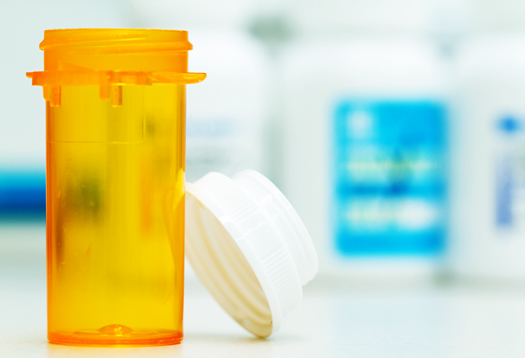
Cholesterol medicationQ:  During a recent physical, blood work indicated that my cholesterol was too high.  This concerns me because heart disease runs in my family.  I’m a little overweight, but I don’t really want to have to take pills to get my cholesterol under control.  What do you recommend?  – Steve; Lakewood, CO

A:  That’s a great question Steve.  The National Cholesterol Education Panel recently updated their guidelines for cholesterol management.  According to the NCEP, desirable levels are:

  • Total Cholesterol – less than 200 mg/dL
  • LDL (bad) Cholesterol – less than 100 mg/dL (optimal); 100-129 mg/dL (near or above optimal)
  • HDL (good) Cholesterol – 60 mg/dL or above

So unless your physician has advised you otherwise, these are your targeted levels.  That said, there are actually several lifestyle changes you can make that could preclude you from having to resort to statins or other cholesterol-lowering medications:

  • If you’re a smoker, you need to quit.  The nicotine in cigarettes tends to increase both the LDL and triglyceride levels in your blood.
  • Get up and move!  This will not only help you shave off that excess weight, which is likely contributing to your high cholesterol, but exercise helps to raise the levels of HDL (good cholesterol) in your bloodstream.  Look for little ways to add some extra movement into your daily routine, like taking the stairs or parking further away from your destination.  Try incorporating 30 minutes or more of moderate physical activity into your schedule at least four days of the week.  Even a 30-minute walk most days of the week will help reduce your total cholesterol reading.
  • Adjust your diet – switch to heart-healthier fare.  Start by avoiding or eliminating saturated and trans fats, which are found in animal proteins and dairy products as well as highly processed foods, “tropical” oils, and some nuts such as peanuts and cashews.  Limit your consumption of eggs, as they are high in dietary cholesterol.  Opt instead for lean cuts of meat and skinless poultry, low-fat dairy and skim milk, egg substitutes, and olive and canola oils.  Next, increase the natural fiber in your diet.  Good sources are fresh fruits and vegetables, whole grains, and beans.  Finally, increase the omega-3 fatty acids in your diet.  These can be found in some fish, such as salmon and herring, as well as walnuts and almonds.

Now, you need to be aware that for some people – particularly those with a genetic predisposition to high cholesterol – these lifestyle changes may not be enough to lower your levels.  Case in point:  Several years ago, my editor and Operations Manager, Debby, also discovered that her cholesterol was dangerously high, but like you, she didn’t want to have to resort to taking statins.  Her doctor gave her six weeks to bring it under control naturally and she immediately modified her diet and kicked her fitness regimen into high gear.  Mind you, this six-week period coincided with the holidays – so no stuffing or pecan pie for Debby on Christmas or Thanksgiving.  Her resolve was inspiring.  Six weeks later she returned to the lab for a blood draw and was astonished to discover that her overall and LDL cholesterol levels had actually increased!  High cholesterol runs in her family and the lifestyle changes didn’t so much as make a dent in her cholesterol levels.  Turns out she deprived herself for nothing; the good news is that Debby’s the only person I know who dropped weight that holiday season.  And, she’s been taking statins ever since.  For many people, though, these “natural” remedies are enough to reduce overall cholesterol levels and keep them under control.  Try them and see – and best of luck!

Share this:

  • Share on X (Opens in new window) X
  • Share on Facebook (Opens in new window) Facebook
  • Share on LinkedIn (Opens in new window) LinkedIn
  • Share on Pinterest (Opens in new window) Pinterest
  • Print (Opens in new window) Print
  • Email a link to a friend (Opens in new window) Email
  • Share on Reddit (Opens in new window) Reddit
  • Share on Tumblr (Opens in new window) Tumblr
Like Loading...

Best Bets: Movie Munchies

Posted by Coach Stacy & Debby Ridgell on February 22, 2013
Posted in: Best Bets, Coach's Kitchen. Tagged: movie munchies, movie theater food, Movie theater snacks, unhealthy movie snacks. 2 Comments

movie snacksYou may be trolling the movie theaters this weekend to check out some of the Oscar nominees in anticipation of Sunday’s Academy Awards ceremony.  But moviegoers beware:  Danger lurks behind the concessions stand.  A large, buttered tub of popcorn alone will set you back over 1,600 calories.  Add a large soda and a candy bar and your two hour stint at the Cineplex will cost you over 2,000 calories.  But a night at the movies doesn’t necessarily need to derail your diet.

One way to enjoy a few movie munchies without packing on the pounds is to bring some snacks from home.  Healthy choices include:

  • Air-popped popcorn
  • Whole grain crackers, goldfish or baked chips
  • Fresh grapes, apple or carrot slices or dried fruit
  • Almonds or walnuts
  • Whole grain dry cereal
  • Cheese
  • Protein or fiber snack bar
  • Bottled water

But if your favorite theater doesn’t allow you to bring these healthier alternatives into the show, here are some Best Bets for diet-friendly munchies you can purchase at the concessions stand:

Choose:

Sno Caps

3.1 oz box, 300 calories

Avoid:

M&Ms

5.3 oz bag, 790 calories

______________________________

Choose:

Good & Plenty

3 oz, 300 calories

Avoid:

Twizzlers

6 oz bag, 579 calories

______________________________

Choose:

Arizona Green Tea with Ginseng and Honey

16 oz, 175 calories

Avoid:

Large Coke

44 oz, 534 calories

______________________________

Choose:

Gummi Bears

3.5 oz bag, 390 calories

Avoid:

Dots

9.2 oz box, 850 calories

______________________________

Choose:

Junior Mints

3 oz box, 360 calories

Avoid:

Reese’s Pieces

8 oz bag, 1,160 calories

______________________________

Choose:

Mike & Ike

3 oz box, 320 calories

Avoid:

Skittles

6.5 oz bag, 765 calories

______________________________

Choose:

Medium Hot Dog

2 oz, 305 calories

Avoid:

Large Cheese Nachos

4 oz, 1,100 calories

Share this:

  • Share on X (Opens in new window) X
  • Share on Facebook (Opens in new window) Facebook
  • Share on LinkedIn (Opens in new window) LinkedIn
  • Share on Pinterest (Opens in new window) Pinterest
  • Print (Opens in new window) Print
  • Email a link to a friend (Opens in new window) Email
  • Share on Reddit (Opens in new window) Reddit
  • Share on Tumblr (Opens in new window) Tumblr
Like Loading...

Coach’s Daily Dose: Strength Training for a Healthy Heart

Posted by Coach Stacy & Debby Ridgell on February 20, 2013
Posted in: Ask Coach Stacy, Physical Activity. Tagged: heart fitness, heart health exercises, strength training for the heart. 3 Comments

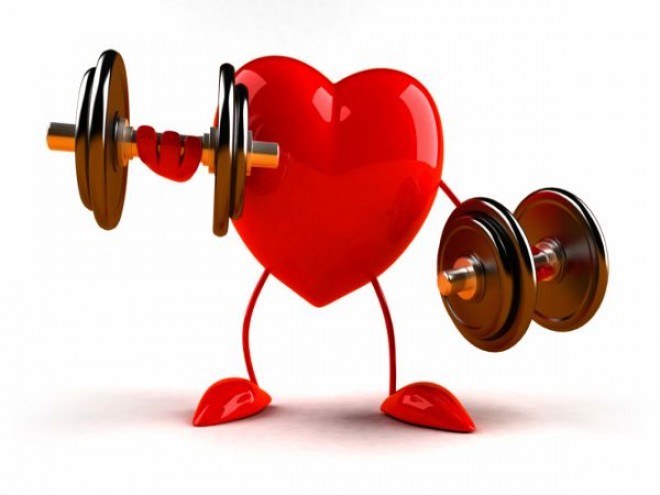
heart exerciseIt’s that time of year – awards season.  Golden Globes, Grammies, and of course the Academy Awards.  If there was an award given for, say, “Best Muscle,” do you know which of your body’s muscles would win?  Why, the heart, of course.  While most of us don’t really think of the heart as “muscular,” the fact of the matter is that it’s the hardest working muscle in your entire body, with never a day off.  In fact, every minute of the day your heart pumps about five quarts of blood throughout your body – or about 2,000 gallons of blood each day, and steady like a clock, it beats about 100,000 times per day.

So, how do you keep your muscles strong and conditioned?  You work them out; and so naturally, your heart should be included in your target strength-training regimen in order to make it strong and improve its efficiency.  A healthy heart is a happy heart. The right workout plan, along with a healthy lifestyle, will help to prevent heart disease.  Unfortunately over 70% of us do not get enough physical activity, which contributes mightily to the prevalence of heart disease in the U.S.  If you’re overweight, your heart has to work extra hard to continue beating. Over time this leads to constriction of the arteries, weakening the heart muscle and leading to heart failure.

Improving your heart health can be as simple as enjoying a daily 30 minute walk – but if you’re able, and so inclined, you should also add some basic strength training moves, one set, 10-15 reps, twice a week. Strength training is estimated to cause a 15% increase in our metabolic rate – which, of course, also translates into weight loss. BUT before embarking on any exercise program – especially if you are over 65 or there is a history of heart disease in your family – check with your doctor who can determine what, if any, limitations you should observe. Weight training is not recommended if you have any of the following issues:

  • Unstable coronary heart disease such as angina
  • Congestive heart failure
  • Severe pulmonary hypertension
  • Severe symptomatic aortic stenosis
  • Acute infection of the heart or tissues surrounding the heart
  • Uncontrolled high blood pressure (more than 18-0/110 mmHG)
  • Aortic dissection
  • Marfan syndrome

I have prescribed an exercise prescription from the American Heart Association to get you started on the road to heart health.  You should include a chest press, shoulder press, triceps extension, biceps curl, pull down, lower back extension, abdominal crunch, leg press, leg curl and calf raise. Choose weights you can safely lift 10-15 times in a controlled manner through a full range of motion. While working out, try not to hold your breath and strain; breathe and do not squeeze the weights so tightly that you see the whites of your knuckles. It is best to alternate your exercises between upper and lower body.  Lifting weights should initially be carried out under the guidance of a personal trainer who can ensure that you know how to lift and safely and effectively.

Chest Press – Can be done using chest press machine, dumbbells, or barbelldumbbell chest press
 

There are several machines on which to perform a chest press in the gym.  Simply set the machine at your height and choose a weight you can lift 10-15 times. Doing a chest press with dumbbells instead of a barbell can add a different element to your chest exercises, since both arms have to work independently from one another. This is great for working both sides of the body, and the dumbbell chest press provides a nice alternative to the barbell exercise. Here are the steps to performing a dumbbell chest press:

  • Lie down on a bench, step or mat and begin by holding the dumbbells in each hand, lifting straight up over the chest, palms facing out.
  • Bend the elbows and lower the arms down until the elbows are just below the chest (arms should look like goal posts).
  • Press the weights back up without locking the elbows and bring them close together without banging them.


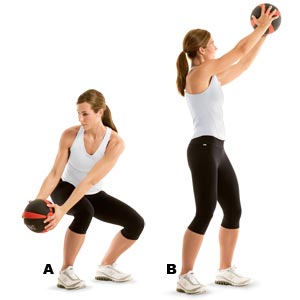
Standing Wood Chop – Absstanding wood chop

I love this exercise because of its versatility.  You can use a Medicine Ball or dumbbells — or beginners can do the exercise using an imaginary ball. The Wood Chop is very functional and mimics movements we make while carrying out our daily chores. In fact, it’s so called because the exercise mimics the wood chop motion:

  • Stand in a split-stance position with your left foot forward holding a medicine ball or dumbbell in both hands. Keep the ball/dumbbell close to your body. Engage your abdominal/core muscles to stiffen your torso and stabilize your spine. Your torso should be upright.
  • Slowly bring the medicine ball to the left, to a starting position high and behind you. Do not rotate your head, chest or torso. Your head, chest and hips should remain facing forward at all times throughout this exercise stage. Keep the medicine ball relatively close to your body.
  • Movement: Slowly, bring the medicine ball down and across your body toward the right hip. Do not rotate your head, chest, torso or hips, and keep them facing forward. Keep the medicine ball relatively close to your body. Hold this end position briefly before returning to your starting position. Repeat the movement in the opposite direction with your opposite leg forward.
  • Exercise Progression: Repeat the same movement, but extend your arms at the elbow and maintain this arm position throughout the wood chop movements. This longer lever increases the loading on the spine, challenging the core muscles to work harder. You can also progress to a wider stance and allow your hips to rotate with your arms and your knees to bend slightly in a semi squat position as you shift with the wood chop move.

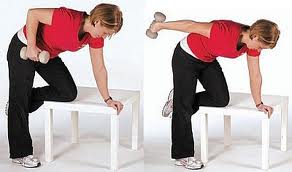
Triceps Kickback – This exercise is a classic and great for novicesSingle arm triceps kickback

Choose a dumbbell that you can lift 10-15 times in your left hand. Stand in a split-stance position with your right leg forward. Keep your weight evenly distributed through the heels of both feet. Tighten your abdominal and core muscles to stabilize the spine. Place your right hand on your right thigh or on a bench. Slowly lean forward, shifting most of your upper extremity body weight into the right side. Pull your shoulder blades down and back. Your head should be aligned with your spine. Maintain these positions throughout the exercise:

  • Bend your left elbow bringing your left upper arm parallel to, and close to, your torso. Your forearm should hang vertically to the floor.
  • Upward Phase: Slowly straighten your elbow. Your upper arm should remain glued next to your torso. Do not allow the upper arm to rise during the movement. Watch that you do not allow the low back to sag or your torso to rotate.
  • Downward Phase: Slowly bend your elbow, returning your arm to the starting position. Do not allow your torso to change position. Keep your upper arm parallel and close to your torso.


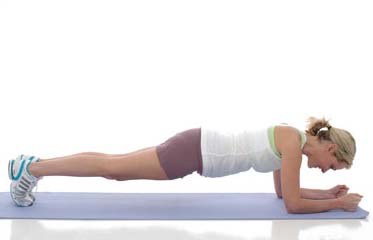
Front Plank – Great for the heart as well as the absNicki Waterman exercises Pic: Joanna Bailey 22/01/08

Planks provide an excellent core workout and abs conditioner. What I love about them is that you can perform them anytime, anywhere – no gym is needed! You can adjust them to your unique fitness level. Beginners should perform them bent kneed and bent armed (hover planks).  Those more advanced can perform planks in the pushup position.

  • Lie on your stomach with your elbows close to your sides and directly under your shoulders, palms down and fingers facing forward. This is known as the hover position.  Tighten  your abdominal/core muscles as if  you are tightening a corset around your waist. For beginners I recommend a bent kneed position. For a more advanced move, engage your thigh muscles to straighten your legs strongly and flex your ankles, (tucking your toes towards your shins).
  • Slowly lift, in one fluid motion, your torso and thighs up off the floor or mat. Keep your torso and legs rigid. Do not allow any sagging in your ribcage or low back. Avoid hiking your hips into the air like a mountain peak or bending the knees. Keep the shoulders away from the ears (no shrugging). The shoulders should be directly over your elbows with your palms facing down through the entire exercise. Continue to breathe, keeping the abdominals engaged while holding this position. Try holding this position for 5 seconds to start and gradually build up to one minute.
  • Keep the torso and legs stiff as you slowly and gently lower your body back towards the mat or floor.  If you experience any pain in the low back with this movement, stop the exercise immediately and consult with your doctor.
  • To progress to the next level, extend the elbows and legs as if in a pushup position and hold for 5 seconds building up to one minute. Again shoulders should be lined directly over your elbows and hands in a straight line with no shoulder shrugging. Avoid hiking hips up into the air and keep your legs straight and your toes tucked under towards your shins.

Share this:

  • Share on X (Opens in new window) X
  • Share on Facebook (Opens in new window) Facebook
  • Share on LinkedIn (Opens in new window) LinkedIn
  • Share on Pinterest (Opens in new window) Pinterest
  • Print (Opens in new window) Print
  • Email a link to a friend (Opens in new window) Email
  • Share on Reddit (Opens in new window) Reddit
  • Share on Tumblr (Opens in new window) Tumblr
Like Loading...

Coach’s Kitchen: Heart-Healthy Comfort Foods

Posted by Debby Ridgell on February 15, 2013
Posted in: Coach's Kitchen. Tagged: comfort foods, heart healthy, low cholesterol recipes, low sodium recipes. Leave a comment

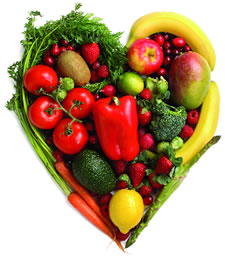
heart healthy foodsA diet that is high in fat, sugar and sodium frequently leads to heart disease.  Consuming a heart-healthy diet, on the other hand, includes the following general guidelines:

  • Reducing the amount of saturated and trans fats consumed.  Avoid processed foods containing hydrogenated and partially hydrogenated oils.  Cook with canola oil and olive oil and cut back on the amount of butter and margarine you use on and in your food.
  • Increasing your daily servings of fruits and vegetables.  Not only are they loaded with healthy vitamins, minerals and antioxidants, they’re also excellent sources of fiber which helps keep your cholesterol level in check.
  • Eating more poultry and fish and sticking with lean cuts of red meat.  Experiment with alternate sources of protein such as beans, low-fat ground turkey and soy.
  • Switching to whole grains whenever possible – brown rice, whole wheat bread, bran cereals.  Once again, that increased fiber helps reduce cholesterol.

Now, contrary to popular belief, embarking on a heart-healthy diet doesn’t necessarily mean you have to abandon flavorful dishes and your favorite comfort foods.  Here are some classic “hearty” recipes updated for heart-smart cooks:

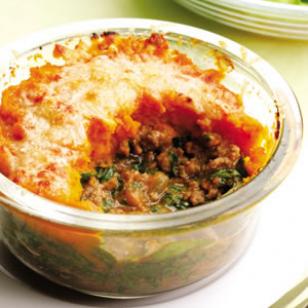
mini shepherd's pieMini Shepherd’s Pie (from www.eatingwell.com)

2 tsp extra-virgin olive oil

½ cup copped onion

12 oz 93%-lean ground beef

2 Tbs all-purpose flour

1 Tbs tomato paste

1 cup reduced-sodium beef broth

6 oz baby spinach, chopped

¼ tsp salt, divided

½ tsp garlic powder, divided

2 12-oz packages frozen winter squash puree, thawed

1/3 cup finely shredded Parmesan cheese

Position rack in upper third of oven; preheat broiler.  Heat oil in a large skillet over medium-high heat.  Add onion and cook, stirring, until beginning to soften, about 2 minutes.  Reduce heat to medium, stir in beef, flour and tomato paste, and cook, stirring, until the beef is mostly browned, about 3 minutes.  Add broth, scraping up any browned bits with a wooden spoon.  Bring to a boil and cook, stirring occasionally, until the broth is the consistency of thick gravy, about 4 minutes. Stir in spinach, ¼ tsp salt and ¼ tsp garlic powder; cook until the spinach is just wilted, about 1 minute.  Remove from the heat.

Place squash in a fine-mesh sieve and gently press on it to extract excess liquid.  Transfer to a bowl.  Stir in the remaining ½ tsp salt and ¼ tsp garlic powder.  Divide the meat mixture among four 10 oz broiler-safe ramekins.  Top each with about ½ cup of the squash.  Place the ramekins on a baking sheet.  Broil until heated through and bubbling around the edges, about 10 minutes.  Sprinkle with cheese and broil until it is just melted, about 3 minutes more.

Yields 4 servings

Per Serving:  310 calories, 13 g fat, 70 mg cholesterol, 26 g carbohydrates, 29 g protein, 5 g fiber, 708 mg sodium

_______________________________________

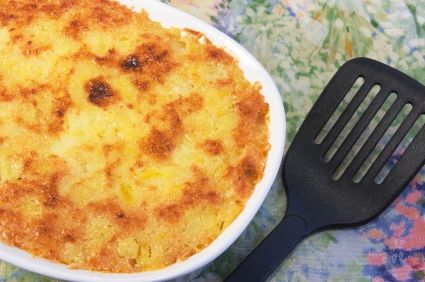
Low Cholesterol Scalloped Potatoes (from www.sparkpeople.com)Scalloped potaoes

4 cups thinly sliced raw potatoes

1 onion

1 Tbs chopped parsley (optional)

3 Tbs whole grain flour

1/8 tsp pepper

1 ½ tsp salt

3 Tbs low cholesterol margarine

1 ½ cups skim milk

Layer potatoes and onions in casserole, sprinkling flour between each layer.  Heat milk and margarine and season with salt, pepper, and parsley.  Pour sauce over all layers.  Bake 1 hour covered at 350°.  Remove cover and bake additional 30 minutes.

Yields 6 servings.

Per Serving:  111.3 calories, 5.9 g total fat, 1.2 mg cholesterol, 695.2 mg sodium, 11.2 carbohydrates, 2.2 g fiber, 4.2 g protein

_______________________________________

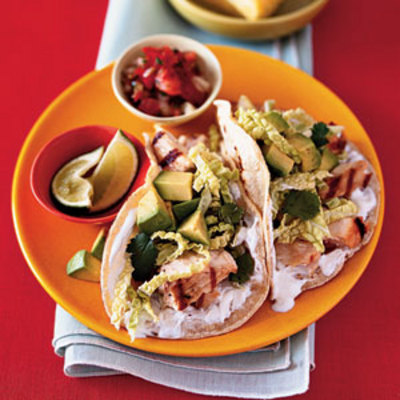
baja fish tacosBaja Fish Tacos (from www.health.com)

Cooking spray

3/4 pound mahi mahi or other firm white fish fillets

2 tsp fajita seasoning

2 cups pre-sliced green cabbage (about 6 oz)

1 Tbs fresh lime juice

½ tsp salt

3 Tbs chopped fresh cilantro

8 (6-inch) corn tortillas

2 ½ Tbs reduced-fat sour cream, divided (optional)

½ avocado, pitted and diced

Bottled salsa

Lime wedges

Lightly spray grill rack with nonstick cooking spray and preheat grill.  Sprinkle both sides of fish with fajita seasoning, gently pressing into flesh.  Grill fish 3-4 minutes on each side or until fish flakes easily when tested with a fork.  Flake into pieces with a fork; keep warm.

In a small bowl, mix together cabbage, lime juice, salt, and cilantro.  Wrap the tortillas in paper towels, and microwave 1 minute on HIGH or until they’re warm.

Place taco ingredients on the table for assembly.  Spread each tortilla with 1 tsp of sour cream, if desired, and top with fish, cabbage mixture, and avocado.  Serve with salsa and lime wedges on the side.

Yields 4 servings

Per Serving: 235 calories, 6 g fat, 20 g protein, 28 g carbohydrates, 6 g fiber, 62 mg cholesterol

_______________________________________

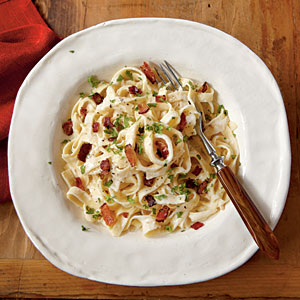
fettuccine alfredo with baconFettuccine Alfredo with Bacon (from www.myrecipes.com)

1 (9 oz) package refrigerated fresh fettuccine

2 slices applewood-smoked bacon, chopped

1 tsp minced garlic

1 Tbs all-purpose flour

1 cup 1% low-fat milk

2/3 cup (about 2 ½ oz) grated Parmigiano-Reggiano cheese

½ tsp salt

2 Tbs chopped fresh parsley

½ tsp freshly ground black pepper

Cook pasta according to package directions, omitting salt and fat.  Drain in a colander over a bowl, reserving ¼ cup cooking liquid.

While pasta cooks, cook bacon in a large nonstick skillet over medium-high heat 4 minutes or until crisp, stirring constantly.  Sprinkle flour over garlic; cook 30 seconds, stirring constantly.  Gradually stir in milk; cook 2 minutes or until bubbly and slightly thick, stirring constantly.  Reduce heat to low.  Gradually add cheese, stirring until cheese melts.  Stir in salt and reserved ¼ cup cooking liquid.  Add hot pasta to pan; toss well to combine.  Sprinkle with bacon, parsley, and pepper.

Yields 4 servings

Per Serving: 339 calories, 11.7 g fat, 17.3 g protein, 38.4 g carbohydrate, 2 g fiber, 22 mg cholesterol, 833 mg sodium

_______________________________________

chunky minestroneChunky Minestrone (from www.bhg.com)

1 Tbs olive oil

1 ½ cups chopped onion

1 medium carrot, halved lengthwise and thinly sliced (about ¾ cup)

2 cloves garlic, minced

3 cups reduced-sodium tomatoes, undrained and cut up

2 – 14.5 oz can low-sodium tomatoes, undrained and cut up

¾ cup water

½ cup long-grain rice

1 tsp dried Italian seasoning, crushed

4 cups shredded fresh spinach

1 – 15 oz can reduced sodium navy beans or white kidney beans, rinsed and drained

1 medium zucchini, quartered lengthwise and sliced (about 1 ½ cups)

¼ tsp freshly ground pepper

Grated Parmesan cheese (optional)

In a 4-quart Dutch oven heat olive oil over medium-high heat.  Cook and stir the onion, carrot, and garlic in hot oil about 3 minutes or until onion is tender.  Stir in the broth, undrained tomatoes, water, uncooked rice, and Italian seasoning.

Bring to boiling; reduce heat.  Simmer, covered, about 20 minutes or until rice is tender.  Stir in the spinach, beans, zucchini, and pepper.  Cook, covered, for 5 minutes more.  If desired, sprinkle each serving with Parmesan cheese.

Yields 5 servings

Per Serving: 246 calories, 4 g fat, 11 g protein, 43 g carbohydrate, 9 g fiber, 462 mg sodium

Share this:

  • Share on X (Opens in new window) X
  • Share on Facebook (Opens in new window) Facebook
  • Share on LinkedIn (Opens in new window) LinkedIn
  • Share on Pinterest (Opens in new window) Pinterest
  • Print (Opens in new window) Print
  • Email a link to a friend (Opens in new window) Email
  • Share on Reddit (Opens in new window) Reddit
  • Share on Tumblr (Opens in new window) Tumblr
Like Loading...

Attempting to Look Hot; but SO Not Driving a Minivan

Posted by Debby Ridgell on February 13, 2013
Posted in: Motivation, Pass the Health. Tagged: fountain of youth, how to avoid aging, how to look younger. 2 Comments

Aging reversalsI celebrated my 37th birthday recently.

For the 16th time.

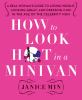
While you’re doing the math, I’ll tell you that I work in a small town public library and to mark the occasion my staff, mostly quinquagenarians themselves, retrieved the book How to Look Hot in a Minivan by Janice Min from the library’s shelves, and slipped it surreptitiously into my mailbox.  Gotta love ‘em.  Despite their shy, mousey ways, the library ladies are impishly clever at times.

Naturally, I checked the book out and took it home.How to Look Hot in a Minivan  
While 
How to Look Hot focuses primarily on strategies for young
 mommies to reclaim their bodies and looks after giving birth, it also provides practical advice for women who simply want to lose a few pounds, update their looks and appear overall less dowdy “in the age of the celebrity mom.”  Pretty good stuff, actually.  And it got me thinking about the fact that so many of us who are over, um….37, tend to helplessly accept as fact that advancing years leads inevitably to middle-aged spread, general frumpiness, and declining overall health.

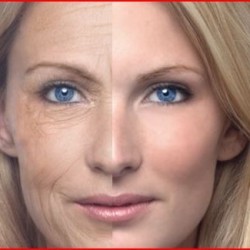
Au contraire.  While it’s healthy to acknowledge that aging is a natural progression in life, passively allowing one’s looks and vitality to deteriorate?   Not so much, particularly when it’s avoidable.  So while you can’t stop the clock and completely reverse the effects of aging, here are a few age-erasing strategies – a proverbial fountain of youth – that will keep you looking and acting “hot” and fit, with or without the minivan (and definitely without the Botox):

  • Get Plenty of ZZZs:  Seven to eight hours of sleep per night will make you mentally astute, emotionally less vulnerable and physically energetic.  AND, it will alleviate those age-defining bags that form under your eyes due to fatigue.
  • Combat Stress:  Schedule some time-out each and every day.  The constant, daily stress-induced surge of adrenaline and cortisol that you may be experiencing will have a disastrous effect on your overall health in the long run.  Even ten minutes of deep breathing with your eyes closed in the middle of the day will help mitigate age-related physical and cognitive deterioration caused by stress.
  • Get Up and Move:  Daily physical activity is a sure-fire way to keep you looking and feeling young and should include cardiovascular movement as well as strength training and balance maneuvers.  Schedule 30 minutes of cardio (walking, running, swimming, Zumba, cycling, etc.) at least four days of the week to keep your blood pressure and waistline in check and improve your stamina.  Incorporate weight lifting sessions once or twice a week for healthy bones and muscles and a shapely physique.  Add some occasional yoga, tai chi or ballroom dancing for improved balance, flexibility, and posture.
  • Go for the Big Gulp:  Of water, that is – H2O is the most vital of nutrients.  Every cell and organ in your body relies on water to function correctly.  Water also helps rejuvenate and moisturize your skin as well as improve skin elasticity.  Aim for at least 8 glasses of water (64 oz.) each day.
  • Fat? No Way.  Essential Fatty Acids? Absolutely!:  The Omega-3 fatty acids that are found in fish, walnuts, flaxseed and some beans help boost energy, improve cell function, reduce inflammation, lubricate the skin and glands, and prevent many of the visible signs of aging.  Don’t care for fish, nuts or beans?  Add a fish oil supplement to your daily Vitamin pack.
  • Boost Your Brainpower:  Life is a schoolhouse; never stop learning.  Read, inquire, do puzzles, take classes, try new things.  Use it or lose it – the less you stimulate your brain, the more prone you will be to mental deterioration.
  • Scale Back:  Even 10 pounds of excess weight increases your chances for developing cardiovascular disease, cancer and diabetes.  Overweight is also hard on the bones and joints and brutal on your wallet and self-esteem.   While you’re at it, cut down on the clutter in your life – both real and electronic.  It contributes to inertia and lack of focus, both of which will age you in a hurry.
  • Super Foods for a Super You:  Cut the junk food and sodas and load up on colorful fresh fruits and vegetables, whole grains, and green tea.  They’re excellent sources of antioxidants, which fight free radicals.  They also enhance your immune system, help keep your weight and mood in check and improve your skin and digestion.
  • Pamper Your Skin and Don’t Neglect Your Teeth:  Your skin is the largest organ of your body and your smile is one of the first things people notice about you.  It’s important that you keep both looking vibrant.  Moisturize daily with retinol-enhanced creams and lotions that have a SPF of 30 to protect the skin against damaging ultra-violet rays and prevent wrinkles.  Brushing and flossing daily will keep your teeth and gums strong and healthy.  Caring for those pearly whites will also keep your breath smelling sweet and lessen your risk of developing heart disease, COPD, overweight, and believe it or not, dementia.
  • Think Positively and Stay Connected: Attitude is everything – and a positive, optimistic outlook on life will help you maintain balance and keep you looking and feeling young.  Embrace change and progress and studiously avoid using such expressions as “new fangled” and “thing-a-ma-jig,” particularly when staring in befuddlement at your new smart phone or tablet.  Dispense with those labored grunts that punctuate every occasion that you stand up.  Pray often.  Maintain a strong bond with both your deity and loved ones.  Re-connect with old friends and make new ones.  And every chance you get, enjoy a good belly laugh.

As an undergraduate I once wrote a paper for a Social Work class on the concept of age as a social construct – ten pages of utter hokum which, in essence, simply supported the maxim, “you’re only as old as you feel.”  For the most part, I don’t feel old, outside of the occasional achy knees and periodic observations of the adverse effects that gravity has on the fleshy parts of my body.  And so, on this 16th anniversary of my 37th birthday, I actually do feel…well no, not “hot” exactly — the very act of writing the expression makes me giggle.  More to the point, I feel happy, healthy, and yes, relatively young.  Now if AARP would quit sending me a membership card every February, life would be sublime.

Share this:

  • Share on X (Opens in new window) X
  • Share on Facebook (Opens in new window) Facebook
  • Share on LinkedIn (Opens in new window) LinkedIn
  • Share on Pinterest (Opens in new window) Pinterest
  • Print (Opens in new window) Print
  • Email a link to a friend (Opens in new window) Email
  • Share on Reddit (Opens in new window) Reddit
  • Share on Tumblr (Opens in new window) Tumblr
Like Loading...

Coach’s Daily Dose: Heart Smart

Posted by Coach Stacy on February 11, 2013
Posted in: Coach's Daily Dose. Tagged: American Heart Month, cardiovascular health, heart disease prevention, heart disease statistics, heart health. Leave a comment

I love my heartWhat is the size of a fist, weighs as much as your sneaker, works like a car engine and works day and night, even when you sleep?  You’re smart – it’s the heart.  But are you heart smart?

While Colorado is tied with Washington, D.C. for having the lowest prevalence of heart disease in the nation, cardiovascular disease is still the leading cause of death in the state.  One Coloradan dies every hour due to heart disease, but nationally, the statistics paint a bleaker picture:

  • Heart disease is the number one cause of death in the U.S.
  • One hundred people die every hour due to heart disease
  • $403 billion were spent in 2006 combating the disease; loss of productivity due to heart disease cost the nation $146 billion
  • 66% of victims never fully recover
  • 90% of middle-aged Americans will develop high blood pressure
  • 70% of Americans are not even aware they have heart disease
  • Cardiovascular disease kills more women than men each year

The red flags for cardiovascular disease are well known:  tobacco use, poor food diet, excessive alcohol intake, physical inactivity, overweight and obesity, high blood pressure and cholesterol.  Certain risk factors cannot be controlled:

  • Age – the risk of heart disease increases with age
  • Gender – women’s risk of heart disease rises sharply after menopause and more women than men suffer strokes
  • Heredity – genetic risk can play a role in heart disease

So how do we win the battle against heart disease?  Prevention, prevention, prevention!  Here are some “heart smart” tips for avoiding the risk of cardiovascular disease:

  • Move It!  Try to build up to 10,000 steps each day.
  • Make healthy food choices.  Eat plenty of colors (fruits and vegetables) and limit your intake of saturated fats and salt.
  • Maintain a healthy weight.
  • Schedule yearly checkups.
  • Keep your cholesterol, blood pressure and sugar levels in check.
  • Avoid tobacco in all forms and excessive use of alcohol.
  • Take time to recharge yourself and try to keep stress levels in check.

The warning signs of a heart attack vary widely, from sudden and intense to generally not feeling well.  Symptoms can include:

  • Chest discomfort
  • Pain in other areas of the body, such as the back, arms, neck, jaw or stomach
  • Shortness of breath
  • Cold sweat, nausea, and dizziness

Call 911 immediately if you or someone you are with suffers any of these symptoms.

February is American Heart Month.  Do your part to become educated in a heart-healthy lifestyle.  Tune in throughout the month for more information on cardiovascular workouts and foods and recipes that promote heart health.  You never know – the life you save could be your own.

Share this:

  • Share on X (Opens in new window) X
  • Share on Facebook (Opens in new window) Facebook
  • Share on LinkedIn (Opens in new window) LinkedIn
  • Share on Pinterest (Opens in new window) Pinterest
  • Print (Opens in new window) Print
  • Email a link to a friend (Opens in new window) Email
  • Share on Reddit (Opens in new window) Reddit
  • Share on Tumblr (Opens in new window) Tumblr
Like Loading...

Diet 411: The Weight Watchers Plan

Posted by Debby Ridgell on February 4, 2013
Posted in: Diet 411. Tagged: healthy diets, PointsPlus, pros and cons, Weight Watchers diet. Leave a comment

Weight WatchersThe concept of the Weight Watchers plan came about serendipitously back in 1961.  The company’s founder, Jean Nidetch, an overweight homemaker from Queens decided it was time to take back her body and embarked on a grim and lonely diet plan.  Although she managed to lose 20 pounds initially, she realized that she needed to lose a lot more – but her motivation was waning.  Jean invited some of her overweight friends to her apartment and amid a sea of empathy and understanding confessed that eating cookies was an obsession.  And just like that – the first ever Weight Watchers meeting commenced.

Now over fifty years later, Weight Watchers operates in over 30 countries and has helped scores of people lose weight.  Here’s how:

  • Weight Watchers emphasizes overall health as a part of weight loss.  As such, no foods or food groups are forbidden.  The emphasis is on balance and moderation and on the preparation and consuming of healthy foods in controlled portions through an elaborate PointsPlus plan.
  • The plan doesn’t rely on expensive, pre-packaged foods.  The flexibility and variety surrounding food choices serves to mitigate boredom and dissatisfaction with mealtimes.  Furthermore, for those cooking for an entire family, everyone in the household stands to benefit somewhat from the diet.
  • Participants have online access to thousands of recipes, adding to the program’s variety.
  • Motivation and support are plentiful through Weight Watchers.  Weekly meetings provide encouragement, advice and compassion – which are helpful to many but not all.
  • Weight Watchers encourages physical activity, which is critical to overall health.
  • Weight loss is consistent and gradual – for most people, around 2 pounds per week, a much healthier rate than the drastic and rapid weight loss caused by certain crash diets.
  • Now featuring Weight Watchers Online, the plan is now more convenient than ever, particularly for those whose schedules make the weekly meetings inaccessible.  And there’s also now an online program geared specifically toward men, but without the “touchy-feely” components of the original plan.

While the Weight Watchers plan is one of the most effective diets on the market, it’s not for everyone.  In fact, many consider some of the benefits listed above to be drawbacks.  For example:

  • The endless calculating of Points is tedious for some.  And while the Point values of various foods can quickly and conveniently be looked up through handy guides and pocket calculators – there’s even a PointsPlus iPhone app – the emphasis is shifted from the food to the Points and that can get old in a hurry.  Eating becomes a chore as opposed to a satisfying and pleasurable activity.
  • The weekly meetings aren’t for everyone, particularly for those who are more private and introverted.
  • Weekly weigh-ins are mandatory (although participants receive one “by-week” coupon when they register, allowing them to skip one weekly weigh-in).  And although the weigh-ins are private, some find them nevertheless stressful and frustrating.
  • The fact that the diet is relatively lacking in structure – i.e. no set meal plans – is problematic for those who prefer to be told exactly what and how much to eat, and when.
  • The cost may prohibitive for some dieters and includes a registration fee as well as the weekly meeting fees.  And of course, food is extra.  Participants can also opt for the $39.95 monthly pass which covers the weekly meetings or online eTools.
  • The gradualness of weight loss, while very healthy, is discouraging for some dieters, particularly for those who want to lose a set amount of weight quickly.

All things considered, Weight Watchers is one of the most durable and effective weight loss programs on the market because of its emphasis on overall healthy lifestyle components.  For more information, or to register for the program, visit Weight Watchers International online and visit your local library or bookstore for these resources:


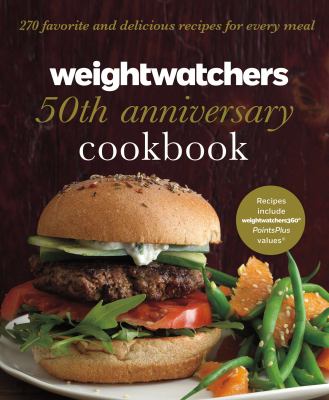
Weight Watchers 50th Anniversary CookbookWeight Watchers 50th Anniversary Cookbook: 250 Delicious Recipes for Every Meal
(2013)

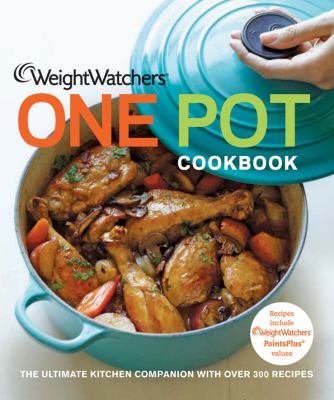
Weight Watchers One Pot CookbookWeight Watchers One Pot Cookbook (2012)

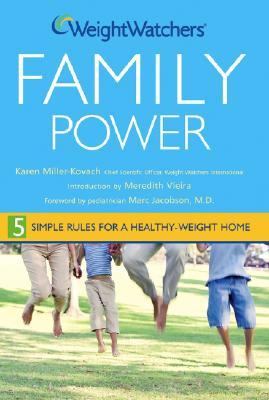
Weight Watchers Family PowerWeight Watchers Family Power: 5 Simple Rules for a Healthy Weight Home  by Karen Miller-Kovach (2006)

Share this:

  • Share on X (Opens in new window) X
  • Share on Facebook (Opens in new window) Facebook
  • Share on LinkedIn (Opens in new window) LinkedIn
  • Share on Pinterest (Opens in new window) Pinterest
  • Print (Opens in new window) Print
  • Email a link to a friend (Opens in new window) Email
  • Share on Reddit (Opens in new window) Reddit
  • Share on Tumblr (Opens in new window) Tumblr
Like Loading...

Posts navigation

← Older Entries
Newer Entries →
  • Enter your email address to follow this blog and receive notifications of new posts by email.

  • Recent Posts

    • Ask Coach Stacy: The 411 on Treadmills
    • No Excuses
    • Sage Advice from Our Favorite Cowboy
    • A Few of Our Favorite Fitness Things
    • Playing It Forward to Aurora Shooting Victims
  • Blogs I Follow

    • TED Blog
    • Denver Post Blogs
    • Blogging Runner
  • Categories

  • Twitter Updates

    Tweets by coachstacy101
  • Archives

Blog at WordPress.com.
TED Blog

The TED Blog shares news about TED Talks and TED Conferences.

Denver Post Blogs

When you're moving, you're improving!

Blogging Runner

COACH STACY'S HEALTHY U
Blog at WordPress.com.
  • Subscribe Subscribed
    • COACH STACY'S HEALTHY U
    • Join 131 other subscribers
    • Already have a WordPress.com account? Log in now.
    • COACH STACY'S HEALTHY U
    • Subscribe Subscribed
    • Sign up
    • Log in
    • Report this content
    • View site in Reader
    • Manage subscriptions
    • Collapse this bar
 

Loading Comments...
 

    %d