COACH STACY'S HEALTHY U

When you're moving, you're improving!

  • About
  • Camp GO™
  • Class Schedules
  • Contact Us
  • We Play It Forward

Coach’s Daily Dose: Girl Power!

Posted by Coach Stacy on February 23, 2012
Posted in: Coach's Daily Dose, Physical Activity. Tagged: Girls in Sports, physical activity. 2 Comments

“Sugar and spice and everything nice…

That’s what little girls are made of.”


And then came Title IX.

 Title IX of the Educational Amendments Act of 1972 was the first comprehensive federal law to ban sex discrimination in the schools, in academics as well as athletics.  Today, one in three high school girls plays sports, a ratio which we’d love to see improve given the enormous health and social benefits that athletic participation offers girls, including:

  •  Better grades and overall school performance
  • Lower drop-out rates
  • Exposure to social virtues including team work, respect, commitment and leadership skills
  • Development of higher level organizational skills including time budgeting, goal setting and priorities management
  • Improved psychological and emotional health, including strong self-esteem and self-confidence, as well as lower rates of depression and risk of suicide
  • The ability to cope in stressful situations and accept responsibility
  • Markedly better physical health, including low rates of obesity and stronger immune systems
  • Decreased drug and alcohol abuse and teen pregnancy

 The long-range benefits of athletic participation among girls and young women are impressive as well.  Women who played sports when young are less susceptible to chronic diseases such as diabetes, heart disease and cancer.  Studies have shown that they also achieve higher levels of education as well as income – in fact, 80% of key women in Fortune 500 companies played youth sports.  Athletic involvement among girls also provides a foundation for life-long physical activity and sustained well-being.

 Debby and I have many fond memories of playing sports when we were young and take great pleasure in encouraging today’s young girls and women to “carry the torch,” so to speak, and enjoy the many benefits of sports participation today.  February is National Girls in Sports Month and this Saturday, February 25 we’ll be marking the 40 year anniversary of Title IX’s passing at Colorado Girls in Sports Day.  Join us for a day of celebration and play:

Colorado Girls in Sports Day

Saturday, February 25, 2012

1:00-4:00 p.m.

University of Colorado at Boulder

Student Recreation Center


For more information, call or email Patty McConnell at 303-492-7206 or mcconnep@colorado.edu.

We’d also love to hear from you!  Did you play sports as a child?  Tell us about your experiences and memories.  What sports did you play?  How did you get started?  Were your experiences beneficial?  Tell us about it by clicking on the comments link at the top of this post.

Share this:

  • Share on X (Opens in new window) X
  • Share on Facebook (Opens in new window) Facebook
  • Share on LinkedIn (Opens in new window) LinkedIn
  • Share on Pinterest (Opens in new window) Pinterest
  • Print (Opens in new window) Print
  • Email a link to a friend (Opens in new window) Email
  • Share on Reddit (Opens in new window) Reddit
  • Share on Tumblr (Opens in new window) Tumblr
Like Loading...

Pass the Health: Confessions of a Girl Scout Cookie Wimp

Posted by Debby Ridgell on February 21, 2012
Posted in: Diet & Nutrition, Pass the Health. Tagged: diet, Girl Scout Cookies, nutrition. 5 Comments

In an effort to try to cut down on sugars and sweets I decided to this year refrain from buying any Girl Scout Cookies.  Turns out it was a short-lived and altogether futile experiment.  For two weeks, my life was more or less a running of the cookie gauntlet, as inundated as I was with requests to buy.  The Scouts were everywhere – the grocery store, church and the mall.  Sign-up sheets flooded the break room at work, and people whom I had mistaken for friends on Facebook posted pleas to buy from their daughters and granddaughters.  Did you know there’s even an iPhone app for locating Girl Scout Cookies in your general geographic region?  And if, as unlikely as it would seem, the Girl Scouts haven’t found you, no worries – you can simply log onto the Girl Scouts’ website and plug in your zip code, and someone from your local troupe will be in touch right away. 

When the inevitability of a freezer-full of cookies finally sunk in, I decided to do my homework and find the “healthiest” cookies to buy.  Sadly, there are no healthy Girl Scout Cookies.  But on a scale of “unhealthy” to “disastrous,” there are a few choices that are better than others.  You’ll want to start by checking out the nutrition facts on each box.  That said here’s the breakdown:

  • Trefoils and Savannah Smiles seem to be the least “unhealthy” of this year’s batch.  Trefoils are the Shortbread Cookies and one serving, or 5 cookies, packs 160 calories and 7 grams of sugar.  The Savannah Smiles, or Lemon Cookies, actually have fewer calories than Trefoils (28 per cookie), but if you look closely at the label you’ll find that the cookies contain sugar, dextrose, invert sugar, and corn syrup solids.  That’s four different kinds of sugar in one cookie!
  • At the other end of the spectrum, you’ll find two newer varieties, the “Lemonade” and “Thanks-A-Lot.”  The Lemonades are shortbread cookies with a “tangy lemon frosting” and the Thanks-A-Lots seem to be the Girl Scouts’ answer to Keebler’s Fudge Stripe cookies.  Both varieties pack a mighty caloric punch – one serving of two cookies will cost you 150 calories.  Yep…..thanks a lot.
  • In between you’ll find the standards – Thin Mints, Samoas, Do-Si-Dos, and Tagalongs – as well as three more new additions – the “Dulce de Leche,” “Shout Out” and “Thank U Berry Munch.”  These varieties will set you back 110-160 calories per serving of two to four cookies.

In the end, I succumbed to both the pressure and the temptation and bought a few boxes of my favorites, the Thin Mints.  A couple of these and a glass of milk are, for me, like a little slice of heaven.  Healthy?  No way.  But remember, it’s all about balance and moderation.  On the days I eat cookies, I also work in a little more cardio or extend my workout with a few more reps in order to work off some of the cookie calories.  I’ll probably be doing lots of extra cardio and reps in the next few months, though.  I just ran into my neighbor who gave me the heads up that her daughter will be selling candy as part of her school’s fund raiser.  Sure, I say, sign me up for a couple of boxes. 

“With or without almonds?”

 Sigh….

Share this:

  • Share on X (Opens in new window) X
  • Share on Facebook (Opens in new window) Facebook
  • Share on LinkedIn (Opens in new window) LinkedIn
  • Share on Pinterest (Opens in new window) Pinterest
  • Print (Opens in new window) Print
  • Email a link to a friend (Opens in new window) Email
  • Share on Reddit (Opens in new window) Reddit
  • Share on Tumblr (Opens in new window) Tumblr
Like Loading...

Coach’s Kitchen: Have Your Cake and Sweeten it Too

Posted by Coach Stacy on February 18, 2012
Posted in: Diet & Nutrition. Leave a comment

Depending upon how you choose to sweeten your pot, here are a few dessert recipes that will satisfy your sweet tooth without spoiling your diet:

Super-Sweet Blueberry Muffins (from The “I Can’t Believe This Has No Sugar” Cookbook by Deborah E. Buhr)

1 cup mashed banana

2 egg whites or 1 extra large egg

1/3 cup vegetable oil

½ cup unsweetened apple juice concentrate (any brand)

1 Tbsp water

2 cups all-purpose flour

1 cup fresh or frozen blueberries, left to thaw in a strainer

2 tsp baking soda

 Preheat oven to 350 degrees.  Prepare 18 standard-sized muffin cups with paper liners.  In a large bowl, stir together banana, egg, oil, concentrate, and water.  Add flour and mix.  Gently stir in blueberries.  Stir in baking soda quickly, and then mix (28 to 30 beats).  Immediately spoon batter into prepared muffin cups.  Bake about 20 minutes, or until a cake tester inserted in the center of one muffin comes out clean.  As soon as they are done, remove muffins from tins and cool on a wire rack.  Serve warm or cool completely and store in an air tight container on countertop or freeze. 

Yeild:  18 muffins

Per Muffin:

Calories: 117; Protein: 2 g; Fat: 4.3 g; Carbohydrate: 17.9 g; Sodium: 148.8 mg; Diabetic exchanges: starch – 1, fat – 1

—————————————————————————–

Sugarless Apple Cookies (from www.recipe4living.com)

¾ cup chopped dates

½ cup finely chopped peeled apple

½ cup raisins

½ cup water

1 cup plus 1 Tbsp all-purpose flour

1 tsp ground cinnamon

1 tsp baking soda

½ tsp salt (optional)

2 eggs

1 tsp liquid sweetener

 In a large saucepan, combine dates, apples, raisins and water.  Bring to a boil; reduce heat and simmer for 3 minutes.  Remove from heat; cool.  Combine flour, cinnamon, baking soda, and salt, if desired.  Stir into apple mixture and mix well.  Combine eggs and sweetener, add to batter.  Drop by tablespoonfuls onto a nonstick baking sheet.  Bake at 350 degrees for 10-12 minutes. 

Yeild: 2 dozen

Per Serving:

Calories: 54; Sodium: 24 mg (without added salt); Cholesterol: 18 mg; Carbohydrate: 18 g; Protein: 1 g; Fat: 1 g; Diabetic Exchanges: starch – ½, fruit – ½

—————————————————————————–

Ultra Mini Cream Cheese Tarts (from www.sparkrecipes.com)

1 – 8 oz package of Cream cheese (regular)

1 – 8 oz package of fat-free Cream cheese

1 cup Splenda sweetener

1 tsp vanilla extract

2 eggs

12 vanilla wafers

12 paper liners for muffin cups

 Preheat oven to 350 degrees.  Place a paper cupcake liner in each cup of a muffin pan.  Beat cream cheese with a hand-held electric mixer until fluffy.  Add Splenda sugar substitute and vanilla and beat well.  Add eggs, one at a time, beating well after each addition.  Place vanilla wafer, flat side down, in each muffin cup.  Spoon Cream cheese mixture over each vanilla wafer.  Bake for 20 minutes.  Allow to cool completely.  Serve as is or add your favorite pie filling (i.e. blueberry, cherry, peach). 

Yield: 12 servings

Per Tart:

Calories: 101.8; Fat 7.5 g; Carbohydrates: 2.3 g; Protein: 2.5 g

Do you have low-sugar or sugar-free recipes you’d like to share?  Feel free to post them under “Leave a Comment” and we’ll share them with the rest of our readers!

Share this:

  • Share on X (Opens in new window) X
  • Share on Facebook (Opens in new window) Facebook
  • Share on LinkedIn (Opens in new window) LinkedIn
  • Share on Pinterest (Opens in new window) Pinterest
  • Print (Opens in new window) Print
  • Email a link to a friend (Opens in new window) Email
  • Share on Reddit (Opens in new window) Reddit
  • Share on Tumblr (Opens in new window) Tumblr
Like Loading...

Sugar: How Much is Too Much?

Posted by Debby Ridgell on February 15, 2012
Posted in: Diet & Nutrition, Pass the Health. 1 Comment

Are you eating too much sugar? Coach Stacy and Joe Fowler demonstrate how much — is too much — sugar.  Click on the video icon above.

Share this:

  • Share on X (Opens in new window) X
  • Share on Facebook (Opens in new window) Facebook
  • Share on LinkedIn (Opens in new window) LinkedIn
  • Share on Pinterest (Opens in new window) Pinterest
  • Print (Opens in new window) Print
  • Email a link to a friend (Opens in new window) Email
  • Share on Reddit (Opens in new window) Reddit
  • Share on Tumblr (Opens in new window) Tumblr
Like Loading...

HealthyLib: Resources to Help You Lick the Sugar Habit

Posted by Debby Ridgell on February 14, 2012
Posted in: Diet & Nutrition, Health & Fitness Library. Tagged: added sugars, artificial sweeteners, diet, HealthyLib, low-sugar, nutrition. 1 Comment

That which we call sugar by any other name would taste as sweet.

Stop by your local library or bookstore and browse the cookbooks section.  You’ll find dozens of low sugar, low carb, and diabetes cookbooks.  Do your homework beforehand, though.  Many cookbooks touting “totally sugar-free” meals actually feature recipes containing Splenda, an artificial sweetener approved by the FDA.  Splenda is a popular calorie-free baking alternative to sugar because it provides both sweetness and bulk, but if you have any concerns about ingesting artificial chemicals these cookbooks might disappoint. 

Other “sugar-free” cookbooks call for “sugar substitutes” such as fruit juice concentrate and agave nectar, which are in fact……um……sugars.  Don’t be fooled.  As Coach Stacy says, “Sugar is sugar.”  If you’re trying to cut back or eliminate sugars altogether, you’ll want to recognize the many sugar aliases on the market.  Just because a recipe doesn’t contain white or brown sugar doesn’t mean it’s sugar-free.

Here are a few cookbooks you might like if you’re trying to reduce or eliminate the amount of sugar in your diet.  The right choices for you depends upon what you’re trying to accomplish:

  • Everything Sugar-Free Cookbook by Nancy T. Maar;  and Eat What You Love: More Than 300 Incredible Recipes Low in Sugar, Fat, and Calories by Marlene Koch

Both cookbooks feature recipes which are, indeed, delicious as well as low in calories and sugar, but do call for Splenda as a sweetener.  If you’re not averse to using artificial sweeteners in your food, these cookbooks are good choices.

  • Gluten-Free, Sugar-Free Cooking: Over 200 Delicious Recipes to Help You Live a Healthier, Allergy-free Life by Susan O’Brien.

You’ll find no table sugar in the ingredients for these recipes.  Instead, sugar substitutes such as fruit juice concentrate, agave nectar, brown rice syrup, honey and maple syrup are called upon to sweeten the dishes.  While many would contend that the recipes might be healthier than those contained in Splenda cookbooks – and certainly suitable for individuals with food allergies — if you’re trying to lose weight or reduce your sugars, this cookbook won’t help you. 

  • The “I Can’t Believe This Has No Sugar” Cookbook by Deborah E. Buhr. 

The cookbook is aptly titled – because you shouldn’t believe it.  There’s plenty of sugar in this book’s recipes – just not the refined variety.  However, I’ll contend that these recipes are, without doubt, healthier than those found in most “sugar-free” cookbooks because they contain no additives or preservatives.  They also feature natural fruit in their ingredients, which add vitamins and fiber.   However, most also contain fruit juice concentrate, which essentially falsifies the title.  Be that as it may, check out Coach’s Kitchen later this week for Buhr’s delicious Blueberry Muffin recipe.  The muffins are easy to make and call for a fresh banana and blueberries (along with unsweetened apple juice concentrate) as its natural sweeteners.

  • The American Diabetes Association Diabetes Comfort Food Cookbook by Robyn Webb, M.S.

Definitely comfort food, but the recipes contained in this volume are most definitely not sugar-free.  The recipes call for table sugar and honey, but less is used than in “normal” recipes because they’re combined with Splenda or stevia, which is an herbal sweetener extracted from a plant that grows in South America and Southeast Asia. 

 You’ll also want to check out these two web resources:

Sugar Stacks:  The home page of this website poses the question, “Would you eat a stack of 16 sugar cubes?”  Probably not, right?  Wrong!  If you drink a 20 oz bottle of Classic Coke, that’s exactly how much sugar you’d be pouring into your body.  This is a clever website offering sobering visual representations of how much sugar we ingest when we consume common foods and beverages, including breakfast cereals, sodas, candy bars and snacks as well as various fresh fruits and vegetables.  The sugar stack representing a complete Thanksgiving dinner is the real eye opener – over 26 sugar cubes.  By the way, did you know that a 14 oz. can of sweetened condensed milk, which is a staple in many holiday baking recipes, contains 220 grams of sugar?  That’s a stack of 55 sugar cubes, or 1,300 calories.  Was it any wonder you felt bloated last November 24?

The USDA Database for the Added Sugars Content of Selected Foods:  This is a helpful tool in calculating the amount of added sugar in your diet.

Share this:

  • Share on X (Opens in new window) X
  • Share on Facebook (Opens in new window) Facebook
  • Share on LinkedIn (Opens in new window) LinkedIn
  • Share on Pinterest (Opens in new window) Pinterest
  • Print (Opens in new window) Print
  • Email a link to a friend (Opens in new window) Email
  • Share on Reddit (Opens in new window) Reddit
  • Share on Tumblr (Opens in new window) Tumblr
Like Loading...

Where’s Sugar?

Posted by Coach Stacy on February 9, 2012
Posted in: Uncategorized. 3 Comments

Remember the children’s books, Where’s Waldo?  The series consisted of laboriously illustrated two page spreads depicting hundreds of people, animals and objects.  The challenge lay in finding Waldo, a tall bespectacled fellow, hiding somewhere on the spread.  Finding sugars in your food is a bit like finding Waldo.  It tends to be hidden in multiple guises on the Nutrition Facts panel of food.  And unless you’re well-versed in the countless sugar aliases hiding out in packaged foods, you’re probably eating more than the recommended six to nine teaspoons per day.

So let’s start with the aliases under which sugars tend to hide in common food items:

white sugar brown sugar cane juice/cane sugar
confectioners’ sugar corn syrup/corn sweeteners dextrose
fructose fruit juice concentrate glucose
granulated white sugar high fructose corn syrup honey
maltose malt syrup molasses
sucrose syrup lactose

Does it matter which form of sugar you’re eating?  Is one less harmful or less fattening than another?  Unfortunately, no.  Sugar is sugar and whether it’s the three teaspoons of honey you’re stirring into your tea or the three teaspoons of confectioners’ sugar sprinkled on your coffee cake – the three teaspoons amount to 48 calories no matter how you serve them up.  And when you’re examining a food label and notice more than one of the above aliases listed, you’re probably about to eat something fairly high in sugar content.  The higher up on the food label the sugar names appear, the higher the sugar content.  Play a little hide and seek before you take a bite.  If you see maltose, sucrose, high fructose corn syrup and glucose all on the nutrition label, chances are that the main ingredient in what you’re about to eat is…..sugar.

Many of my clients ask if artificial sweeteners are better choices for satisfying their sweet tooths.  Unfortunately, the jury’s still out on that one and a lot depends on what is trying to be accomplished.  The artificial sweeteners that are currently approved by the FDA are Acesulfame potassium (in Sunett and Sweet One), Aspartame (found in Equal and NutraSweet), Neotame, Saccharine (in Sugar Twin and Sweet ‘N Low), and Sucralose (found in Splenda).  For the last thirty years, artificial sweeteners have been under intense scrutiny because of studies conducted in the 1970s that linked saccharin ingestion to bladder cancer in lab rats.  However, according to the National Cancer Institute, there’s no hard evidence that artificial sweeteners cause cancer or other ailments.

Most of us turn to artificial sweeteners because they don’t pack the caloric punch to our diets that sugars do.  In fact, most artificial sweeteners have no calories at all and could be considered beneficial for people trying to lose weight or prevent weight gain.  Also since they don’t raise blood sugar, artificial sweeteners could be considered suitable alternatives to sugar for people who have diabetes.  And tooth decay?  Far less likely if you’re sweetening your food with artificial sweeteners.

The flip side of the coin is that imitation sweeteners can be up to 600 times sweeter than real sugar or any of its aliases.  Most people then tend to crave such intense sweetness in all of their foods, thus making it more difficult to satisfy their sweet tooths.  The net result is that we tend to crave and eat even more sweets. 

Another problem with falling for the fakes is the rationalizing we tend to do when we eat or drink foods that are marketed as “diet-friendly” such as sugar free sodas.   We think, “Well, I had the diet Coke so I can have a second helping of cake.”  In the end, many of us tend to over eat when we’ve been “good” with the artificial sweeteners. 

All in all, your healthiest choice will be to reduce the amount of added sugar in your diet.  That doesn’t mean cutting it out all together – remember it’s all about balance and moderation.  Here are some tips: 

  • Cut back gradually.  If you try quitting sugar cold turkey you’re setting yourself up for failure.  Cut back a little at a time.  For example, if you usually spoon three teaspoons of sugar into your morning coffee, try just two teaspoons.  Then see if you can cut back to one.  Your taste buds will adjust to the gradual reduction.
  • Likewise, allow yourself some sugar – but save your “ration” for the foods in which it will matter the most, like desserts.
  • Drink with caution.  Cut back on sugary, non-diet sodas and other beverages, including soft drinks, bottled teas, and fruit juices.  Many of us drink more sugars than we realize.  A 12-ounce can of regular soda contains 39 grams of sugar.  An 8-ounce serving of Tropicana 100% orange juice packs 25 grams of sugar.  Even a 20-ounce bottle of Vitamin Water contains a walloping 33 grams of sugar.  Opt instead for milk or regular water.  Both are healthier and easier on the wallet.  If plain water doesn’t suit you, try flavoring it with a little fresh fruit such as strawberries or orange slices. 
  • Try going half and half.  If I’m craving a Coke and no other beverage will do, I’ll ask for half regular and half diet to cut down on the amount of sugar I drink.
  • Substitute naturally sweet foods such as fruit for foods with added sugars.  This will help to satisfy your sweet tooth.
  • Scrutinize your food labels for added sugars (remember the sugar aliases).  The higher up on the ingredient list various sugars appear, the more added sugar the product contains.  One particularly problematic food tends to be breakfast cereals, many of which contain lots of added sugars to appeal to children.  Choose cereals and other foods with lower sugar content. 
  • Substitute spices such as cardamom, cinnamon, coriander, ginger, mace and nutmeg for sugars.
  • Go easy on the condiments such as salad dressings and ketchup.  Also, opt for reduced sugar varieties of syrups, jellies and preserves.
  • Watch for canned fruit packed with syrup.  Choose fruits packed in water or natural fruit juice instead.

So there you have it.  Just limiting the amount of sugar in your diet will help you cut calories drastically without compromising taste.  And if it doesn’t go in your mouth, it won’t wind up on your hips.  Balance and moderation are the keys.

Share this:

  • Share on X (Opens in new window) X
  • Share on Facebook (Opens in new window) Facebook
  • Share on LinkedIn (Opens in new window) LinkedIn
  • Share on Pinterest (Opens in new window) Pinterest
  • Print (Opens in new window) Print
  • Email a link to a friend (Opens in new window) Email
  • Share on Reddit (Opens in new window) Reddit
  • Share on Tumblr (Opens in new window) Tumblr
Like Loading...

Pass the Health: Don’t Just Sit There – Get a Move On!

Posted by Coach Stacy on February 5, 2012
Posted in: Pass the Health, Physical Activity. Leave a comment

This evening over 100 million viewers will be glued to their seats watching the Giants and the Patriots battle it out during the biggest game in American sports.  Not me.  Oh, don’t get me wrong – I’ll have the game on, for sure.  But I won’t be glued to my seat.

I read a report recently that one hour of sedentary activity – like watching TV – burned a measly 81 calories.  But pairing a little physical activity with television viewing could double or even triple one’s calorie burn.  Here are some ideas for incorporating physical activity into your TV viewing:

  • Do some light step aerobics or jump in place on a mini trampoline
  • Walk or jog on a treadmill or ride a stationary bike
  • Hula hoop (seriously, I can burn 420 calories hooping for 60 minutes)
  • Lift dumbbells to tone your shoulders, biceps and triceps
  • Do crunches on a fit ball
  • Lunges
  • Squats
  • Mat exercises (push ups, planks, bicycles, figure 8s, “Tebows,” etc.)
  • Couch triceps dips

 The burning question is whether you’ll incorporate movement during the game or during the commercials.  Either way, don’t just sit there – get a move on, because When You’re Moving, You’re improving!

Share this:

  • Share on X (Opens in new window) X
  • Share on Facebook (Opens in new window) Facebook
  • Share on LinkedIn (Opens in new window) LinkedIn
  • Share on Pinterest (Opens in new window) Pinterest
  • Print (Opens in new window) Print
  • Email a link to a friend (Opens in new window) Email
  • Share on Reddit (Opens in new window) Reddit
  • Share on Tumblr (Opens in new window) Tumblr
Like Loading...

Coach’s Kitchen: Super Healthy Tailgate Recipes

Posted by Debby Ridgell on February 5, 2012
Posted in: Diet & Nutrition. Leave a comment

Avoid super-sizing your waistline during the Super Bowl with some of these healthy snacks:

Broiled Buffalo Wings (from USA Weekend’s food columnist Ellie Krieger)

2 pounds chicken wings, split at the joints

¼ cup cayenne pepper sauce, preferably Frank’s Red Hot, plus more for serving

1 Tbs. Fresh lemon juice

3 Tbs. low-sodium chicken broth

3 large ribs celery, cut into sticks

1 recipe Blue Cheese Dip (below)

 Preheat the broiler.  Place the wings in a large pot and fill the pot with water to cover by about 2 inches.  Bring to a boil, then continue to boil for 10 minutes.  Drain. Meanwhile, in a small bowl, combine the cayenne pepper sauce, lemon juice and broth.  Reserve.

 Transfer the wings to a baking sheet, drizzle with the reserved sauce and toss well to coat.  Place the baking sheet under the broiler for 1 minute to heat the wings and sauce together. 

 Serve with extra hot sauce on the side, celery sticks and the Blue Cheese Dip.  Yield: 4 servings.

 Per Serving:

Calories 240

Protein 27 g

Fat 12 g ( 4 g saturated)

Cholesterol 95 mg

Fiber 1 g

Sodium 710 mg

Blue Cheese Dip

¼ cup plain Greek-style non-fat yogurt

2 Tbs. mayonnaise

1 tsp. white wine vinegar

1/3 cup crumbled blue cheese (1 ½ oz)

In a small bowl, stir together the yogurt, mayonnaise, vinegar and blue cheese.  Mash any very large chunks of blue cheese with the back of a spoon to integrate the cheese into the dip.

Make the dip up in advance and store in an airtight container in the refrigerator.  Allow to come to room temperature before serving.  Yield: 4 servings

Per Serving:

Calories 70

Carbohydrates 3 g

Protein 4 g

Fat 6 g (2 saturated)

Cholesterol 10 mg

Fiber 0 g

Sodium 210 mg

Cheesy Crab Dip

Cheesy Crab Dip (from www.familycircle.com/recipes)

8 oz reduced-fat cream cheese, softened

1/3 cup light mayonnaise

1/3 cup fat-free milk

2 Tbs. chopped fresh dill, plus more sprigs, to garnish

1 tsp. Worcestershire sauce

¼ tsp. garlic salt

½ pound imitation crabmeat, coarsely chopped

6 Tbs. grated Parmesan cheese

Fresh vegetables for dipping

Heat oven to 350 degrees.  Coat a 9-inch pie plate with nonstick cooking spray.  In a large bowl, combine cream cheese, mayonnaise, milk, dill, Worcestershire sauce and garlic salt.  Fold in imitation crabmeat.  Spoon mixture evenly into prepared pie plate.  Sprinkle Parmesan cheese evenly over top.  Bake at 350 degrees for 25-30 minutes until lightly browned.  Cool slightly.  Garnish with dill sprigs and serve with sliced vegetables.  Yield: 12 servings

Per serving:

Calories 114

Protein 6 g

Carbohydrates 5 g

Fat 8 g (4 saturated)

Cholesterol 25 g

Sodium 464 mg

 Nat's Oven Baked Zucchini Sticks

Oven Baked Zucchini Strips (from www.food.com)

3 medium zucchini

¾ c whole wheat bread crumbs

¼ c freshly grated Parmesan cheese

1 tsp. oregano

½ tsp. fresh ground pepper

½ tsp. garlic powder

¼ tsp. salt

1 Tbs. extra virgin olive oil

Preheat oven to 450 degrees.  Spray a large baking sheet with oil cooking spray.  Cut zucchini into slices. Toss zucchini in a bowl with the olive oil.  Mix dry ingredients in a plastic bag.  Place zucchini, a handful at a time, in the plastic bag and shake to coat.  Spread coated zucchini on the baking sheet and bake 20 minutes.  Turn zucchini and bake another 15-20 minutes, or until golden brown.  Serve with your favorite dip.  Yield: 4 servings.

spinach artichoke recipe

Spinach Artichoke Balls (from www.foodrepublic.com)

Balls:

1 pound package frozen chopped spinach, thawed and chopped finely

½ pound frozen artichokes, thawed and chopped finely

5 eggs

1 large onion, minced

4 Tbs butter, melted and cooled

1 ½ cups Parmesan cheese, grated

2 cloves garlic, minced

½ tsp. Cayenne powder

2 c. Italian-style breadcrumbs

Dill sauce:

1 c mayonnaise

1 c sour cream

¼ c dill, chopped

2 scallions, chopped

Salt and pepper to taste

Combine all sauce ingredients together in a bowl, cover and refrigerate.  Preheat oven to 350 degrees.  Squeeze excess water from spinach and put in a large mixing bowl.  Add remaining ingredients and mix well by hand.  Form mixture into 1 ½” balls either by hand or with a small ice cream scoop.  Roll them between the palms of your hand to get a uniform smooth finish.  Place balls on a parchment lined sheet pan and cook until firm to the touch, 20-25 minutes.  Serve warm with dipping sauce.

Share this:

  • Share on X (Opens in new window) X
  • Share on Facebook (Opens in new window) Facebook
  • Share on LinkedIn (Opens in new window) LinkedIn
  • Share on Pinterest (Opens in new window) Pinterest
  • Print (Opens in new window) Print
  • Email a link to a friend (Opens in new window) Email
  • Share on Reddit (Opens in new window) Reddit
  • Share on Tumblr (Opens in new window) Tumblr
Like Loading...

HealthyLib: Sweet Misery

Posted by Debby Ridgell on February 4, 2012
Posted in: Diet & Nutrition, Health & Fitness Library. 2 Comments

A few weeks ago I started thinking about how much sugar I put down on a daily basis.  I decided to monitor my intake closely and have been scrutinizing my food labels.  One day, as a visual aid I poured one teaspoon of sugar into a measuring cup for every four grams of sugar that I swallowed.  The result?  Good mercy, I’m like a walking sugar plantation.  The teaspoons added up in a hurry and the sources were many:  2 spoons full of sugar in my morning coffee (oops make that two morning coffees and four spoons full), my bowl of Fiber One cereal for breakfast (Really? 14 grams of sugar?), the fruit and walnut salad and large McDonald’s Sweet Tea at lunch, my Lindor truffles in the middle of the afternoon (goodness, three of ’em), the Girl Scout cookies that veritably screamed from the pantry after dinner. 

Take a look at what that much sugar looks like:

Yuck.

It was clear that I had a problem – but how did I get this way?  Why had I become such a brazen sugarholic?  To figure it all out I hit the library and here are some of the useful resources that I found:

  Sugar Shock! by Connie Bennett:  A former journalist, Connie Bennett suffered from a host of physical maladies, but eventually discovered that drastically cutting back on the sugars and simple carbs in her diet helped her to regain her health and happiness.  Bennett offers evidence that many others in America are suffering from “sugar shock.”

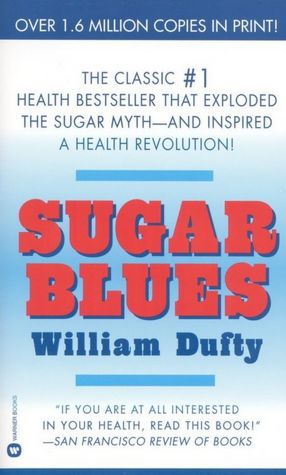
  Sugar Blues by William Dufty:  A pioneering work in the toxic effects of sugar consumption, Sugar Blues posits that sugar is a kind of poison that causes overweight, irritability, premature aging, diminished mental acuity, and lethargy.  He describes an encounter he had with screen legend Gloria Swanson, who had sworn off the stuff years before, which inspired his lifetime of work researching the health problems associated with sugar addiction.  Interesting reading.

  Suicide by Sugar by Nancy Appleton:  Clinical nutritionist Nancy Appleton  describes her own sugar addiction and how too much sugar caused her body’s homeostasis to become completely out of whack.  She details the many physical maladies tied to high sugar consumption, including hypoglycemia, metabolic syndrome, diabetes, and dementia, and outlines an action plan for beating sugar addiction.

You might also want to check out this Nightline report featuring Dr. Robert Lustig, a Pediatric Endocrinologist, on the health concerns surrounding sugar consumption, including rising obesity levels due to eating foods containing high fructose corn syrup.

I’m now determined to cut a lot of the added sugars out of my diet.  Next week, I will outline other helpful tools, including low sugar and diabetes cookbooks as well as websites geared at helping us monitor and reduce the amount of sugar we eat and drink.

Share this:

  • Share on X (Opens in new window) X
  • Share on Facebook (Opens in new window) Facebook
  • Share on LinkedIn (Opens in new window) LinkedIn
  • Share on Pinterest (Opens in new window) Pinterest
  • Print (Opens in new window) Print
  • Email a link to a friend (Opens in new window) Email
  • Share on Reddit (Opens in new window) Reddit
  • Share on Tumblr (Opens in new window) Tumblr
Like Loading...

Just a Spoonful of Sugar

Posted by Coach Stacy on February 1, 2012
Posted in: Coach's Daily Dose, Diet & Nutrition. 2 Comments

“Attention all units.  Crystalline substance suspected of causing obesity.  Suspect is considered fattening and dangerous and last seen hiding in thousands of food labels under a number of aliases.  Suspect is recognized as white or brown granules but often disguised as an amber liquid as well.  Approach suspect with caution.  Ingest at your own risk.”

It’s sad but true.  Sugar is the number one suspect in our nation’s obesity epidemic.  Sweet and addictive, sugar hides in massive quantities in a variety of unsuspecting foods like yogurts, condiments, soup, peanut butter, salad dressings, lunch meats, canned fruits and vegetables, sauces, and non-dairy creamers.  Sugar is considered “nutritive,” meaning it contains calories – but they’re empty calories offering no nutritional value whatsoever.  Once a rare delicacy enjoyed only by the affluent, sugar – in its many forms – has saturated the food market and is now the number one food additive.  Today, the average adult consumes over 150 pounds of sugar per year.  That’s nearly a half a pound, or around 50 teaspoons, of sugar each day.

Let’s break this down:  Sugar is a carbohydrate with a calorie count of 4 calories per gram.  Four grams of sugar is equivalent to one sugar packet or just under one teaspoon – which would be just about 16 calories.  Now consider this:  Those 50 teaspoons of sugar you’re putting down each day?  They account for 800 of your daily calories.  That 20-oz. bottle of soda you just drank?  66 grams of sugar or 264 calories.

It’s no shock, then, that according to the CDC, more than one third of American adults and 17% of children in the U.S. are obese.  In addition to adding inches to our waistlines, sugar consumption has also been linked to heart conditions, stroke, high blood pressure, diabetes, cancer, candida, hypertension and dramatic spikes and drops in blood sugar leading to adrenal failure.  And let’s not forget that high sugar consumption is a leading cause of tooth decay.  There’s even some evidence that high sugar consumption causes “body-wide biochemical stress and inflammation” which leads to a weakened immune system.

This begs the question, “How much is too much sugar?”  In 2009 the American Heart Association suggested that women limit themselves to 6 teaspoons of sugar per day, men 9 teaspoons, and children 3 teaspoons – a tall challenge in today’s sugar-laden processed food and beverage market.  Take, for example, the following culprits:

  • Fat free yogurt with fruit:  47 grams (nearly 12 teaspoons)
  • 1 can of Coke Classic: 39 grams (nearly 7 teaspoons)
  • 1 cup of Fruit Loops: 16 grams (4 teaspoons)
  • Grande Starbucks vanilla Frappuccino: 58 grams (over 14 teaspoons)
  • 1 cup of canned pineapples in syrup: 43 grams (almost 11 teaspoons)

 So what’s a sweet tooth to do?  Tune in next week for tips on finding hidden sugars in foods and strategies for cutting back on the amount of sugar you eat.  We’ll also give you the low-down on the many artificial sweeteners currently on the market.  And later this week we’ll post some recipes for low-sugar, healthy Super Bowl snacks and meals.  Meanwhile, keep in mind that a spoonful of sugar may help the medicine go down, but it won’t help you pull up your skinny jeans!

Share this:

  • Share on X (Opens in new window) X
  • Share on Facebook (Opens in new window) Facebook
  • Share on LinkedIn (Opens in new window) LinkedIn
  • Share on Pinterest (Opens in new window) Pinterest
  • Print (Opens in new window) Print
  • Email a link to a friend (Opens in new window) Email
  • Share on Reddit (Opens in new window) Reddit
  • Share on Tumblr (Opens in new window) Tumblr
Like Loading...

Posts navigation

← Older Entries
Newer Entries →
  • Enter your email address to follow this blog and receive notifications of new posts by email.

  • Recent Posts

    • Ask Coach Stacy: The 411 on Treadmills
    • No Excuses
    • Sage Advice from Our Favorite Cowboy
    • A Few of Our Favorite Fitness Things
    • Playing It Forward to Aurora Shooting Victims
  • Blogs I Follow

    • TED Blog
    • Denver Post Blogs
    • Blogging Runner
  • Categories

  • Twitter Updates

    Tweets by coachstacy101
  • Archives

Blog at WordPress.com.
TED Blog

The TED Blog shares news about TED Talks and TED Conferences.

Denver Post Blogs

When you're moving, you're improving!

Blogging Runner

COACH STACY'S HEALTHY U
Blog at WordPress.com.
  • Subscribe Subscribed
    • COACH STACY'S HEALTHY U
    • Join 131 other subscribers
    • Already have a WordPress.com account? Log in now.
    • COACH STACY'S HEALTHY U
    • Subscribe Subscribed
    • Sign up
    • Log in
    • Report this content
    • View site in Reader
    • Manage subscriptions
    • Collapse this bar
 

Loading Comments...
 

    %d